My fascination with cemeteries didn’t start with a movie, a book or a horror story told around a campfire. It started with a funeral. The men had entered and hoisted the charpai — what I’d then mistaken as an adult crib — with the body to take the departed to their ‘final destination’. What was this final destination? What did it look like? And most importantly, why were the women not to follow?
Mariana Enriquez’s, on the other hand, started with her falling in love. When Mariana first walked the Stagliano cemetery in Genoa in 1997, she wasn’t sure if it was the boy she’d met on the streets who was making her fall in love with the cemetery or vice versa. Neither the boy nor the cemetery were on her itinerary, and yet her goth self was struck by the romance of it all: the elaborate tombstones, the silent statues of angels and saints, the many lives lived in the past just under her feet…
Years later, in Somebody Is Walking on Your Grave, the Argentine writer of horror and gothic tales takes us through the cemetery visits that followed that first walk in Genoa. With Mariana as our guide, we visit five cemeteries in Argentina, along with others, such as in Cuba, Peru, Chile.
This time, though, she tempers the romantic with a more historical lens. While marble angels and gothic and art nouveau elements make appearances later on in the book, she begins her non-chronological account of cemetery journeys on a critical note. Her focus is turned towards Indigenous communities, from the Australian Aborigines to the Indigenous of the Argentine Patagonia. With a sharp eye she looks at their displacement, the plundering of their gravesites and other brutalities inflicted on them by their colonisers even in death. She is unwilling to look away from the differences in burials, the conditions of graves and the solemn hierarchy and erasure of the history of these cemeteries.
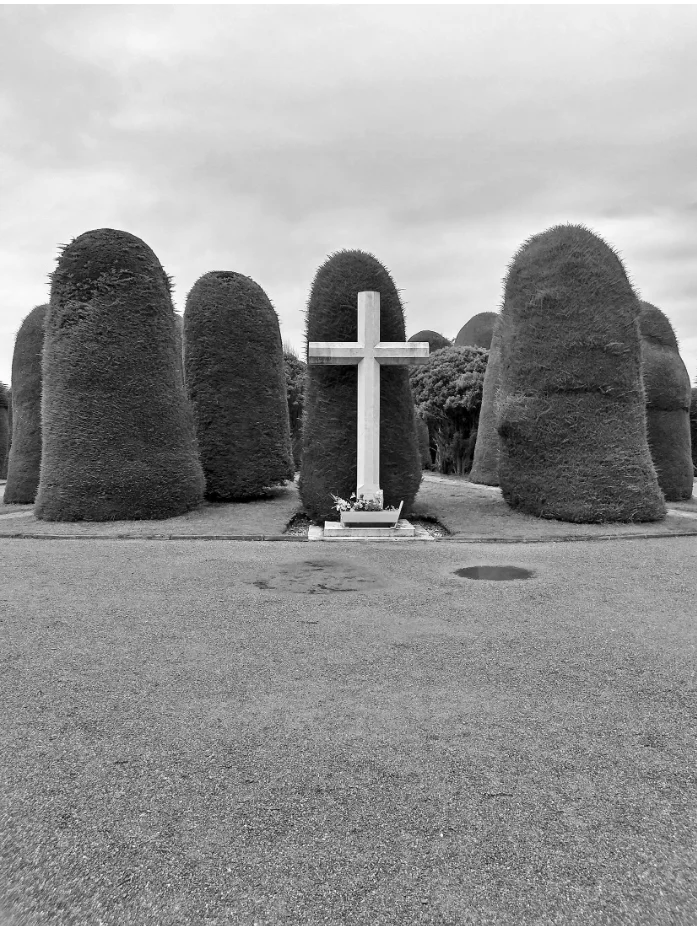
Mariana, through deft storytelling, turns walks through cemeteries into anthropological observations. We come across cemeteries full of soldiers and settlers to further understand the way the colonisers took over other lands: the community and mutual aid associations comprised of Germans, Croatians, Belgians, Danes, Greeks, Dutch, Italians, Americans (so on and so forth) in Chile; the Welsh in Argentina; the English in the English Cemetery in San Sebastian. She further looks at cemeteries as sites of possible protest. While visiting the Sara Braun Municipal Cemetery (‘The Most Beautiful Cemetery in the World’) in Chile, she comments on the vandalism of the cemetery’s famous cypresses:
“Or, more seriously, did they want to damage this burial ground of the millionaires complicit in the massacres of Indigenous peoples and workers in Patagonia?”
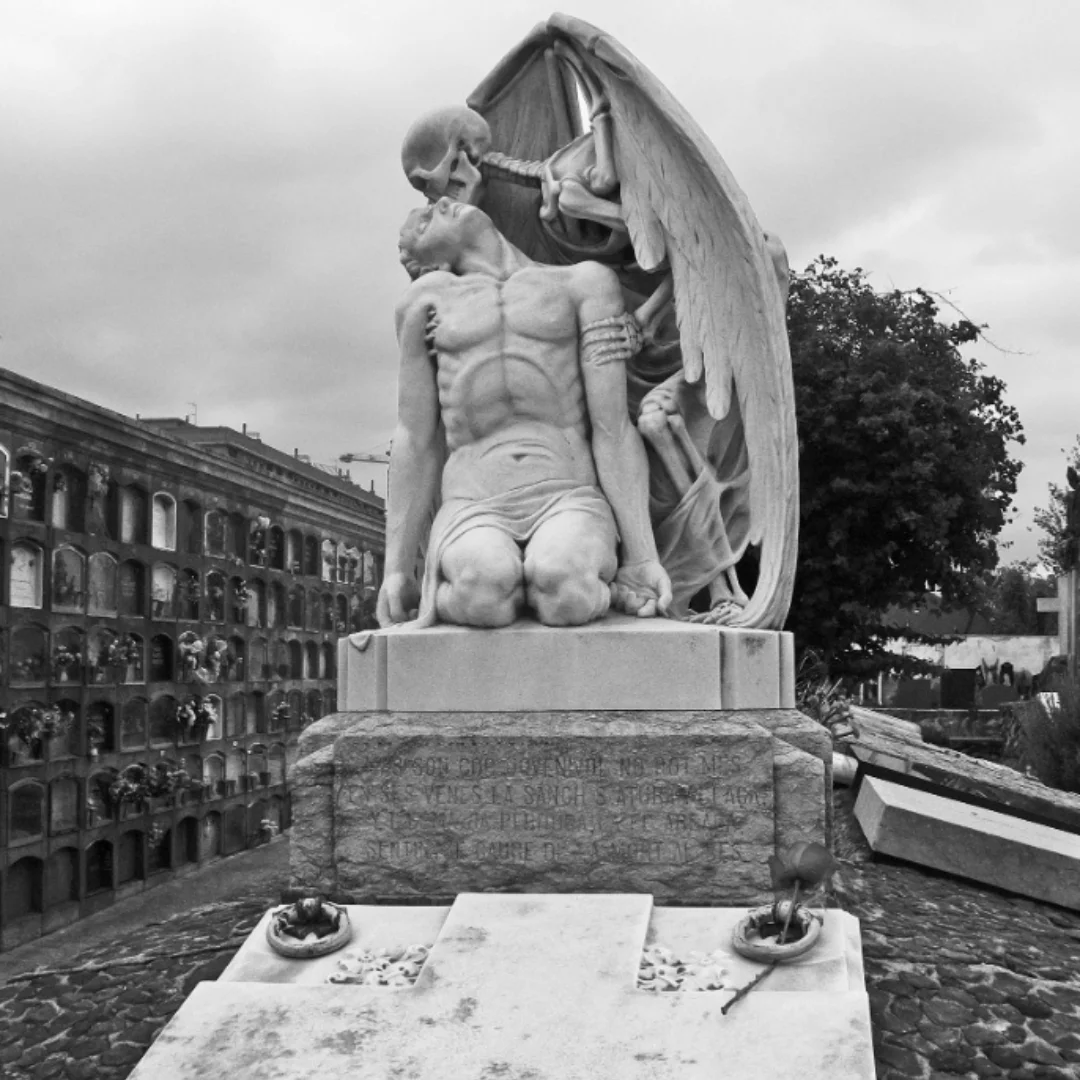
Apart from the sociological makeup of cemeteries, she peels back layers to look at the land they were built on, allowing deeper insight into the way cemeteries became yet another tool in the oppressor’s arsenal. For instance, the beautiful Bonaventure cemetery in Savannah (one she recalls Shelley’s “It might make one in love with death, to think that one should be buried in such a sweet place”, for) is built on land that was previously a plantation; the Poblenou cemetery in Barcelona was a common gravesite before Napoleon’s troops galloped through and gave the rich a reason to expand the area for their desired shrines and mausoleums; the ‘Zona Intangible’ (The Untouchable Zone) was an Indigenous burial ground in Buenos Aires’s Martin Garcia Island Cemetery that flooded, yet the bodies were made to stay where they were. The somebody in the title may very well refer to the colonisers, the rich and powerful.
Mariana, through deft storytelling, turns walks through cemeteries into anthropological observations. We come across cemeteries full of soldiers and settlers to further understand the way the colonisers took over other lands…
It also may refer to the fact that cemeteries move, (and are moved):
“Cemeteries move! I feel like shouting to a guide I hear in Colonial Park. Cemeteries were all nomadic in the nineteenth century, so we’re always walking over the dead — what else could we be walking on?”
It’s true. Whether for pestilence, floods, making room for the rich or for urban expansion, cemeteries are noted to relocate all the time. On a visit to San Sebastian’s Polloe Cemetery, we discover that the first municipal cemetery beyond city walls was founded after the stench of the dead bodies around the church was suspected to further the spread of disease. Similarly, in the UK we learn of the Magnificent Seven: seven cemeteries constructed outside London to accommodate the growing number of dead bodies, both because of an increase in population, as well as deaths after the plague.
In Paris, the Catacombs are traced back to Mariana’s favourite cemetery (“My favourite cemetery no longer exists”), The Holy Innocents, which she mentions having first come across in Patrick Süskind’s novel Perfume, where common graves containing over fifteen hundred cadavers at a time lay as feasting grounds for wolves and grave robbers. Eventually it’s noted that people’s relationship with death began to change, and gravesites began to be marked with crosses and plaques. The common graves were exhumed and bonfires were lit to prevent the spread of the stench. The bones from these graves were then stacked underground in what are now the Paris Catacombs.
Speaking of no burials, in New Orleans, which has a whopping 42 cemeteries; swamp-like conditions and flooding made it impossible to bury bodies underground and so there are only niches, vaults and mausoleums.
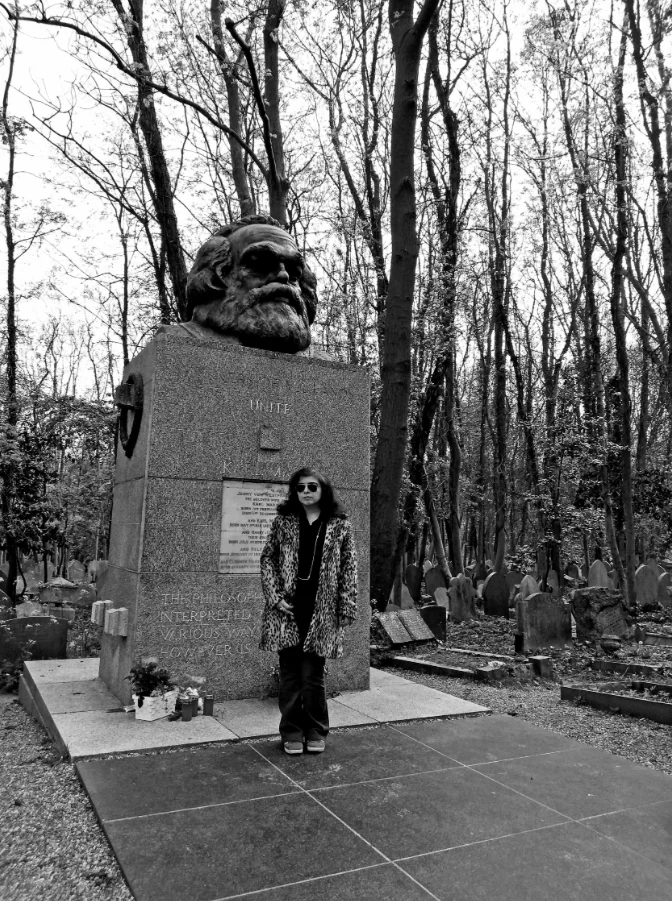
Mariana also notes the difference in the commemoration of death across continents, the tourist ‘ghost tours’, and the clash of the macabre and the urban. She comments on the grotesque romance (Spain, Paris, the UK) and almost clinical neatness (Germany) of European cemeteries and the garish displays of South American cemeteries — particularly in Recolata, Buenos Aires — that are void of actual remembrance. In Prague, cemeteries are a tourist hotspot for morbid fans and freaks alike. She comments on cemeteries that are hotspots, and the experience of visiting their host cities being ruined by tourists:
“But how can it be avoided? Are all the world’s exquisite cities destined for this kind of invasion? [..] It’s just that when they’re all together at the same time, along with the kids on spring break and the drunks drinking green beer and the young people in the Thai massage parlour with its doors open to the street and a waiting list, it’s all overwhelming and sad and desperate. Barcelona, Venice, New Orleans: the spirit is still there, but it’s quelled and crushed.”
It is only in Mexico, during the Day of the Dead celebrations, where she finds true respect and joy in the celebration of the dead. And though there is plenty of paraphernalia and associated ‘branding’ with the celebration (as with Halloween), there is a devotion and respect to it that transcends cultures. And death. I suppose that’s what makes it so resonant — the dead are truly never gone unless their keepers are.
Chilling history and infrastructure isn’t all that makes up the book; she intertwines her personal stories with observations of the dead and their resting places, reporting with her sardonic, but tender, and equally curious tone. There is a fantastically detailed walkthrough of the Catacombs in the chapter, ‘A Bone from the Innocents’, which proved to be a vicarious pilgrimage for me who, despite being a fan of the macabre, is extremely claustrophobic and can’t imagine walking through the narrow bone-lined tunnels underground. She also has a running gag — but may as well be quite serious to her — involving vampires across these various locations and timelines. From Anne Rice’s fictional Lestat to conspiratorial and controversial vampires of Highgate and Montparnasse cemeteries. I found myself amused whenever I felt the narrative tilt to could there be vampires here?
It is only in Mexico, during the Day of the Dead celebrations, where she finds true respect and joy in the celebration of the dead. And though there is plenty of paraphernalia and associated ‘branding’ with the celebration (as with Halloween), there is a devotion and respect to it that transcends cultures. And death.
There are many such illustrious examples of Enriquez’s forays into these cemeteries, each with their own eclectic cast of characters: the guard insistent on showing her a ‘headless Dominican’, her hosts in Savannah who were disappointed that their house was not haunted, the voodoo priests of New Orleans and a singular guard dog in Guadalajara to name a few. She approaches these observations as if introducing characters in her stories, which fans of both her fiction and her persona will surely enjoy, I also found it noteworthy that most of her travels to these cemeteries were on account of being invited to the book fairs there, or chasing bands she loved (Suede, Manic Street Preachers). A real testament to the rock and roll ways of a goth flaneuse.
Alongside the details of the overtly-macabre, the horror stories, the imagery, the tourist attractions she comes across and all the famous dead people ever, we look at cemeteries as sites of extensive histories and resistances, reinforcing the fact that we truly are the keepers of the dead and must never forget them, and those that killed them.
Ayza Khan is a business school escapee, currently pursuing her dream of working in publishing. For more of her book takes, find her on Instagram: @ayzonbooks.