This year marks 25 years since the publication of Kamila Shamsie’s novel Salt and Saffron, and I can tell you exactly where I was when I finished reading it. It was around 2 am, I was probably 15 and had never heard of ‘the Club’; I was starving — you cannot read it and not walk away with visceral hunger — and entirely enamoured. I’ve read and reread the book over the years — in my 20s, 30s, and now at 40. What has surprised me is not how much I associate Salt and Saffron with Karachi literature, but how well it has held up in its observations of a city that has decimated and patched itself several times over in the past 25 years. It is also, 25 years on, still utterly hilarious — to date, I cannot think of a funnier observation on Pakistani English-language journalism than ‘Who’s flaying who?’
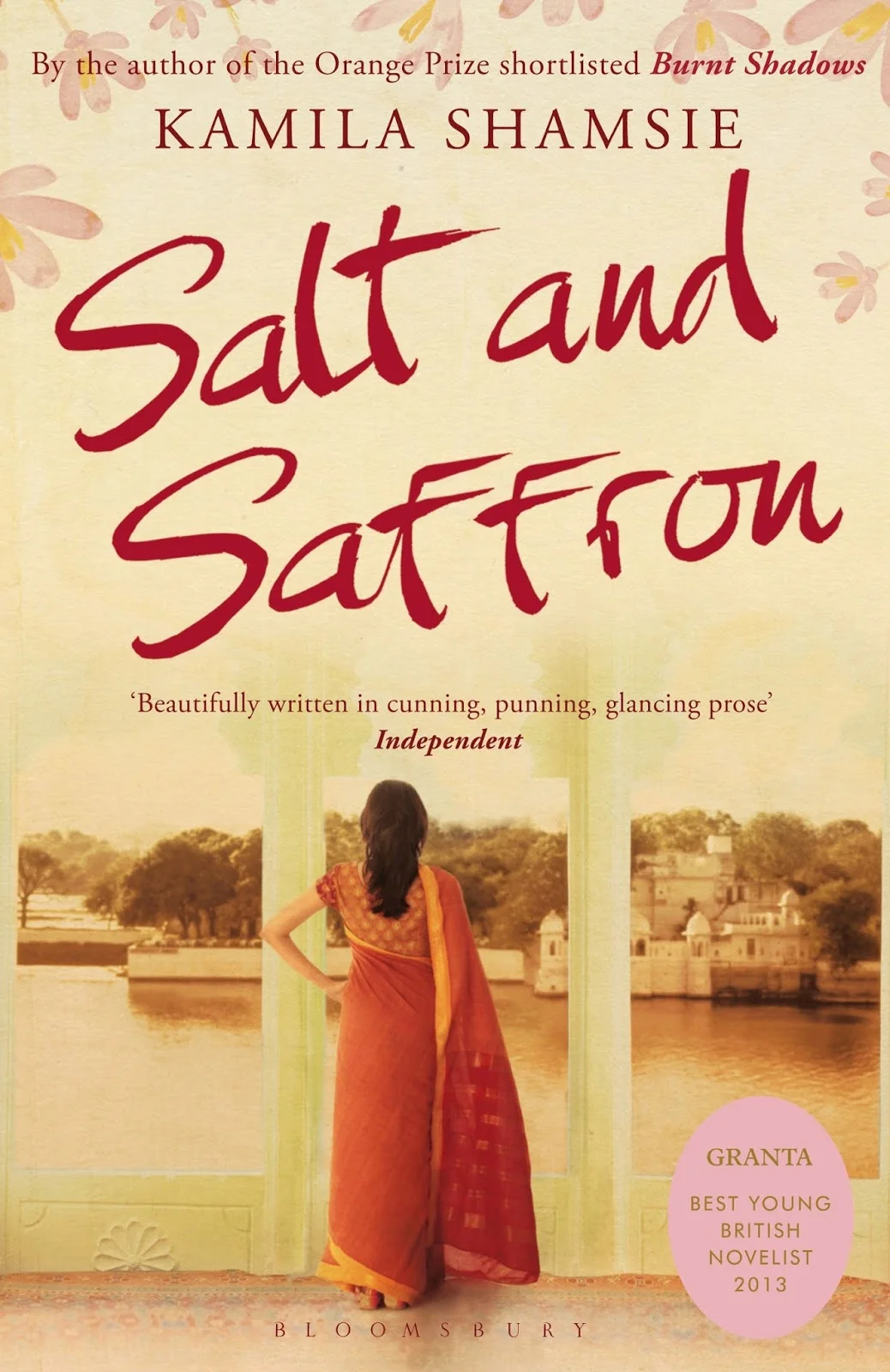
Salt and Saffron is Kamila Shamsie’s sophomore novel. Published in 2000, the book is, on surface, about the relationship between Aliya and Mariam, her aunt who mysteriously leaves the family, a scandal that everyone speaks about (and doesn’t), interspersed with the story of the convoluted, once-princely Dard-e-Dil family and its curse (or blessing?), of sorts, of not-quite twins.
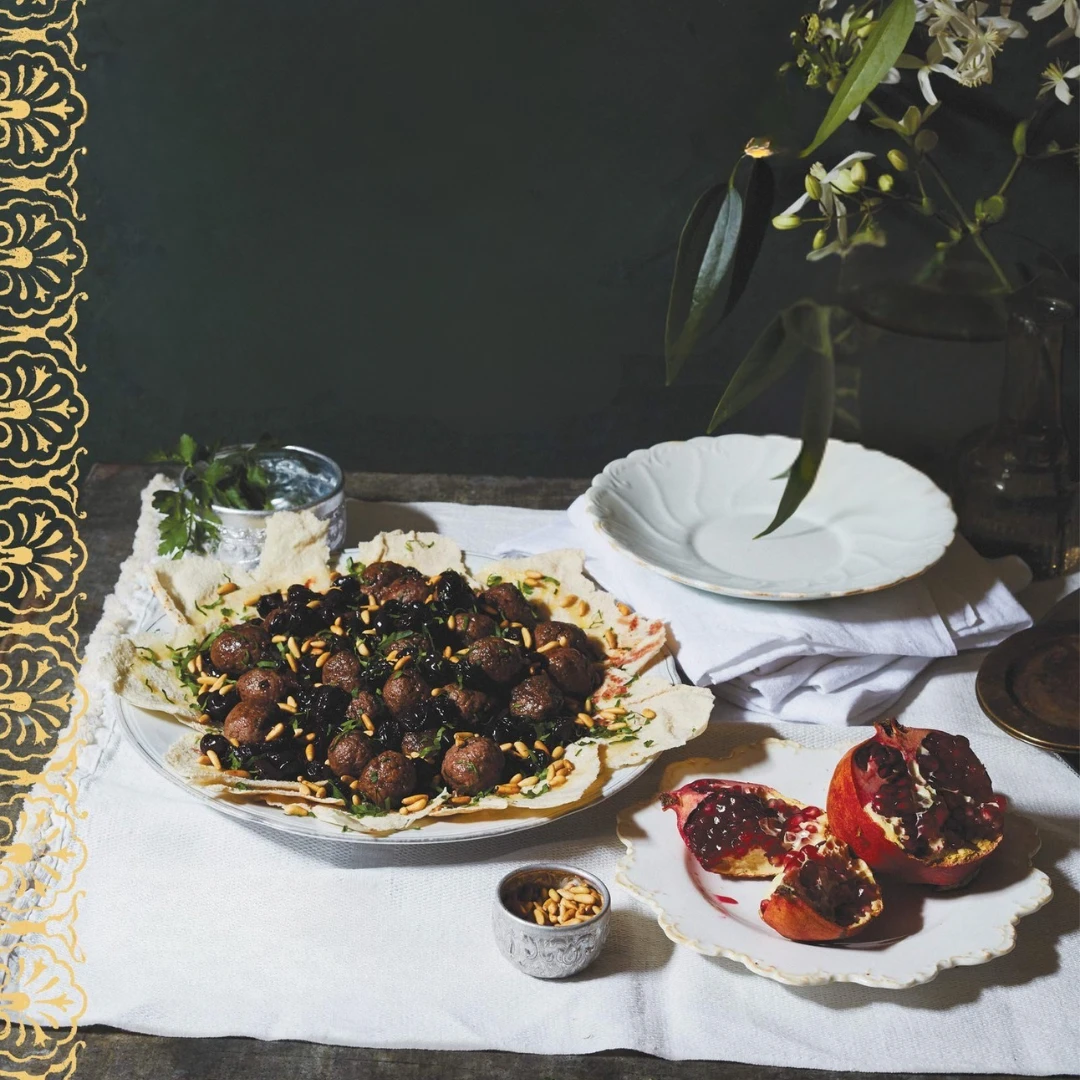
I think it’s ridiculous and restricting to put labels on fiction, so I could tell you that this is a book about class and social politics. It is also a romance and a family drama. It is also about a literal language: of food. This is a novel told by a Karachiite writer in the way that it describes meals: with obsession, with the kind of maniacal, proselytising zeal that makes people think of Karachiites as slightly unhinged, in the way that locals seek out the best biryani / haleem / bun kebab / lemon tart / pairing of Slims — and believe in the superiority of that choice forever. (For every Karachi person who says they know the best biryani / haleem / nihari / samosa, there is another person who knows one better.) It is a story told in the way a Karachi person tells you a Karachi story, where taunts and tarts are seamlessly woven in. Or, as Sameer, one of the characters, says: ‘There is no digression, only added detail’.
Shamsie’s Karachi novels, and particularly Salt and Saffron, felt — and still feel like — a memorialisation of a certain kind of urban experience for young adults. Karachi is indescribable, but Shamsie manages to take on this task.
Maybe, just maybe, this is a true Karachi novel, undefinable in the way the city by the sea has always been, observed in the way only someone who understands the world it is drawing the reader into can do well. It is also, just exceptionally good; funny, sharp, shocking, well-observed. Is it a book about Karachi? Not quite.
Of course, one could say that Salt and Saffron is timeless and worth revisiting on its 25th anniversary, because it is about class. Stories of class — the invisible lines and physical bridges, the divides between the haves and the have-nots — are timeless; these stories have been told for generations, and continue to do so. But what Salt and Saffron does well and with levity, is spinning this other, magical story at the same time: of the Dard-e-Dil family beset with the usual problems of the once-royal families, of familial politics, inherent biases, misunderstandings and the crises brought on by Partition, as well as other larger-than-life characters, to the point where it’s easy to be just as invested in the travails of the Dard-e-Dils as in the story of Mariam and Aliya.
Aliya, the protagonist, is very much a creature of Karachi — sometimes outwardly bristling, aware of her position in the world. But, she never comes out and says: privilege. There is often a bizarre expectation of novelists to handhold their readers as they gently introduce them to a new world; that fiction needs to line up with a reader’s lived experience — an impossible task, and frankly, inane. Readers don’t need to be hit over the head with descriptions of class or Clifton, to have a billboard declaring where they come from. There is a reason this book only refers to the ‘Club’; that the unsuitability of an American-born Pakistani whose relatives live in Liaquatabad is explained as ‘there is no one we know who would have exchanged phone numbers with him’. What the book digs at sharply, is the potent mix of self-righteousness with self-awareness, but again, without the handholding, beating the protagonist’s (and reader’s) head against the wall, without the hectoring that could have rendered this plot charmless.
Shamsie’s Karachi novels, and particularly Salt and Saffron, felt — and still feel like — a memorialisation of a certain kind of urban experience for young adults. Karachi is indescribable, but Shamsie manages to take on this task. Take the depiction of boys driving in Karachi, which is still one of the best descriptions I’ve ever read: ‘Karachi boys have a distinctive one-handed way of driving, though I hadn’t realised that until I went to America. They push their seats further back than is necessary, keep one hand on their left thigh, ready to shift over to the gearbox, extend the other arm forward, absolutely straight, and grip the top of the steering wheel. When the time comes to turn, they unfist their right hand, hold the open palm against the wheel, and make the turn, the circular motion of their hand suggesting that they’re miming the actions of a window-cleaner with a wash cloth. It’s only silly when it isn’t sexy’. Close your eyes, Karachiites, and tell me you can’t visualise this exact man, and this exact circular motion. In one of my many obsessive conversations about Salt and Saffron, a friend pointed out how Best of Friends, Kamila’s most recent novel, partly set in Karachi, also has a key moment in a car with boys. These depictions, published two decades apart, evoke memories that can be deeply uncomfortable, unsettling, and in Salt and Saffron, silly when it isn’t sexy.
There is often a bizarre expectation of novelists to handhold their readers as they gently introduce them to a new world; that fiction needs to line up with a reader’s lived experience — an impossible task, and frankly, inane.
Salt and Saffron is often overlooked when it comes to Shamsie’s work, from the much-obsessed over Kartography (you had to be there, and by there, I mean the Pakistani blogosphere in the 2000s), to the prescient Home Fire. But of all the books from my teenage years that I have reread, travelled and moved around with, this is one of the few that has survived. And so here I am, 25 years later, still laughing over miscreants being flayed, flipping back to the helpful Dard-e-Dil family tree and obsessively asking people over coffee, “So, listen, do you remember Salt and Saffron?”
But maybe I’ve been selling it wrong — perhaps the reason Salt and Saffron requires revisiting isn’t for the Karachi observations, but because this is a book about love, in the way that love plays out in families: harsh, bitter, hypocritical, transactional, conditional; that love, in concept, is great, but love in reality, in Karachi, of all places, is to navigate micro-aggressions and macro-aggressions, Starched Aunts and class divides, even within a family, the writing and rewriting of history to suit a narrative, stars on a family tree. The haves and the have-nots, the quite twins and not-quite twins, the pettiness and jealousies that span generations. There is the reality that Aliya’s education and awareness and even her biases can’t win over generations of doing things a certain way, that scandal never quite fades away, even if what the characters consider scandalous may change. Can Aliya and her mysterious aunt rewrite history and the course of the family’s future? Or is everyone destined to live their lives, tight-lipped, inwardly rebelling but always acquiescing to custom because it's the easier thing to do? As Aliya’s dadi says: ‘What we are, we are’.

Saba Imtiaz is currently writing the world’s most unrealistic romance.