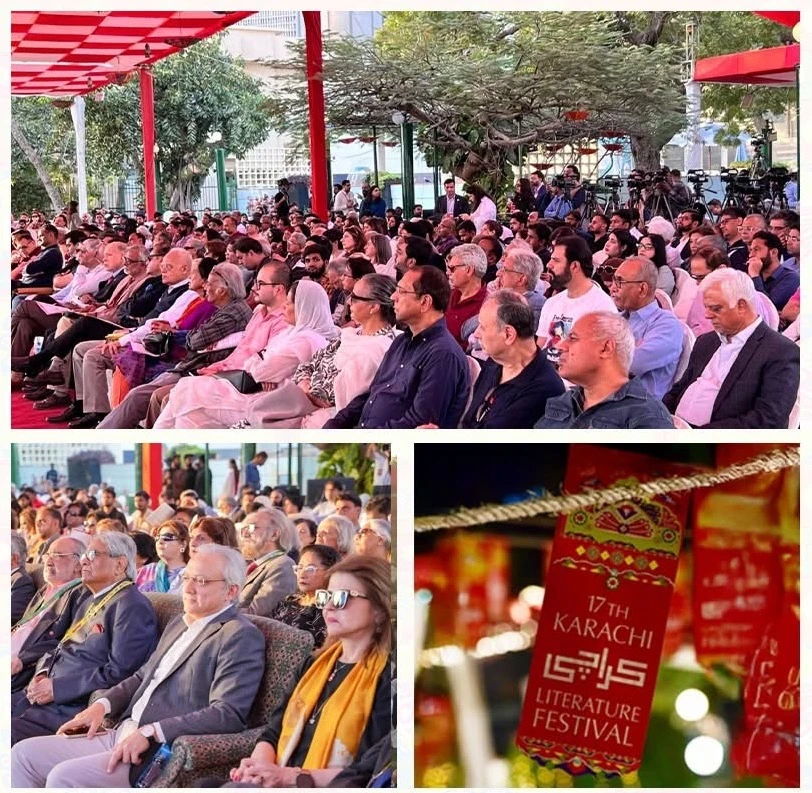
There is a particular kind of magic that settles over the Beach Luxury Hotel in February. It is a sensory experience, as much as an intellectual one: the briny scent of the Karachi mangroves mingling with the aroma of freshly brewed tea, and the distinct, rustling music of pages turning in unison. For seventeen years, this "classic venue" has served as more than just a backdrop; it is the physical anchor for Pakistan’s reading culture, a seaside sanctuary where the weight of the world is momentarily balanced by the lightness of dialogue.
As the 17th Karachi Literature Festival (KLF) unfolded under the theme ‘Literature in a Fragile World’, the hotel’s sprawling gardens became a microcosm of a much larger, interconnected geography. This year, the salt air carried whispers of the Gulf, bridging the short nautical distance between Karachi and the Emirates, reminding us that the stories of South Asia have always been deeply entwined with the currents of the Middle East.
Bridges Across the Water
One of the most compelling arcs of KLF 2026 was the exploration of Gulf diaspora voices, a theme that felt long overdue. For decades, the movement of people between Pakistan and the Arab world was often reduced to economic data points. This year’s panels, however, peeled back the layers of labour to reveal a rich tapestry of ‘transnational identity narratives’.
Take, for instance, Saba Karim Khan. As a UAE-based academic, author and documentary filmmaker, Khan represents a new generation of Gulf-based diaspora creatives who are not just living ‘abroad’, but are actively returning to South Asian literary spaces with stories shaped by the Emirates. Her presence — moderating sessions like the documentary screening W.R.A.P. (We Really Are Pakistan) — highlighted how the experience of living between two worlds creates a unique creative friction, one that challenges traditional notions of ‘home’.
This amplification of storytelling was further echoed in the work of Ammar Aziz. A filmmaker and poet whose documentaries have reached global audiences via Al Jazeera, Aziz embodies the growing role of Arab media networks in providing a stage for South Asian political narratives. His lens, often focused on the marginalised, from labourers to the internally displaced, finds a natural resonance in the Middle East’s documentary culture, proving that the struggle for justice and the art of ‘South Asian political storytelling’ know no borders.
One of the most compelling arcs of KLF 2026 was the exploration of Gulf diaspora voices, a theme that felt long overdue. For decades, the movement of people between Pakistan and the Arab world was often reduced to economic data points. This year’s panels, however, peeled back the layers of labour to reveal a rich tapestry of ‘transnational identity narratives’.
Perhaps no one captures the historical depth of this migration better than Mishal Husain. The globally recognised journalist and author has spent her career exploring the messy, overlapping edges of ‘empire, migration and Muslim diaspora identity’. In her recent work, Broken Threads, she explores the search for reason amidst the chaos of history. Her presence at KLF served as a reminder that the histories of Karachi, Dubai and London are bound by shared post-colonial scars and the enduring resilience of those who cross oceans to build new lives.
Classical Echoes and Imperial Shards
While contemporary voices provide the ‘now’, the festival also looked back to the intellectual foundations that link our regions. The Gulistan-i-Saadi Literary Sessions were a highlight for those seeking to understand the Iran-Pakistan cultural continuities. By revisiting the classical Persian traditions of Sheikh Saadi, these sessions reminded us that long before modern borders, there was a shared intellectual tradition that defined moral and ethical thought, from Shiraz to Sindh. Saadi’s Gulistan (The Rose Garden) remains a model of how literature can provide a ‘poetry of ideas’ that is as relevant in a 13th-century court as it is in a 21st-century literature festival.
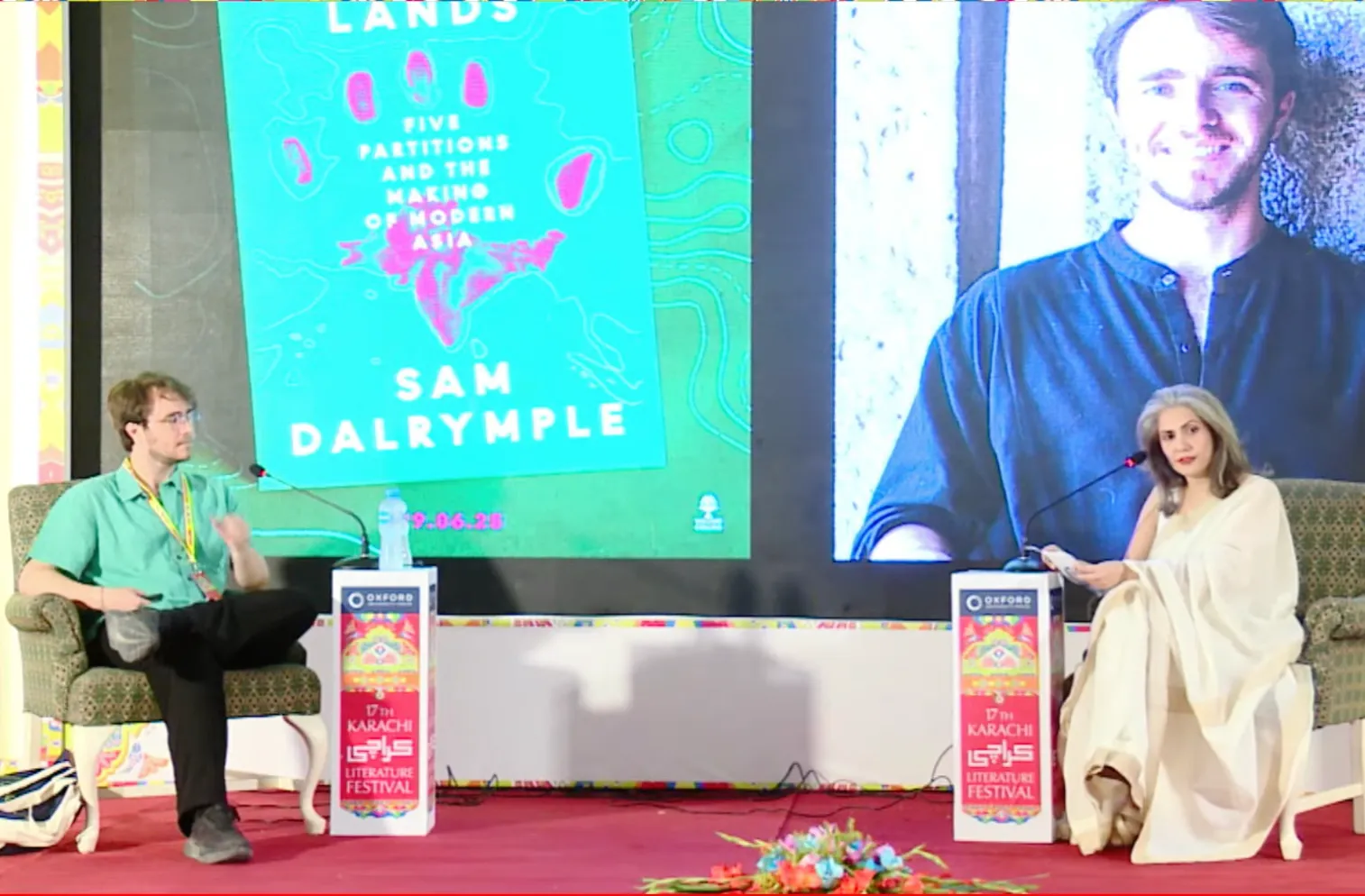
Providing the necessary context for these shifting sands was historian Sam Dalrymple. In his session on ‘imperial borders and Asian political identities’, Dalrymple delved into the ‘Five Partitions’ that unmade the Indian Empire and birthed twelve modern nations. His work provides a vital historical scaffolding for our contemporary geopolitical conversations, linking the legacies of the post-Ottoman regional shifts to the hard boundaries of modern South Asia. He helps us see that the fragility of our world today is often rooted in the ink and fire used to draw maps nearly a century ago.
Invisible Frontlines
Beyond the grand historical narratives, KLF 2026 also turned its attention to the Invisible Frontlines — the urgent, often overlooked issues that shape our daily survival.
The session ‘Women and Children's Health in the Times of Climate Change’ addressed the devastating intersection of environmental collapse and public health. Featuring experts such as Azra Pechuho, the panel underscored that climate change is not a future threat, but a present reality that disproportionately affects the most vulnerable. The importance of this topic cannot be overstated; it is a call to action to recognise that our fragile world requires a healthcare infrastructure that is as resilient as the people it serves.
Literature Today: Elitist or Essential?
At the Youth Pavilion, the next generation took centre stage to tackle a foundational question. Moderated by seasoned educators, students from various schools debated whether literature remains an essential tool for empathy or if it has become an elitist pastime for the few. This session was vital, because it challenged the festival itself to remain accessible and relevant, ensuring that the love for reading is not just a legacy but a living, breathing passion for the youth.
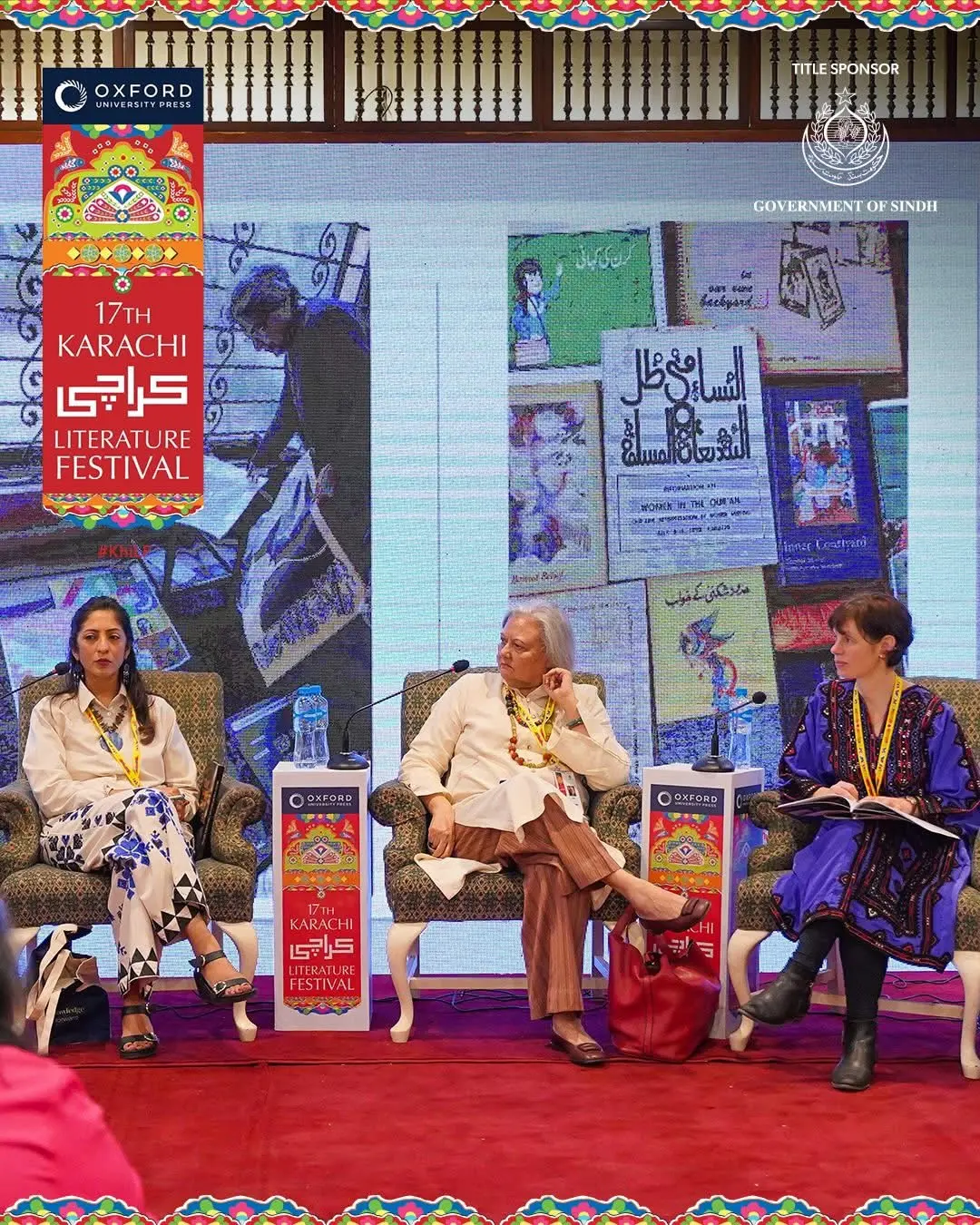
Continuing this conversation, ‘Telling Her Story: Women in Print, 1960s Onwards’ was a session dedicated to the female voice in publishing, where panellists such as Madeline Clements (project head for Editing Women in the Archives handbook) along with researcher Tazeen Hussain and curator Niilofur Farrukh, discussed the hurdles and triumphs of women in publishing (and in print). The importance of this topic lies in its reclamation of the narrative; for too long, history has been ‘his-story’. By focusing on the women who write, edit and publish, the session highlighted the essential role of female agency in shaping the intellectual landscape of Pakistan.
As the three days of KLF 2026 drew to a close with a traditional qawwali, one was left with a profound sense of why? In a world that often feels fractured and increasingly digital, these festivals are essential because they provide a physical space for reflection and dialogue.
At the Youth Pavilion, the next generation took centre stage to tackle a foundational question. Moderated by seasoned educators, students from various schools debated whether literature remains an essential tool for empathy or if it has become an elitist pastime for the few. This session was vital, because it challenged the festival itself to remain accessible and relevant, ensuring that the love for reading is not just a legacy but a living, breathing passion for the youth.
They remind us that despite our different backgrounds, whether we come from the Gulf diaspora, the heart of Lahore or the bustling streets of Karachi, we are all searching for ‘points of light’ in the darkness. KLF is more than a series of book launches; it is a celebration of our ‘shared humanity’ and a testament to the ‘enduring power of literature’ to connect us, even in the most fragile of times. It is here, by the mangroves and the sea, that we realise our stories are not just our own, they are the threads that hold our collective world together.
All photographs via KLF social media.
Sara Danial is an independent writer from Karachi, Pakistan.