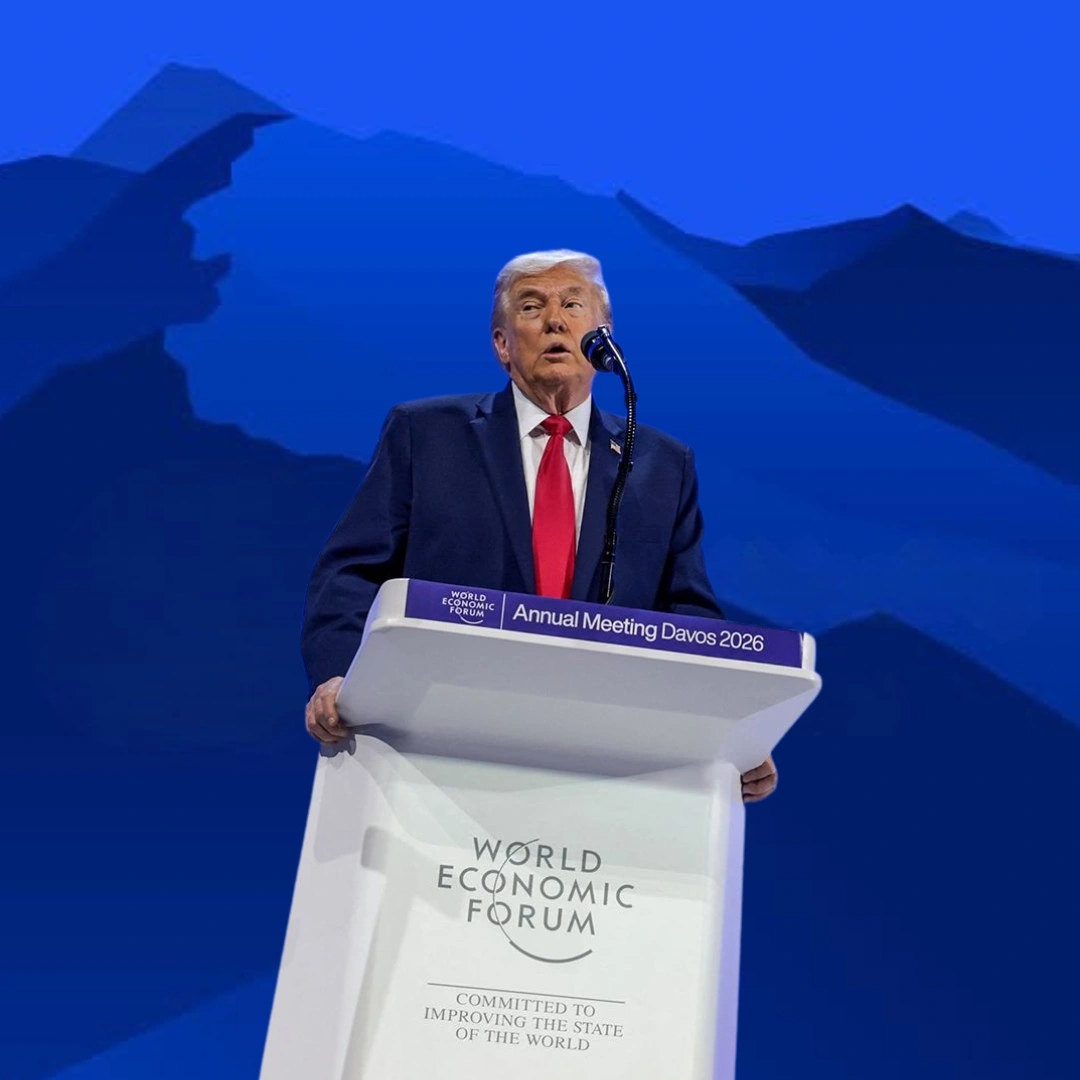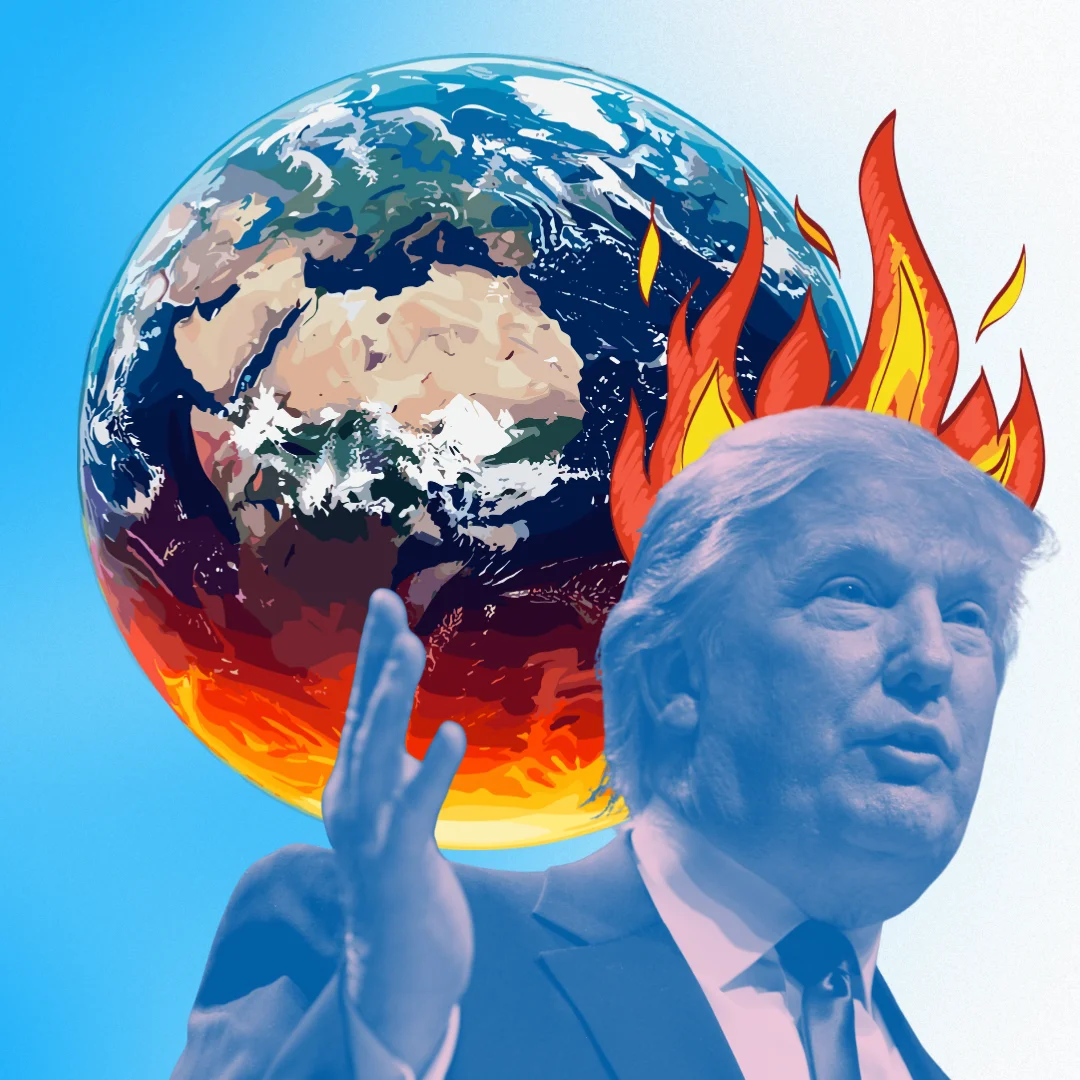
Donald Trump has always treated global governance less as a shared responsibility and more as a transactional marketplace. From questioning NATO’s value to withdrawing from multi-lateral agreements, his worldview has consistently placed national interest, narrowly defined, above collective action. Recent signals around renewed interest in Greenland and announcements of a withdrawal from the United Nations Framework Convention on Climate Change (UNFCCC) and 65 other international bodies reflect a familiar pattern. What is new, however, is the context. The world is deeper into the climate crisis, geopolitical competition in the Arctic has intensified and global climate diplomacy is already under strain. All in all, these developments raise serious questions about the future of global climate action.
Trump’s interest in Greenland is not new. During his first term, his suggestion that the United States should ‘buy’ Greenland was widely mocked, dismissed as a diplomatic oddity. Yet beneath the spectacle lay a strategic logic. Greenland is rich in critical minerals, strategically located in the Arctic and increasingly important as melting ice opens new shipping routes and resource opportunities. Climate change is what makes Greenland geopolitically valuable. Ironically, the very crisis Trump has repeatedly downplayed is the reason major powers are now competing for influence in the Arctic.
On one hand, Trump’s rhetoric signals climate scepticism and hostility toward multilateral climate institutions such as the UNFCCC. On the other hand, his strategic instincts acknowledge the material and geopolitical consequences of a warming planet. This is climate realism without climate responsibility. It recognises opportunity, while denying obligation.
A withdrawal from the UNFCCC would be far more consequential today than it was during Trump’s first term. When the United States announced its intention to leave the Paris Agreement in 2017, global momentum carried on despite the shock. The European Union reaffirmed its commitments, China positioned itself rhetorically as a climate leader and subnational actors within the United States attempted to fill the gap. However, this time, the global context is far less forgiving.
Climate diplomacy is fragmented. Developing countries are increasingly frustrated with unmet climate finance promises. Loss and damage mechanisms remain politically contested and financially underdeveloped. Trust between the Global North and Global South is fragile. In this environment, a US exit from the UNFCCC framework would not merely weaken ambition, it would undermine the legitimacy of the entire system.
On one hand, Trump’s rhetoric signals climate scepticism and hostility toward multilateral climate institutions such as the UNFCCC. On the other hand, his strategic instincts acknowledge the material and geopolitical consequences of a warming planet. This is climate realism without climate responsibility.
The UNFCCC is not just a treaty; it is the institutional backbone of global climate co-operation. It provides a platform for negotiations, reporting mechanisms, scientific assessments and finance discussions. If the United States, historically the largest cumulative emitter, signals that it no longer recognises this framework, it legitimises disengagement by others. Climate nationalism will become contagious, prompting other countries to follow suit.
The implications for developing countries would be particularly severe. Many low and middle income countries rely on the UNFCCC process to access climate finance, technology transfer and capacity building. They also rely on it to make their voices heard in a system otherwise dominated by powerful states. A weakened UNFCCC risks becoming an empty shell that is heavy on conferences and light on real impact.
The Greenland episode also exposes a deeper shift in how climate change is being reframed by powerful actors. Increasingly, climate change is not discussed as a shared existential threat, but as a driver of strategic advantage. Melting ice becomes accessible, while rising temperatures become new trade routes and scarcity becomes leverage. In this framing, co-operation gives way to competition.
It is also worth noting that US withdrawal from climate leadership does not create a vacuum that is easily filled. China, often cited as the alternative leader, has its own contradictions. While it has invested heavily in renewable energy, it remains heavily dependent on coal and prioritises development flexibility over binding commitments. The European Union, while normatively committed, lacks the geopolitical weight to enforce global alignment on its own. The result of all this is a leaderless climate regime.
Trump’s posture toward the UNFCCC reflects a broader scepticism of multi-lateralism itself. In his worldview, international agreements constrain sovereignty without delivering tangible benefits. Climate agreements are framed as economic burdens, rather than insurance against systemic risk. This framing resonates domestically, especially in polarised political environments where climate policy is weaponised in cultural and economic debates.
Yet, for countries like Pakistan, the costs of global disengagement are neither abstract nor distant. Climate-related disasters already impose severe economic and human losses each year. From catastrophic floods to prolonged heat waves and water stress, Pakistan consistently ranks among the most climate vulnerable countries, despite contributing minimally to global emissions. Disruptions to global supply chains raise food and energy prices domestically and fiscal space shrinks as disaster response consumes public resources.
The Greenland episode also highlights a moral imbalance that resonates strongly in the Global South. When powerful states seek strategic advantage in climate-affected regions while distancing themselves from responsibility for climate mitigation, it reinforces a deeply unequal global order. It suggests a future where wealthier nations secure assets and opportunities created by a warming world, while countries like Pakistan absorb the human and economic costs of floods, displacement, and lost livelihoods. This is not adaptation in any meaningful sense. Instead, it is the externalisation of climate risk onto those least equipped to bear it.
Yet, for countries like Pakistan, the costs of global disengagement are neither abstract nor distant. Climate-related disasters already impose severe economic and human losses each year.
For global climate efforts, the immediate danger for Pakistan is an erosion of trust and delivery. Lower ambition by major emitters translates into fewer resources for adaptation and resilience. Delays in climate finance undermine national planning and weaken already fragile institutions. Pakistan’s climate action depends heavily on the credibility of international commitments, particularly on finance, technology transfer and loss and damage. When influential actors signal indifference to these obligations, the consequences are felt most acutely in vulnerable countries.
The longer-term risk is normalisation of disengagement. If stepping away from the UNFCCC framework becomes politically acceptable for major powers, developing countries will be left navigating climate impacts without meaningful global support. Climate co-operation could drift away from a rules-based, multi-lateral system toward selective partnerships shaped by strategic interest rather than climate need. For Pakistan, such a shift would represent a fundamental setback, weakening both its negotiating position and its ability to protect its people from an increasingly unstable climate.
Ultimately, the Trump-Greenland-UNFCCC triangle tells us that climate change is reshaping geopolitics in real time. Climate change demands co-operation precisely because its impacts are uneven and interconnected. Walking away from the institutions designed to facilitate that co-operation makes the world more unstable. The future of climate action depends not only on emissions targets and finance pledges, but on whether major powers still believe that shared problems require shared solutions.

Ahmad Jamal Wattoo is a development professional who currently works at the Punjab Clean Air Program within Punjab's Ministry of Planning and Development. He has previously worked at the World Bank's Information Technology Solutions division and the United Nations Department of Peacekeeping Operations. He writes on Pakistan's energy, environment and economy.