For a generation that remembers the Lal Masjid operation unfold live on television, Atif Aslam and his music have been something of a barometer of changing times. His career, almost accidentally, maps the anxieties, aspirations and contradictions of a country that has spent the better part of two decades lurching from one kind of crisis to another.
Consider 2007. Maulana Abdul Aziz was escaping the Lal Masjid premises dressed in a burqa; suicide bombings and militancy were beginning to reshape the national imagination; and Shoaib Mansoor’s Khuda Kay Liye arrived as a cinematic response to the post-9/11 moment, arguing for a softer, more introspective Islam against the increasingly visible extremism and Islamophobia around it.
Somewhere in the middle of all this, Atif Aslam released Meri Kahani, his third album, and, as it would turn out, his last for 18 years.
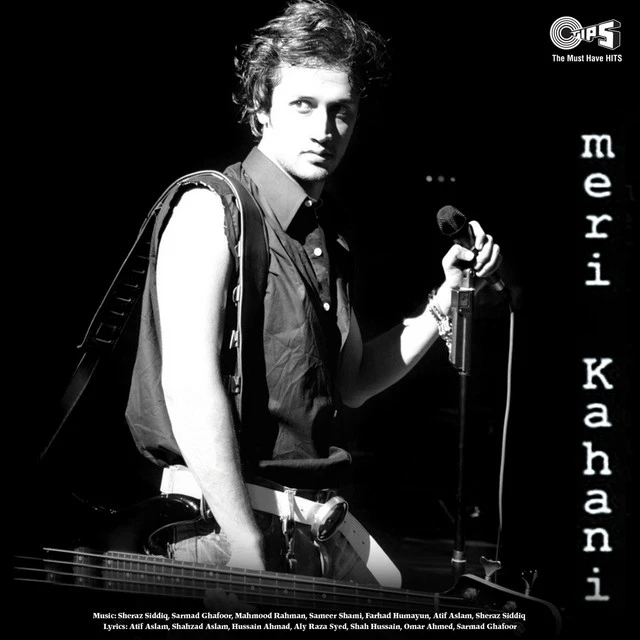
That absence is remarkable. Atif did not disappear. Quite the opposite: he became one of the most recognisable Pakistani voices across borders, survived the years of suicide bombings and terrorist attacks, navigated the rupture caused by the Bollywood ban, endured Covid and blessed us by recording the Azaan in his voice, while occupying that peculiar space reserved for artists who become bigger than the medium that first made them famous.
He did all this without needing the conventional currency of a new album. In fact, the album itself ceased to be the necessary unit of relevance. Singles, film songs, Coke Studio and streaming could keep an artist culturally omnipresent without requiring the larger, more deliberate statement that a full-length album demands.

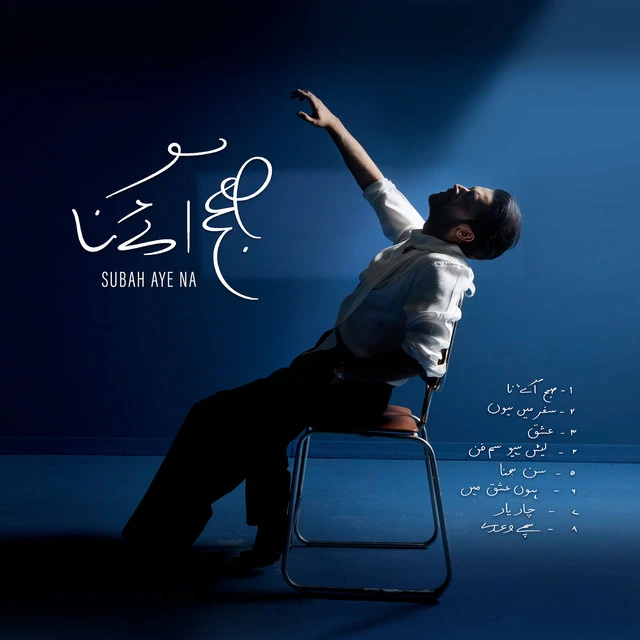
And now, after 18 years, Atif has made that statement. Subah Aye Na is packaged less like something an artist needed to release and more like something he wanted to say. Even its title carries that distinction. Subah Aye Na sits ambiguously between a plea and a doubt – closer to “won’t morning arrive?” than to a confident declaration about the inevitability of this morning. This is not optimism sung with certainty. It is a request to time itself, hedged by the possibility that it might go unanswered, and shadowed by the darker NFAK compositions that have always hovered over Atif’s musicality. That ambiguity is the album’s central argument compressed.
There are moments where the introspection sounds almost forced: the kind of inward-looking music an artist is expected to make after crossing 40, rather than the kind of introspection that has emerged organically from what Atif has already been doing.
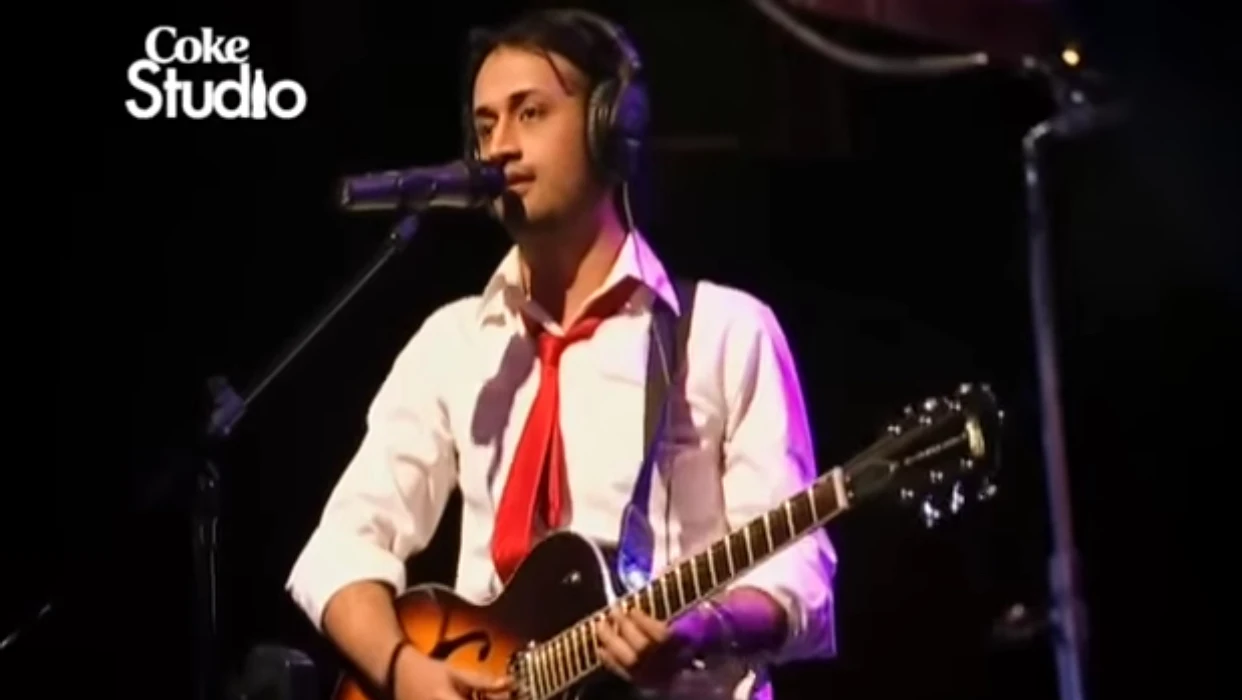
There is something particularly Atif-like about that uncertainty. From looking for a kinara – a shore on which to anchor himself – in his massive Coke Studio rendition, a song that introduced many global listeners to an Atif Aslam dressed in a shiny red tie, to now yearning for the morning to arrive, it seems that Atif has either still not found what he is looking for, or has accumulated too many shores to conquer.
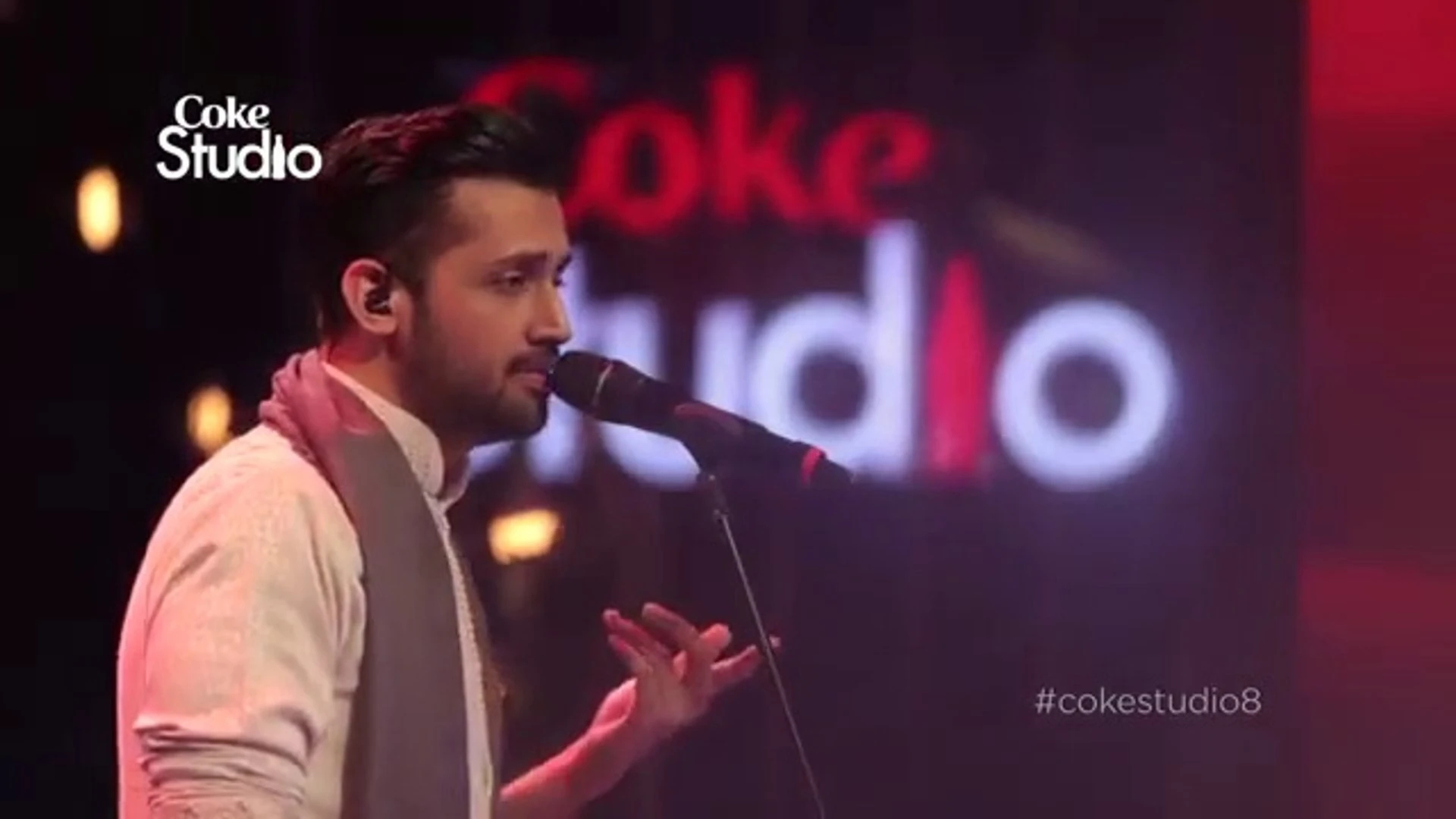
That tension is not confined to the title track. In 2025, Atif returned yet again to the imagery of the shore with ‘Kinaare’, an ode to the great Tanras Khan’s bandish of the same name, released as part of his Borderless World project. The song invokes Khizr, the mystical guide associated with helping lost travellers and boats find their way, as Atif asks for both the boat and his heart to find a shore.
The repetition is telling. After all these years, Atif Aslam is still singing about arrival. Earlier, the preoccupation was with space, and now it is with the time of arrival. It is no longer simply: where is my shore? It is: after 18 years of travelling, what does arrival even look like?
‘Kinaare’ matters because, to my ears, it represents the best Atif has ever sounded – even better than the title track of this album. It is the culmination of every musical curiosity he has accumulated: the devotional, the arifana, the Sufi, the hamd, the naat, the classical, the rock – all meeting without sounding like a musician ticking off influences.
More importantly, he sounds at home. He is no longer proving he can execute a difficult alaap or descend into a low register. He sounds like a singer who has stopped demonstrating and is simply enjoying what he can do. His evolution here also reminded us of the Atif who was our musical mascot in the world of big Bollywood giants, and through whom we discovered that Indians loved our music too, back before YouTube comment sections became the ultimate barometer of cross-border cultural appreciation.
That makes the single ‘Kinaare’ such an interesting predecessor to Subah Aye Na. Because when placed next to it, much of the new album – with the notable exception of its title track – can feel less like the continuation of that journey and more like an interruption. There are moments where the introspection sounds almost forced: the kind of inward-looking music an artist is expected to make after crossing 40, rather than the kind of introspection that has emerged organically from what Atif has already been doing.
The album features eight tracks: ‘Subah Aye,’ ‘Safar Main Hu,’ ‘Sachay Waday,’ ‘Let’s Have Some Fun,’ ‘Hun Ishq Main, ‘Char Yaar,’ ‘Sun Sajna,’ and ‘Ishq.’ Atif handles vocals and production across the record, working with composers and writers including Raj Ranjodh, Ahsan Parvaiz Mehdi, the Leo Twins, Shiraz Uppal, Shahzad-e-Ali, Omar Ahmad and also incorporates Bulleh Shah’s poetry.
Much of the record operates like a curated portfolio of moods: ballads that ache with the melodic architecture he perfected in the 2000s, mid-tempo numbers that gesture toward reinvention without quite arriving there, and production choices designed to showcase range rather than conviction. None of it is careless; much of it is recognisably Atif. But recognisability, for an artist who has spent eighteen years refusing to be pinned down, can feel like a gilded cage.
Atif has acknowledged this tension himself, insisting that he was a star for eighteen years and now he has become an artist. But there is a difference between becoming reflective and making reflection your aesthetic. The album arrives when Atif no longer needs to prove he belongs, but the album seems self-conscious, as if he’s aware that he is supposed to have something profound to say about having been here so long.
He may already have said it though. He said it in ‘Kinaare’ – in the searching, the surrender, the classical ornamentation, the low notes and those restless alaaps. He said it by returning to an old bandish and making it sound unmistakably his. He said it, perhaps, by finally sounding like a singer who had found his shore.
Which makes Subah Aye Na a rather hard-to-digest comeback, or even a comeback album no one asked for. You were doing so well, Atif - then why this forced confusion? The fact that the one song – which is the title track – that sounds raw, impactful and like something only a veteran pop star could produce is the one Atif wrote, composed and sang himself speaks volumes. For much of the rest, the album sounds like a portfolio offering the many shades of Atif, minus Atif himself. He arrives in the first song and, as the critic in me might say, disappears at sunrise.
[T]he album opts for collaborations that feel safe, as though the brief was to complement Atif rather than complicate him.
This is also where the album becomes a missed opportunity for the Pakistani industry at large. One of Atif’s previous peaks – ‘Tajdar-e-Haram’, the first Pakistani song to cross 200 million views – came through collaboration with forces strong enough to shape him. Here, the collaborations feel capable but compliant. Raj Ranjodh, Ahsan Pervaiz, the Leo Twins and even Shiraz Uppal, who was behind Atif’s defining Tajdar-e-Haram performance, are musicians capable of bringing out different sides of him, but here they seem more interested in serving the existing Atif than challenging him.
What was needed were figures like Rohail Hyatt, Mekaal Hasan, Shuja Haider, Shani Arshad, Shahi Hasan, Abbas Ali Khan, Sahir Ali Bagga and Jokhay – musicians both new and old with strong, distinctive voices who would treat Atif as an instrument rather than a vehicle. Hell, Atif had the power to rope in Shoaib Mansoor, the maestro behind Vital Signs, who directed him in his first and only film project. Instead, the album opts for collaborations that feel safe, as though the brief was to complement Atif rather than complicate him.
There is something inexplicably self-protective about our superstars – from Mahira Khan to Atif Aslam – that at the very moment they could assemble entire teams to create projects best suited to their talent, they opt for something safer, despite being among the most unharmable assets of their respective industries. Even if Atif does treat the industry as his clan, though it is rarely reported or heard, it does not reflect in what could have been his magnum opus.
And that is the irony of Atif’s comeback. He has returned at precisely the moment when Pakistani music has become more interesting, fragmented and adventurous than it was when he left the album format. A new generation of producers has emerged; hip-hop has become a dominant force; independent artists have built audiences without traditional gatekeepers; and the boundaries between classical, pop, rock, electronic music and rap have become increasingly porous.
Atif could have entered that new ground triumphantly. Instead, ‘Subah Aye Na’ asks us to look backwards. This is not quite the arrival of an artist who spent eighteen years preparing his grand statement. It is the sound of an artist confronting the burden of having become an institution.
Perhaps that is why the title matters beyond the album. For eighteen years, Atif has been one of the voices through which Pakistan has processed its own uncertainty. The country that he released Meri Kahani in has since passed through military operations, terrorism, political upheavals, economic crises, bans, elections, and even brokered a global peace deal. Every few years, citizens of this country are told that morning is coming. Every few years, we find ourselves asking whether it really is.
That may be the peculiar tragedy of us, both Pakistanis and Atif fans: we have been disappointed often enough to know better, yet remain unwilling to give up on the possibility of arrival. As Iftikhar Arif put it:
فریب کھا کے بھی اک منزلِ قرار میں ہیں
وہ اہلِ ہجر کے آسیبِ اعتبار میں ہیں
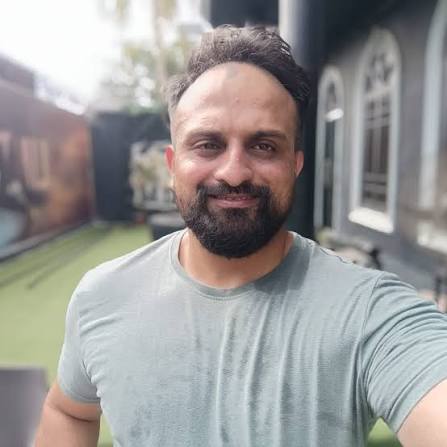
Rafay Mahmood is Assistant Professor of Practice at Habib University and writes on pop culture, digital rituals, and contemporary media culture in South Asia. 𝘏𝘦 𝘵𝘸𝘦𝘦𝘵𝘴 @𝘳𝘢𝘧𝘢𝘺_𝘮𝘢𝘩𝘮𝘰𝘰𝘥 𝘐𝘯𝘴𝘵𝘢𝘨𝘳𝘢𝘮 @𝘳𝘢𝘧𝘢𝘺_𝘮𝘢𝘩𝘥𝘰𝘰𝘥