“And one for my sister!”
There were always children asking for extra whenever my grandmother would give out tabaruk at the end of the ladies' majlis at my family’s imambargah in Mughalpura. She never refused the request, but made sure to ask the child to bring their sibling next time.
As an 8 years old with an overdeveloped sense of justice, I would tell her that the children never listened, they never brought the brother or sister in question, they didn’t even attend the majlis, and instead hung around the street outside the gate until she came out with the baskets of baqarkhani, weaving in and out of the exiting mourners, palms outstretched.
She never listened to me. Tabaruk was for everyone. Anyone who sat through the majlis, anyone who joined in time for the matam, anyone who arrived at the gate before the last piece was handed out.
Maulana Syed Abbas Murtaza, a Shia scholar trained at Hawza Ilmiyya of Qom, explains that the word ‘Tabaruk’ comes from the Arabic word ‘Barakah’ and means something that is blessed, sanctified, made spiritually beneficial and abundant via proximity — in this case, proximity to gatherings where Allah, the Holy Prophet (P.B.U.H), and his progeny are remembered, invoked, praised, and mourned. In Pakistan, the word is used interchangeably with the Persian word ‘Niyaaz’, which means a gift presented with great humility. It is typically food (less often a physical item such as a tasbeeh) distributed during or after a majlis, milaad, or jashan. While sometimes the fatiha is said over a small portion, the food’s association with a spiritual event is enough to sanctify it. Both the words and the practice have become synonymous with Shia mourning rituals, the various majalis, juloos, and taziya processions that have become a part of Lahore’s cultural and religious fabric.
My earliest memories of tabaruk are of its sheer abundance. There was always so much of it, handed out, received, stored, passed on; I’ve spent many Muharrams where there was no need to cook at home for weeks on end, because someone had sent something from a majlis.
Syed Abid Murtaza and Syed Muhammad Hassan, organisers of the 96-year-old annual ashra at Hussainiya Syed Nasir Shah in Mughalpura, describe the practice of distributing tabaruk as being taken from Dawat-dhul-Ashira, the event when Prophet Muhammad first announced his prophethood and invited his family to accept Islam. The event is reported in sources such as Tarikh at-Tabari as a feast, served before the Prophet delivered his message. Shias emulate this sunnah by providing food and drink after gatherings where religious teachings are shared, offering hospitality to mourners of the Prophet (P.B.U.H)’s grandson.
It is also meant to make attendance easier, giving mourners respite from having to earn their daily bread or cook for their families so they can spend more time in worship and remembrance. Perhaps most fundamentally, according to Abid Murtaza, the son of the prolific Mujhtahid Maulana Murtaza Husain Sadr-ul-Fazil Lakhnawi, tabaruk is primarily a way to provide dignified meals to the poor and needy, since it is often open to the public. In fact, many Shias, such as AN (name withheld for security reasons), who helps manage majalis at one of the many pre-partition imambargahs inside the Walled City, argue that it is the public nature of distribution that actually gives tabaruk and niyaz their spiritual meaning. “The same 200 or 250 people going to each other’s houses and only feeding their friends and relatives is simply not the same as opening your homes and hearts to anyone and everyone mourning Imam Hussain.”
While sit-down meals are common, more often the attendees are handed something as they leave the premises — a snack, a drink, or a full meal — depending on the time of day, and the resources of the majlis organisers. A few practicalities govern what is given out as tabaruk in most imambargahs. Tabaruk should be easy to distribute, even for sit-down meals. One or two items that can be quickly assembled in plates and passed around are preferred. Otherwise, anything dry that can be packed and carried away with ease is the norm. Sheermal or taaftaan, bun, baisani roti, plain or alu naans, chana chawal, sabzi chawal, and chicken pulao are popular choices. Winter Muharrams have even more variety as food is less likely to go bad, with people adding palak gosht, qorma, or qeema naans to the rotation. Both halwa and haleem retain a special place on the tabaruk menu during every season of course. The former, as it is a customary funeral food that keeps well and is simple to make. The latter, because many Shias connect the dish to popular reports of the first meal served to Imam Hussain’s family after his martyrdom. It is reported that the widow of Hurr Ibne Yazid gathered whatever ingredients she had at hand in Kufa and prepared a mixed stew before rushing to the aid of the Imam’s women and children, breaking their three-day fast.
Over the years, as Shias have continued to give food in remembrance of Imam Hussain’s hunger, their brothers from Ahl-e-Sunnat have committed themselves to keeping alive the more painful memory of his thirst. Most sabeels have been and remain in their charge.
My earliest memories of tabaruk are of its sheer abundance. There was always so much of it, handed out, received, stored, passed on; I’ve spent many Muharrams where there was no need to cook at home for weeks on end, because someone had sent something from a majlis. Feeding mourners at this scale is possible because of a meticulous level of organisation amongst Lahore’s Shia community. Lahore’s public Muharram activities date from the early 19th century, when Baba Syed Ghulam Ali Shah of Gamay Shah reportedly carried a taziya through the streets, mourning the martyrs of Karbala, at first defying and then winning over the ruler Raja Ranjit Singh, who gave him some land to practice his devotions. The Gamay Shah Imambargah was built on this land in 1877 and has since been the ending point of multiple mourning processions, including Lahore’s main Muharram juloos that originates from Nisar Haveli near Mochi Gate. For at least 170 years, this procession has begun at midnight on the 9th of Muharram and passed through the Walled City, concluding at Karbala Gamay Shah on the evening of the 10th of Muharram. As time passed and especially after newer Muslim communities migrated to Lahore after partition, from Krishanagar to Shadman, Shias began to organise additional majalis and juloos. They took care to hold them on the 9th to avoid clashing with the Nisar Haveli procession.
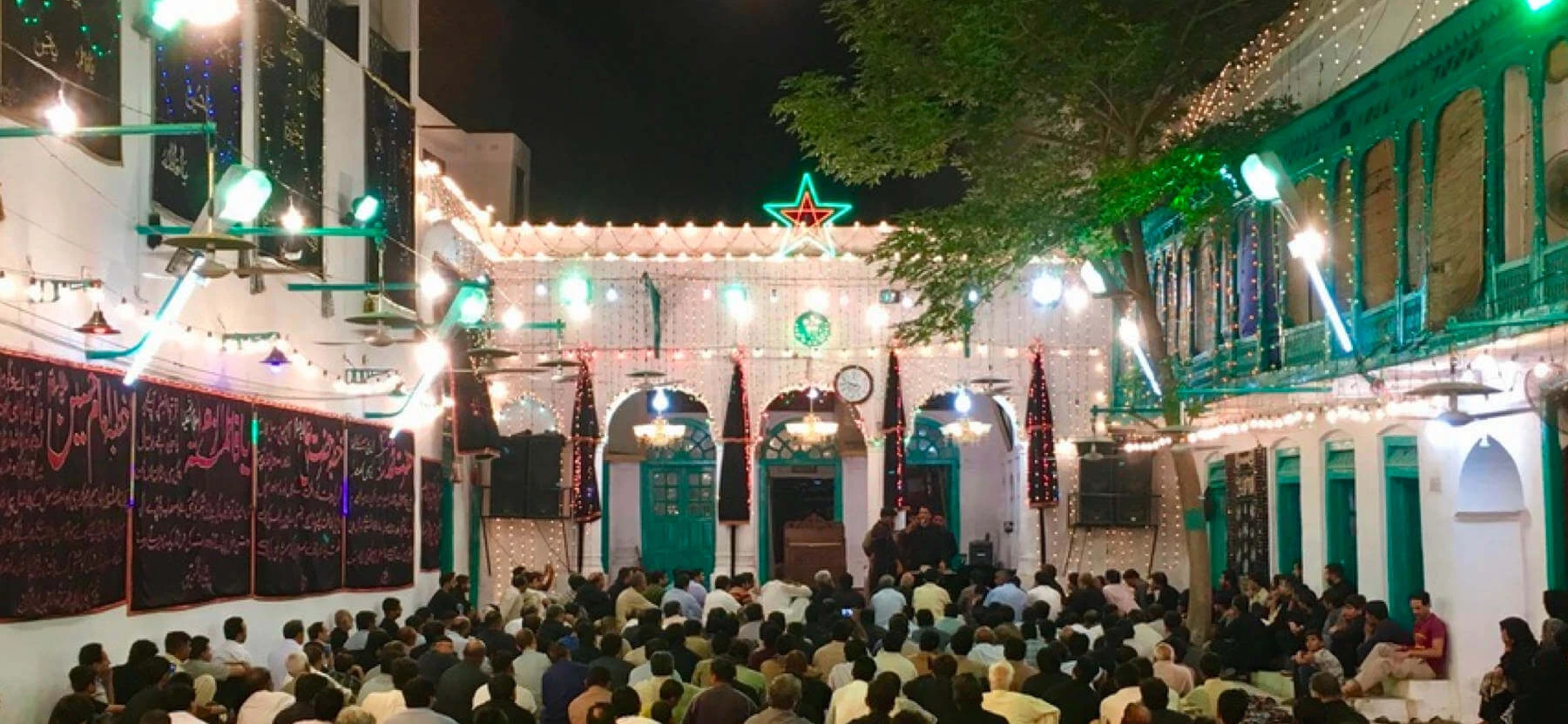
Today, multiple imambargahs and majlis organisers in the same area sometimes stagger their timings and dates. Even for the smaller private majalis, homeowners have long coordinated, announcing the week's schedule at each other’s houses, and men and women go from one gathering to the next, spending multiple hours in recollection and weeping. There are now many Shias with the means and the fervour to keep majalis going all day and all month. This gruelling routine requires sustenance. And just as the community comes together to make sure each majlis is well attended, they also come together to ensure that the attendees are well-fed.
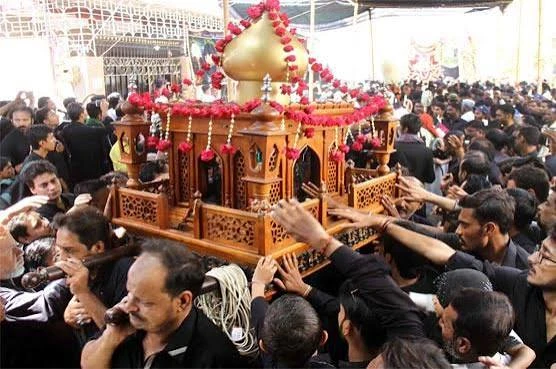
Modern Shia communities in the newer parts of the city, such as Johar Town and Model Town, are more scattered, but just as well connected. Syeda Gulezahra Rizvi is part of a women’s WhatsApp group that even holds annual elections. The elected representative is responsible for filling in the year’s majalis calendar through Muharram and Safar, reaching out to members and choosing the home that will host the first ashra. During the first 10 days, different women are charged with bringing and serving tabaruk to this venue.
It would be impossible to arrange and manage the food needed to feed the thousands who participate in the city’s main jalsas, which is why families, committees, and community members organising them do not try. Instead, the massive crowd is catered to by volunteers who set up sabeels of water, sharbat, milk, and tea, or distribute whatever food they are able to carry. People give out haleem or halwa folded into naan out of ‘shoppers’ swinging from motorcycle handles, and hand out boxes of biryani or pulao from the trunks of their cars. They give out portions of halwa or zarda wrapped in newspapers, or dole out milk into containers. In any given year, the mourner may also receive kebabs wrapped in parathas, roast or steamed chicken, fruits, nuts, mithai, packaged snacks such as biscuits and chips, cartons of milk, juice, cans of soda, and even burgers, pizzas, and sandwiches.
Food and service everywhere have evolved over the years. If wedding menus can be elaborate, then why can’t food that has the rich and the poor eating side by side from the same type of humble plastic plate?
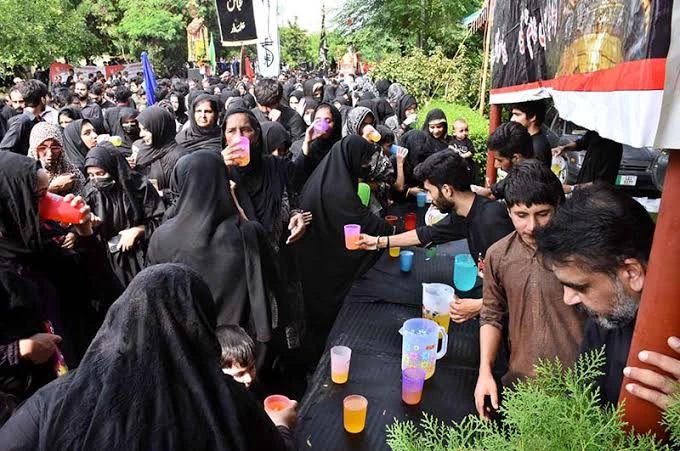
For larger ashras such as those that occur at Imambargah Gulistan-e-Zehra on Abbot Road or Khaima-e-Sadaat in Anarkali Bazaar (where over 6000 people may be in attendance), majlis organisers focus their energy on the comfort and security for the thousands that attend. In terms of food provision, they allow visitors to either distribute small amounts of tabaruk inside the premises, or leave it with organisers at the gate where members of the security team hand single items to people as they enter or leave. Over the years, citizens wishing to serve in the name of Imam Hussain have built satellites of service around these landmark gatherings, establishing points of distribution where mourners can rest, eat, and drink. Some develop a distinct identity via their service. For example, there is a sabeel on Chowk Nawab Sahab that only serves a sandalwood sharbat, or an alley in Ramgarh that serves only halwa on the 6th, as much as the mourner would like to eat, a few doors away from a large annual majlis.
Many homes near large imambargahs, as well as those along almost every jalsa’s traditional route (most notably Shadmaan and Model Town), prepare food and drinks to hand out to passing mourners; those with the space arrange for seating as well. Sabeels for water, sharbat and tea have, for generations, typically been arranged by the Ahl-e-Sunnat community, and children arranging their own sabeels in older neighbourhoods such as Mughalpura and Wasanpura are a common sight. Syeda Gulezahra Rizvi, whose family helps manage Imam Bargah Dar-ul-Hassan in Wasanpura, tells me that children who are unable to arrange a cooler for their sabeel walk through the local 10th Muharram juloos with home-made sharbat in bottles or cool water in jugs, begging attendees to take a plastic cupful.
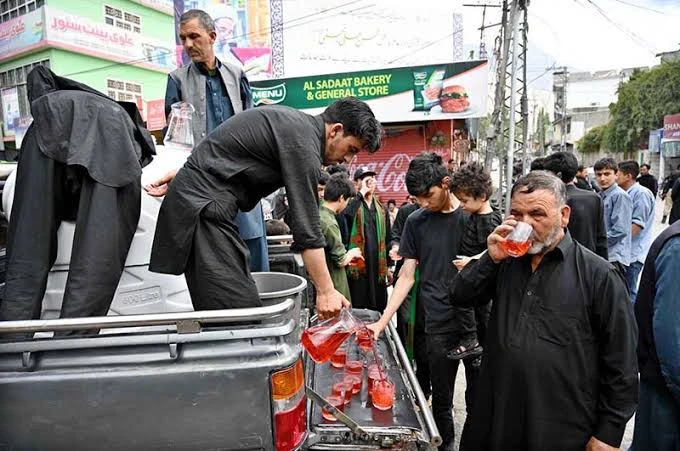
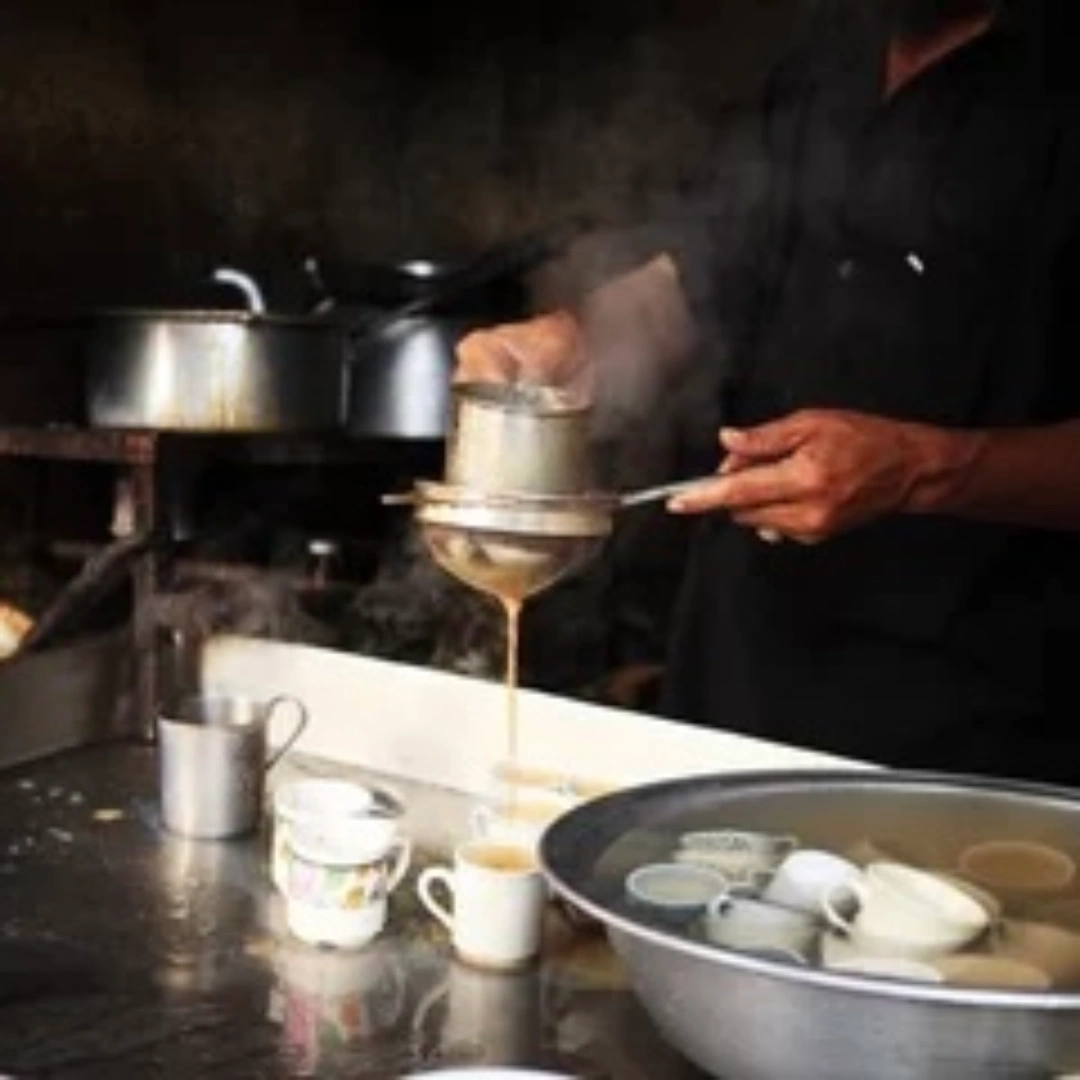
This variety is relatively modern; Hussainiya Syed Nasir Shah’s Muhammad Hassan recalls his father describing the tabaruk of his childhood in the 1950s as being plain or sweet phuliyaan (puffed rice) and chanay, two handfuls for the adults and one for the children. Sharbat, or tea in the winter, was available throughout the event. During his own childhood in the 60s and 70s, packaged buns became the norm for the men’s majlis and baqarkhani for the women’s. He recalls that even in those days, like today, large commercial bakeries such as Dawn Bread gave special offers on bulk orders during Muharram, with their vans delivering every day and collecting payment. He recalls visiting neighbourhoods in Nabipura on the 6th of Muharram, where old women would sit at their doors with a pot of halwa and spoon portions onto squares of paper, or even directly into the palm of your hand. Children would go from door to door, returning for seconds if a particular spoonful was especially delicious.
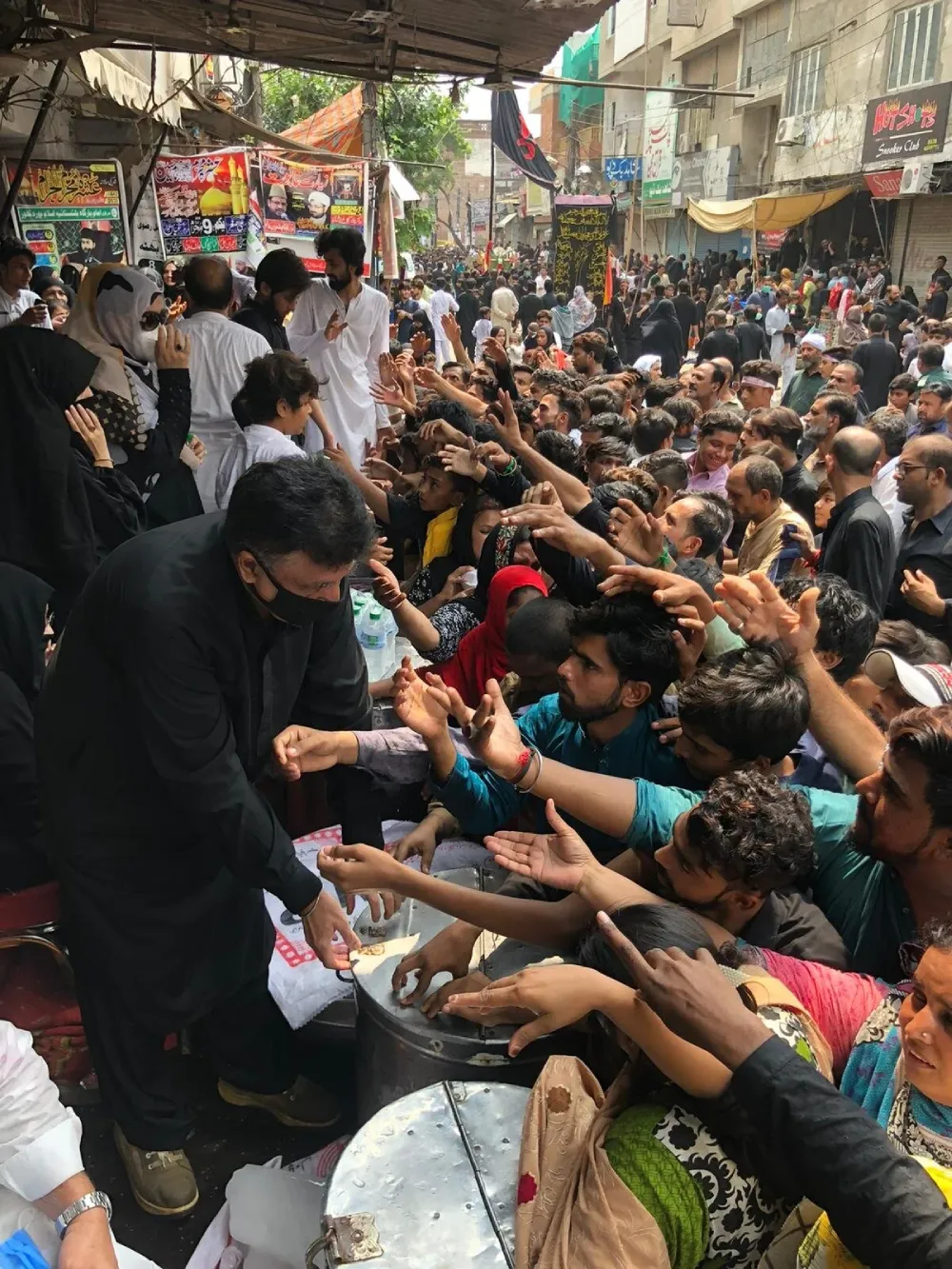
89-year-old Zulfiqar Hussain Jaffri, a lifelong member of Khaima -e- Sadaat’s organising committee, also recalls the imambargah’s very first majalis after partition and the fistfuls of peanuts and bowls of Kashmiri chai that were the only items given out to mourners during winter Muharrams. In the summer, each mourner was handed two biscuits ordered from the famous S Mohkam-Ud-Din and Sons Bakers in Anarkali Bazaar. In his youth, it was impossible to walk 10 feet in the Mochi Darwaza area on the night of the 9th and the day of the 10th without someone forcing you to accept naan haleem. Most Shias consider distributing tabaruk to be a deeply spiritual act of service, and they see no harm in the variety and increasing amounts given away as long as humility and not competition remain the driving force. Both Abid Murtaza and AN insist that food and service everywhere have evolved over the years. If wedding menus can be elaborate, then why can’t food that has the rich and the poor eating side by side from the same type of humble plastic plate?
It’s difficult to measure the economic impact of Muharram since most of the activity is informal and undocumented, but some reports cite as much as PKR 700 Billion being spent in a season on lighting, seating, sound, orator fees, and, of course, food. A niyaz that AN helps arrange for the Walled City’s main Chehlum procession on 20th Safar has, in the past, received up to 40 degs of palak gosht from a single donor. For smaller majalis with a few hundred attendees, such as the 9th Muharram Zuljinnah Ziarat at Hussainia Syed Nasir Shah, 8 to 9 degs are the norm. Ashar Rizvi, owner of a catering business that operates in the newer neighbourhoods of Askari 11, DHA and satellite communities, says that he can expect to receive up to 70 orders every season. Larger imambargahs order up to 20 degs of rice or gravies; smaller events in private homes often require between 50 and 500 units, typically boxed rice dishes, or dry meals such as kebabs or roast with naan.
Some develop a distinct identity via their service. For example, there is a sabeel on Chowk Nawab Sahab that only serves a sandalwood sharbat, or an alley in Ramgarh that serves only halwa on the 6th, as much as the mourner would like to eat, a few doors away from a large annual majlis.
Such numbers could not exist without the participation of almost every community that observes Muharram. Muhammad Hassan shares pre-Partition stories of Mughalpura that he heard from his father of Hindu neighbours visiting the Hussainiya Syed Nasir Shah to collect niyaz during Muharram when they would typically refuse other food from Muslims. Zulfqar Hussain Jaffri describes a Muharram in Ferozpur in 1946 when he visited a primarily Hindu neighbourhood and saw boxes of mithai placed outside multiple homes for mourners with a note specifying that it was purchased from a Muslim shop. Over the years, as Shias have continued to give food in remembrance of Imam Hussain’s hunger, their brothers from Ahl-e-Sunnat have committed themselves to keeping alive the more painful memory of his thirst. Most sabeels have been and remain in their charge. When asked about the spike in hostility towards Shias due to political events in the last twenty years, both Abid Murtaza and AN insisted that the tension is simply on the surface. AN describes how things are slowly swinging back to normal, and Abid Murtaza mentions that the nai or traditional caterer that has been supplying tabaruk to multiple imambargahs in his area for decades is Sunni.
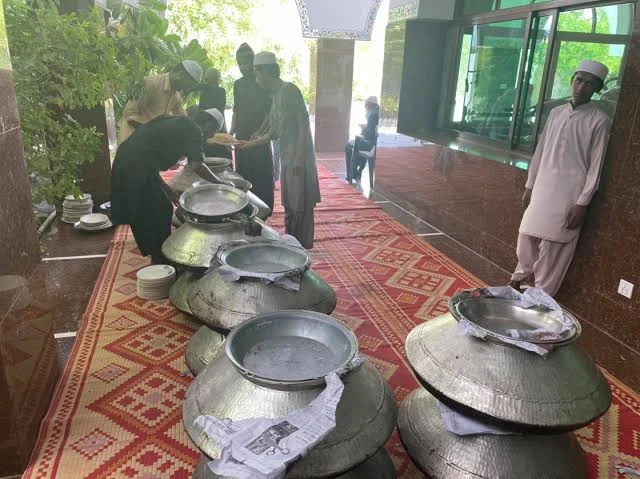
Muharram is, and always has been, about the collective. Muhammad Hassan has lost count of the number of times neighbours, relatives, and strangers have stepped in to make sure that arrangements have remained satisfactory. For a few years in the 2010s, a well-known caterer arranged for multiple degs of biryani, and one year someone simply handed out a few hundred Subway sandwiches. Once, during a winter Muharram, when he ran out of funds to arrange a sabeel of tea for the Zuljina Ziarat on the 9th, a Sunni lady stepped in. While she usually set up a sabeel for that date at Data Darbar, she had seen herself in a dream setting it up at Hussainia Syed Nasir Shah instead. Abid Murtaza gives this event a less mystical, though still emotional, interpretation: “Because the community, Shia or Sunni, takes ownership and great pride in the Muharram activities they participate in, anything lacking causes them a lot of anxiety. This can manifest in signs and dreams, spurring them to action by giving them an excuse to help.”
Nazar-e-Maula, Niyaz-e-Hussain is the phrase that many people associate with tabaruk distribution. Maulana Abbas Murtaza tells me that in Arabic, the word Nazar means promise or to make an obligation out of something that was not compulsory before. Here, the promise is to Allah: an act of worship, an act that might hasten the acceptance of prayers, something done simply to collect sawab for oneself and one’s family. The food and water are distributed in the name of one who gave up everything for Allah and Allah’s religion, inspiring a movement that is alive and well today. Those who distribute tabaruk, or niyaz take pride in providing this service, as far as possible, with their own two hands. It is typical to treat the receiver as a revered guest, and to save all year to be able to serve them with the best possible food. Niyaz is a gift given in great humility. Most attendees will testify to food and drink being forced into their hands, to elders and children begging them to take five minutes to sit and eat with them, to there being no questions asked, no barriers created.
My family's imambargah has changed a great deal since I was a child. The high-ceilinged hall with its brick-paved courtyard has been replaced with a more modern building that now also houses a madrassa. Management is now in the hands of a committee that includes community members and religious scholars. Things are more organised. Since my grandmother’s passing, my mother now hands out packets of biscuits, or juice boxes, two for the women, one for each child. Baqarkhanis have become too expensive for an entire ashra. For some majalis, women from the local community give out buns, chips, or tea cakes shaped like boats. Children still wait in the street outside the gate, and rush in only when my mother appears with her boxes. Some ask for extras for a sibling back home. Like my grandmother, my mother always gives in to requests for more, but asks them to bring the sibling with them next time. The siblings never come, and tabaruk never stops.
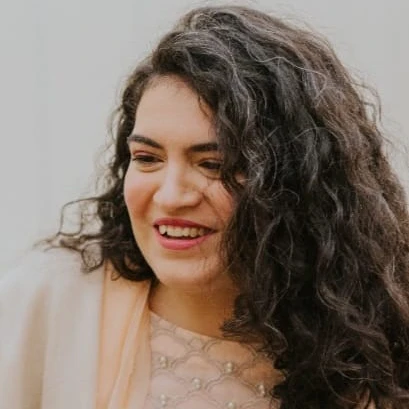
Sakina Hassan is a freelance writer who also writes short fiction and poetry. She is a Salam Award winner, has been longlisted for the Zeenat Haroon Writing Prize, and teaches writing workshops in whatever time is left from caring for her two children. You can find her @kyascenemehjabeen on Instagram.