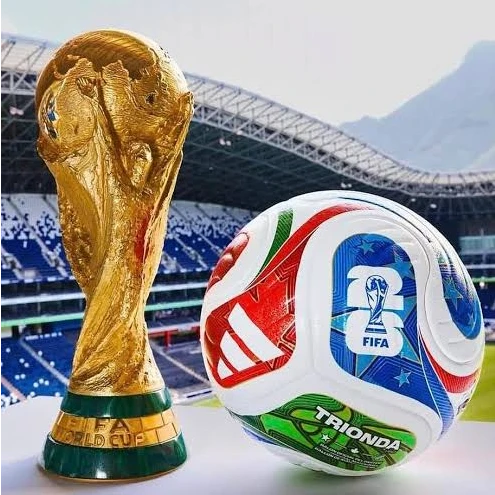
As a sporting spectacle, the World Cup remains unmatched. The past six weeks have witnessed audience engagement, viewing figures, in-person and social media discourse, and various forms of partisanship at an unprecedented scale. No other sporting event draws in representation and interest from as wide a pool of humanity as the quadrennial festival of football.
Before the tournament began, there was much debate over the expansion to 48 teams. Critics declared it to be a cash-grab on part of FIFA, purists felt it would dilute on-field quality. While some of these critiques proved to be better-founded than others, this and various other acts of football governance reveal the longstanding tension between the sport’s commercial logic and its widespread appeal as a shared, humanistic endeavour.
Expecting the sport to remain in some pure state, untouched by the broader, material context of the society within which it evolves is naïve idealism. Yet it’s still worth charting out just how transformative these shifts have proven to be.
Twentieth century capitalism first rendered professional football to be the norm, with waged players and clubs prioritizing commercial success over community entrenchment and service. Capitalism in the 21st century then monetized every living, breathing aspect of the sport, turning individual players into marketable commodities, turning clubs into brands with global reach, and turning matches into a canvas for electronic payment solutions and state-owned oil and gas companies.
Many of these shifts have close parallels in other sports. The Americans, as foremost practitioners and evangelists of the cult of capital, have taken the sports that they play mostly amongst themselves to their absolute extremes. Every square inch on the field or on screen is an advertising signboard. Every sport’s rulebook has evolved to provide as many discrete, individual events that can be interspersed with ad breaks, and every large sporting event is a marketing bonanza with some athletic action on either side.
That FIFA is one of the most corrupt and vapid entities to govern any aspect of human society remains without a shadow of a doubt. That this corruption found in the tournament’s primary host, USA, an excellent vessel for the realization of its greed, is similarly true.
One of the more painful realities is that none of this would have been possible without the creation of stark incentives for the athletes themselves. The promise of fantastical riches and unmatched glamour, and the gradual tilting of the odds in favour of players and agents (especially after football’s Bosman ruling in the 1990s) turned players into a strong lobby for the sport’s continued commercial success. And so we have ended up with a world where an individual player, rather than a team, an aesthetic, or a tactical form, represents the sport, and becomes its interface with the rest of the world.
This isn’t just because a particular technological form – social media - exists that didn’t exist in the past, nor is it down to the (debatable) notion that players today are simply better at the sport than in the past. It’s because the complete and utter immersion of all sporting spectacle into social media represents the final frontier of late-capitalism, reminding us of what philosopher and social theorist Antonio Hardt called the immateriality of labour in the present. Instead of Marx’s “nerves and sinew” serving as the primary source of profit, Hardt argued that value in the 21st century is to be tapped and extracted through attention, affect, communication, and social relations.
Throughout this tournament, as well as in its preamble, we were served reminders that the sport remains subordinate to such predatory interests. That FIFA is one of the most corrupt and vapid entities to govern any aspect of human society remains without a shadow of a doubt. That this corruption found in the tournament’s primary host, USA, an excellent vessel for the realization of its greed, is similarly true.
In quick succession, this combination gave us an expanded format to accommodate lucrative sponsors in Asia. It arbitrarily suspended Cristiano Ronaldo’s two match suspension ahead of the group games because it deemed an absence of his marketable, commoditized, extremely manicured human form an unbearable cost. It introduced hydration breaks to give advertisers a quarterly shop window, but under the laughable pretext of player well-being, even though players have played in more adverse conditions in past tournaments.
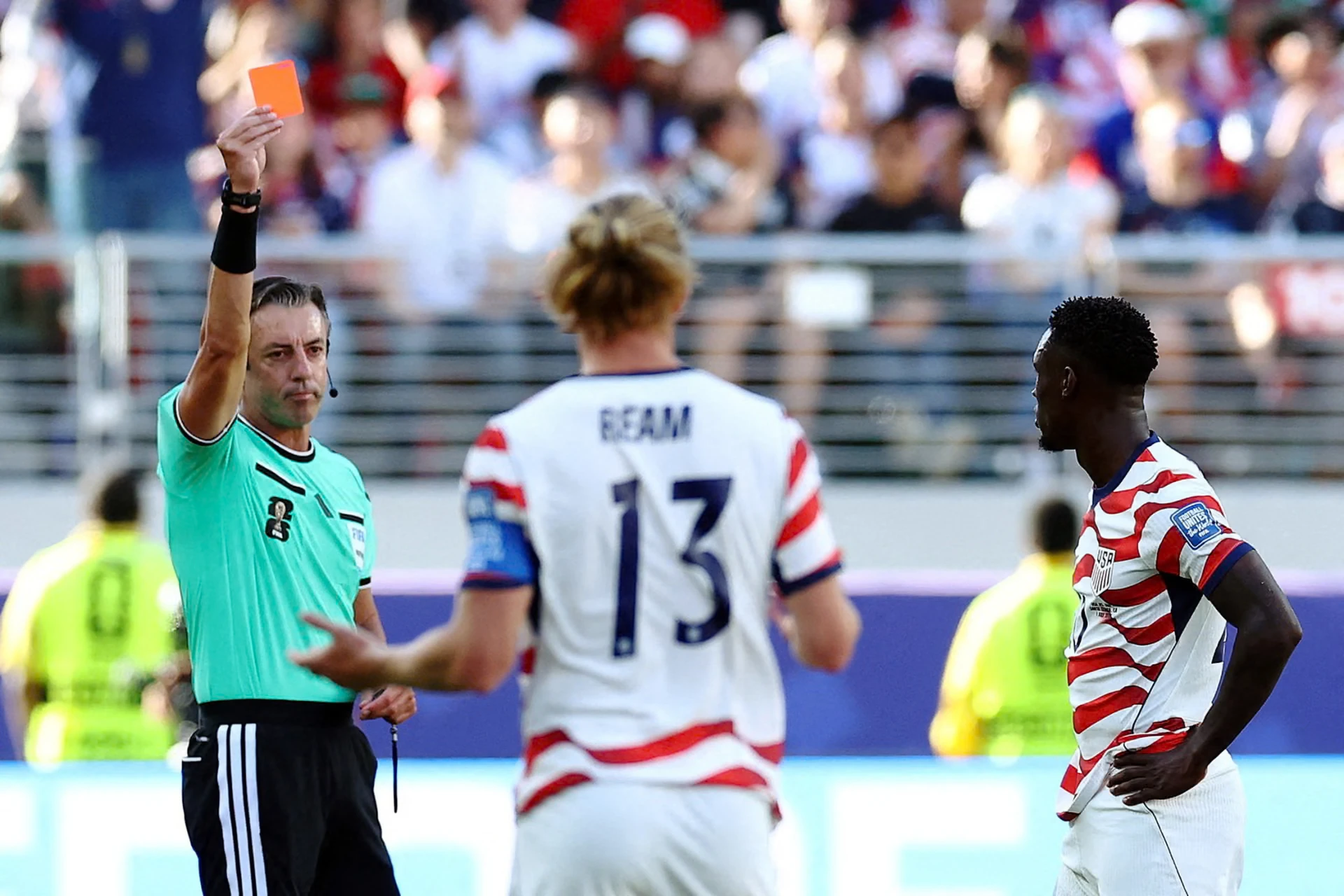
But perhaps the biggest stain remains the overturning of Folarin Balogun’s red card ahead of USA’s match with Belgium, likely through the intercession of Trump. While political machinations played their part, the commercial angle was not far behind. USA progressing in the tournament meant more eyeballs from the wealthiest society in the world.
It is frustrating to follow and love a sport that falters in its management and execution so often. And yet many of us persist because the conditions that create commercial value often carry within them the seed for subversion and for the realization of something far more humane.
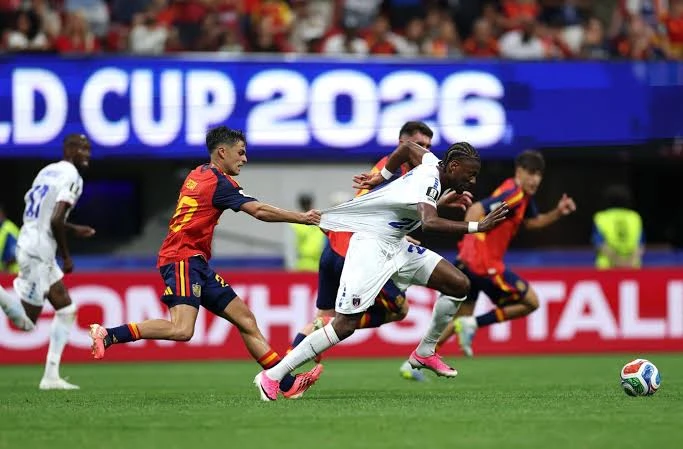
This World Cup gave us Cape Verde and its remarkable run, featuring a formidable performance against Spain for a draw, and a valiant, though ultimately futile, joust with Messi’s Argentina . Their starring defender, ‘Pico’ Lopes, currently plying his trade in the semi-professional Irish League, was recruited to the island nation’s team via a Linkedin message.
Upper-middle class American parents can pay through their nose for access to afterschool ‘soccer’ to beef up their children’s college applications, but turns out it does little for the prospects of the national team.
The tournament also saw Egypt gain its first victory at a World Cup, its first appearance in the Round of 16, and its first ever knockout win. The visuals of support from Gaza and team manager Hossam Hassan’s post-match comments showcase something far bigger than what the sport’s bureaucrats could have ever conceived.
Off the field, ignorant Americans from the cult of capital, chiefly former US men’s team player Alexis Lalas, had to grapple with the fact that working class black and brown children getting access to free, municipality provided football pitches is a formula for producing talent more effectively and of a much higher quality. Upper-middle class American parents can pay through their nose for access to afterschool ‘soccer’ to beef up their children’s college applications, but turns out it does little for the prospects of the national team.
The late, great Eduardo Galeano, “global soccer's pre-eminent man of letters," once remarked that industrial capitalism turned football from “beauty to duty.” As the stakes of success grew greater, the sport turned to efficiency and productivity on the field. Players became laborers; everyone else became spectators. Post-industrial capitalism took this one step further, and turned football from duty to commodity. Its governing metric, thrust upon us all by FIFA, is now consumption and commercial success.
Yet, as fleeting moments in the World Cup remind us, there is still something humanistic and pure somewhere deep in the core of this sport that is worth saving. The run of the underdog, the joy it gives to the repressed and the coerced, and the occasional display of breathtaking skill and perseverance of human endeavour is perhaps what makes this sport the most beautiful of all sports.

Umair Javed teaches sociology at LUMS. Twitter: @umairjav