Growing up in Karachi, there were many times I wished that I were a man — someone who could walk through life boldly, selfishly and safely.
Across my childhood, there were particular moments where I felt the invisible burden of being a woman slowly placed on me. When I turned nine, my dresses and skirts were swiftly exchanged for trousers that fell just above my ankles. At thirteen, my tone was policed and my behaviour disciplined. During meals with extended families, I was told to listen to my male elders, to never voice dissent or disagree, no matter how outrageous, sexist or pejorative their statements.
It was not just me. Many of my female friends and peers share similar stories of how they were always told to sit ‘properly’, with their legs crossed in the company of men, to never wear short shirts or red lipstick and to never take too many photos of themselves, should they appear vain or, perhaps worse, confident.
In Pakistan, as in many parts of the globe, patriarchy has made the experience of being a woman a taxing and lonely one. Pakistan’s male-dominated and ruled society has made simply existing as a woman a daily hardship, from the policing of a woman's clothing and movement within society, to the acute gendered violence that women face, like honour killings, where a woman is murdered for bringing shame upon her community. The notion that a woman’s body belongs solely to her — and not to the state, her family, her husband or religious establishments — is still a radical one.
Pakistani women continue to ensure that Pakistan is our country as much as it is a man’s; they keep fighting to ensure that the women who come after us are safer, louder and freer than we were ever allowed to be.
There is a continuing crisis of sexual and gender-based violence against women and children across Pakistan, particularly in its most populous province, Punjab. Reported cases of honour killings alone rose sharply between 2023 and 2024. Despite these alarming statistics, the government has repeatedly skirted meaningful conversations about child abuse, underage and forced marriages and women’s restricted movement in society, while remaining heavily influenced by religious parties and conservative dogma.
It is these challenges that pushed women like Sadia Khatri to start Girls at Dhabas. The movement began out of frustration at being ostracised by one’s own city and of having one’s sense of security stripped away by men in public spaces — men who illegally film women on their phones, masturbate in front of them or simply stare them down, imposing a hierarchy of power with just a single intrusive glance.
As a response, Khatri and her friends began documenting their everyday experiences in Pakistani urban spaces on social media, posting photos of themselves gathering and reading books at dhabas. The images spurred conversation and gathered interest online, as women and non-binary people across South Asia began submitting their own photos and narratives of unconventionally existing in public spaces.
Khatri described how this movement has contributed towards feminist progress in Pakistan saying, “We’ve introduced the language to talk about the relationship between public spaces, sexuality, leisure, pleasure and class in mainstream feminist discourse. And we’ve brought bodily autonomy on the basis of leisure (not purpose) to the forefront of feminist discussion.”
That discussion has also grown to include women’s safety in the online world, where Pakistani women fail to find respite. Nighat Dad founded the Digital Rights Foundation, which fights for a digital sphere where all people, and especially women, are able to exercise their right of expression without being threatened.
“In Pakistan, women face massive consequences for having an online presence on social media,” Dad says. “Not only are they harassed, but they are constantly doxed too, with their photos and videos being leaked and shared online. So, we provide services like a toll-free helpline for all internet users in Pakistan who are facing cyber harassment. We offer legal aid and mental health counselling so that users are left feeling more empowered in online spaces.”
The need has only grown. In 2024, the Digital Rights Foundation’s helpline received 3,171 complaints from across Pakistan, with cyber harassment remaining the single most reported category of abuse.
Dad describes the cautious way women have to move online, whom they follow, what they post and what opinions they dare to express. Despite Pakistan having a young population, with a median age in the early twenties that might suggest more progressive thinking, women still face deeply entrenched traditional and religious barriers in both online and offline spaces.
“Being a woman in Pakistan means that you must always keep one eye out, be it online or offline,” Dad continued. “A woman carries her family’s honour with her; she also carries the blame if anything goes wrong. The men who harass or assault her get away with no consequences.”
Despite Pakistan having a young population, with a median age in the early twenties that might suggest more progressive thinking, women still face deeply entrenched traditional and religious barriers in both online and offline spaces.
One need not look far for evidence. Pakistan has become a nation where a deep vein of internalised misogyny runs through everyday life, and an appalling culture of victim-blaming still dominates, leading many abused women to fear stepping forward with their claims.
In September 2020, the horrific Motorway Incident saw a mother gang-raped in front of her children when her car broke down on the motorway. When the case was reported, the first response of a senior Lahore police official was to blame the mother for taking that route at night with her children. The takeaway was clear: a woman should know that after a certain hour in the night, the predatory and bestial nature within man emerges and the onus of protecting herself falls solely on her.
It is a sad truth that Pakistan’s administration and its judicial systems have failed its women and children. There is a peculiar acceptance of this abnormal reality, as many seem to have become desensitised to the news around us, whether it is a woman killed in the name of honour or a minor sexually abused.
However, whether online or in the real world, the fury and disillusionment which exists within the female collective has created an urgent desire to take responsibility for protecting our communities. As such, there is a growing collective of women in Pakistan who are as revolutionary as their feminist ancestors. It was in that spirit that the women of the feminist group Hum Aurtein, initiated the Aurat March in 2018 to progress the feminist movement in Pakistan.
These efforts have mobilised women from different echelons of society, both liberal and conservative, to communally acknowledge and rebel against discriminative norms. During its second march in 2019, Aurat March participants brought topics like sexuality and sexual health out into the streets, holding up controversial posters that read, ‘Mera jism, meri marzi’, even as multiple religious parties denounced them as indecent and vile. By bringing sexuality to the forefront and displaying it in colloquial terms on a poster, women cut through the stigma that has long held back any honest conversation about bodily autonomy.
Shehzil Malik, a prolific illustrator who designed some of the most lauded posters for the Aurat March, is no stranger to the frustration of feeling unsafe in her own city of Karachi, where she was born. But, as she shared, her rage is channelled in a different way:
“I draw,” Malik says. “I draw about taking ownership of public spaces, because it’s been denied to me. We still belong to a society which thinks of a ‘good’ woman as covered and within four walls.”
But even Malik’s artistic work isn’t safe from patriarchal backlash.
“Us women, who are challenging dominant ideologies, all receive messages that are violent, cruel and dehumanising,” she says. “Constantly defending my work and its feminist leanings is a draining experience. I’m not as thick-skinned as I used to be. And this fatigue, I believe, is shared by many visible women who talk openly about feminism in Pakistan.”
Even so, Malik remains inspired by the number of people who feel seen and represented by the art she puts out. “It makes me very happy when people add their own stories to the imagery,” she says.
Whether online or in the real world, the fury and disillusionment which exists within the female collective has created an urgent desire to take responsibility for protecting our communities. As such, there is a growing collective of women in Pakistan who are as revolutionary as their feminist ancestors.
In 2025, Dad’s and Malik’s work has shifted to a sustained presence. The Aurat March has become an annual fixture in cities like Karachi, Lahore and Islamabad, each year unveiling a detailed manifesto that links everyday sexism with the climate crisis, state violence and economic injustice. These marches move forward in the face of police blockades, smear campaigns and attempts to deny formal permission. On the digital front, the Digital Rights Foundation has shown that survivors of technology-based gender violence are more aware of where to go, which forms to fill and which evidence to save when fighting for their rights in the digital space.
Personally, writing has become an artform that has helped me reclaim my voice and understand that the thoughts and beliefs I hold on political, religious and cultural matters are not insignificant. They are worthy and necessary to put out into the world so that other women, especially Pakistani women, can find the courage to make themselves seen and heard.
Pakistani women, if anything, are resilient. Moving towards the new year, they continue to ensure that Pakistan is our country as much as it is a man’s; they keep fighting to ensure that the women who come after us are safer, louder and freer than we were ever allowed to be.
This personal essay is an updated version of a piece originally published on Shondaland.com under the title ‘The Women Rising to Help other Women in Pakistan’ (2021).
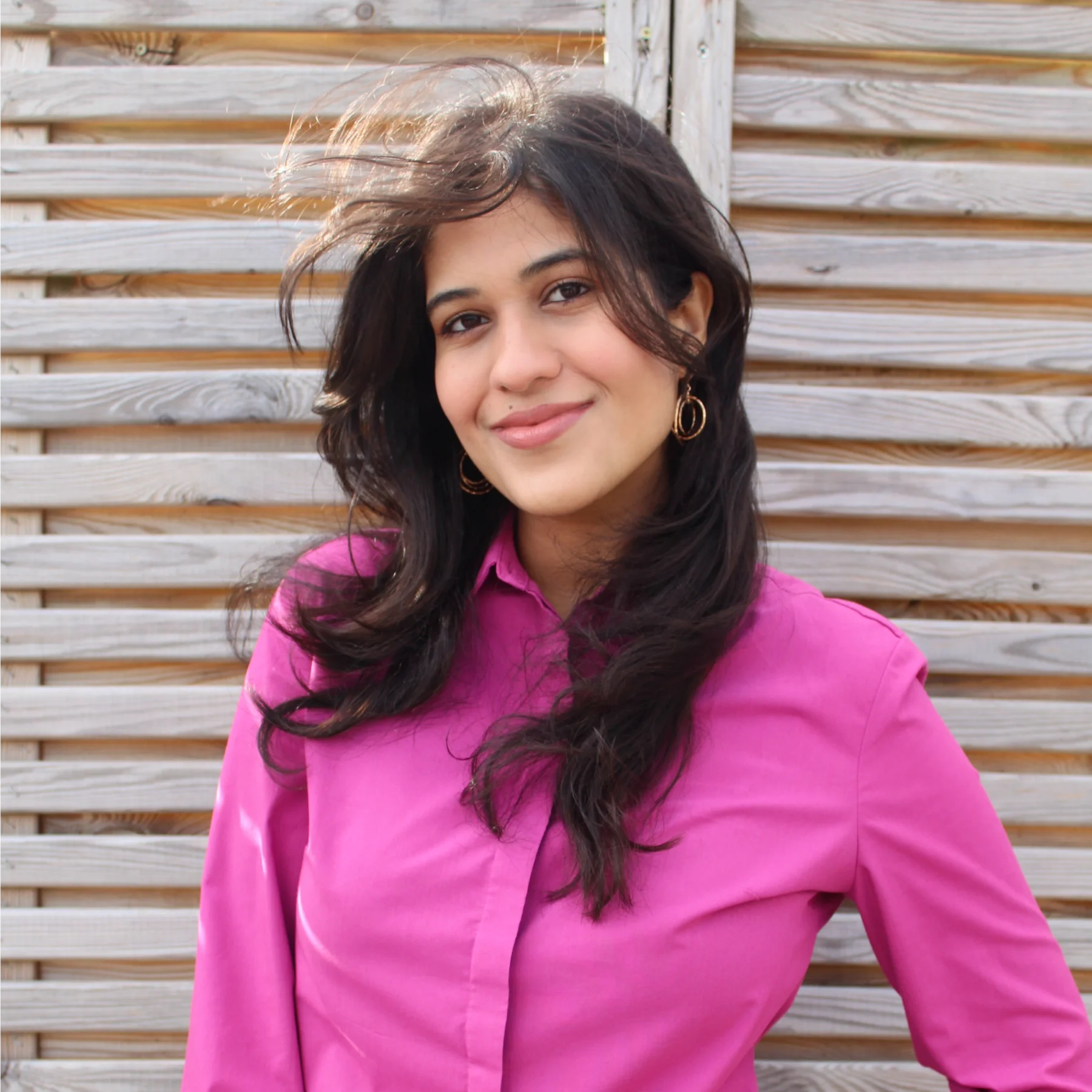
Neha Maqsood is a Pakistani writer and poet whose work explores race, displacement, gender and the postcolonial condition. She holds a medical degree from the University of Bristol and is a graduate of Imperial College London. More of her work can be found at nehamaqsood.com