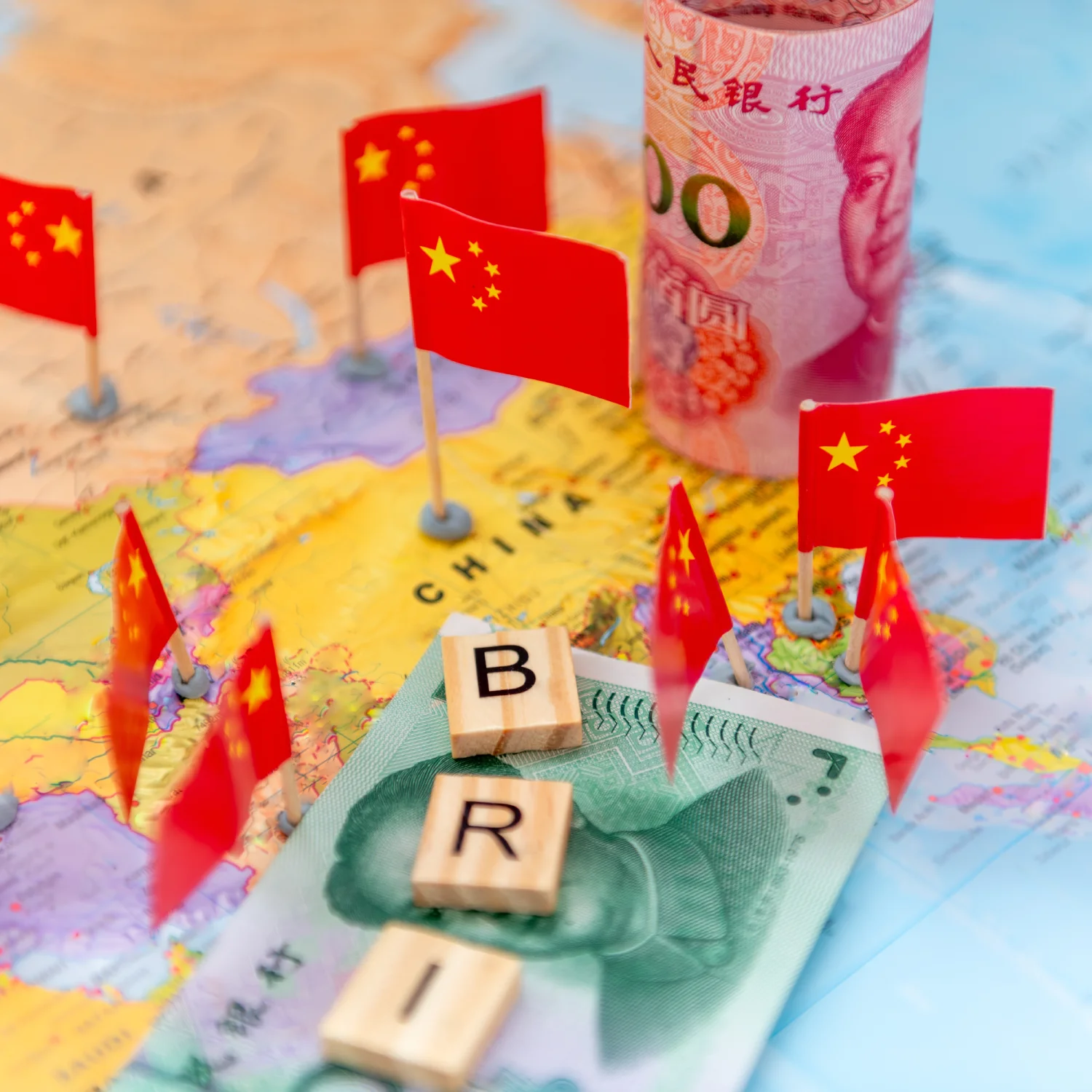
If the 1955 Bandung Conference was the political awakening of the Afro-Asian world, the Belt and Road Initiative (BRI) is its economic realisation. For the Communist Party of China (CPC) leadership, the ‘Bandung Spirit’ was never intended to be a static set of slogans or a nostalgic memory of post-colonial fervour. Rather, it was a normative seed that required a specific set of material conditions to bloom. To understand the BRI today, one must see it through the lens of Chinese ideological conceptualisation: as the transition from anti-colonial solidarity to developmental solidarity.
A central question in the history of the People’s Republic is why the vision of this grand integration of the Global South was not pursued with vigour in the 1960s or ‘70s, when revolutionary enthusiasm was at its peak. The answer can perhaps be found in the CPC’s adherence to historical materialism. This would be: a vision without a material base is merely a dream.
In the decades following Bandung, China was a revolutionary but poor power. As John Garver notes in China’s Quest, the PRC possessed the moral authority to lead the Third World but lacked the productive forces (the capital, the surplus technology and the industrial capacity) to offer a viable alternative to Western financial hegemony. During the Reform and Opening-up era, the leadership under Deng Xiaoping made a calculated decision to ‘hide and bide’. This was not an abandonment of the Bandung promise, rather a necessary retreat. China had to first integrate into the global market to accumulate the resources necessary to eventually challenge its neo-colonial structure.
The BRI represents a normative reading of international relations that stands in sharp contrast to the Western rules-based order. While the latter often predicates co-operation on internal political standardisation, demanding liberalisation, privatisation and specific governance models, the Chinese framework is built on absolute sovereignty.
The CPC views this delay as a matter of scientific stages of development. Only after China had ‘stood up’ (1949) and ‘grown rich’ (1980s–2000s) could it enter the current ‘New Era’ of becoming strong. For the first time since 1955, the material capability of the Chinese state matches the normative ambitions of the Bandung Conference. The BRI is the surplus of that successful accumulation, redirected towards the partners who stood by China during its years of isolation.
A Relational vs. Rule-Based Order
The BRI represents a normative reading of international relations that stands in sharp contrast to the Western rules-based order. While the latter often predicates co-operation on internal political standardisation, demanding liberalisation, privatisation and specific governance models, the Chinese framework is built on absolute sovereignty.
This is the Community of Common Destiny in practice. It posits that development is the primary human right and the only true path to sovereignty. In the Western model, law is often seen as a prerequisite for development (the Good Governance trap). In the Chinese reading, development is the prerequisite for law. By focusing on connectivity rather than conditionality, Beijing believes it is offering a new paradigm where states are not judged by their internal ideologies, but by their participation in a shared network of prosperity.
This is the direct descendant of Zhou Enlai’s Five Principles: it is a relational order where the Kingly Way (wang dao) of mutual benefit replaces the Hegemonic Way (ba dao) of military and financial coercion. As outlined in the book Normative Readings of the Belt and Road Initiative, this is an attempt to move from the Westphalian focus on borders to a Tianxia (All Under Heaven) focus on networks.
From the Spirit to the Body
The primary ideological challenge for the Global South as a whole remains its position in the international political economy. For decades, many post-colonial states remained trapped in a center-periphery relationship, serving as mere resource appendages to the Global North. They exported raw materials and imported expensive finished goods, a cycle that generated debt without development.
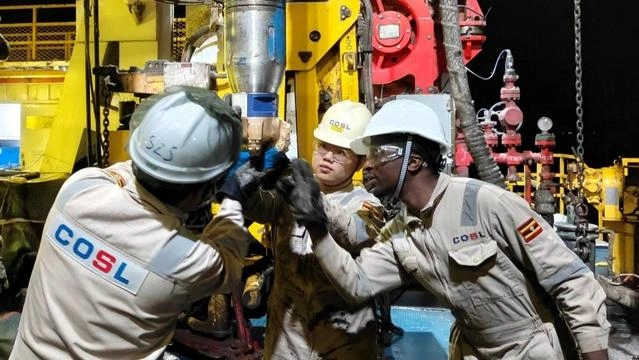
The BRI’s focus on industrial corridors, like the China-Pakistan Economic Corridor (CPEC), is ideologically conceptualised as a way to break this cycle. Beijing knows that the Global North maintains its dominance through technological monopolies and financial hegemony. The BRI serves as a counter-weight by offering an alternative financial architecture (the AIIB and the Silk Road Fund) which treats infrastructure as a public good rather than a high-interest debt instrument. By building the hardware of modernity — the ports, power plants and fiber-optic cables — China provides the tools for Global South countries to industrialise on their own terms. It is the transition from selling cotton (as Pakistan did in the 1950s) to building value chains. The goal is to move the Global South from the periphery to being a hub in its own right.
Perhaps the most striking aspect of this partnership is how a Marxist-Leninist state like China engages with the development of countries whose domestic regimes might be hostile to their own local communists. We saw the prototype of this in 1955, when Zhou Enlai prioritised a strategic understanding with the pro-Western Bogra over ideological purity. The CPC resolves this today through a sophisticated Marxist lens regarding the base and superstructure. In Marxist theory, the economic base (the means of production and infrastructure) determines the superstructure (the politics, laws and culture). The Chinese leadership believes that the most revolutionary thing they can do for a partner state is to modernise its economic base. By nurturing development, they believe they are inevitably maturing that country’s social structure. To intervene in the internal superstructure (the local politics) would be a violation of the Bandung principle of non-interference, a neo-colonial move in itself. Furthermore, the CPC views the global struggle as a battle against imperialism, not a clash between individual parties. In this grand strategy, a strengthened Pakistan or a prosperous Africa is a loss for imperialist hegemony, regardless of the domestic party in power.
Beijing knows that the Global North maintains its dominance through technological monopolies and financial hegemony. The BRI serves as a counter-weight by offering an alternative financial architecture (the AIIB and the Silk Road Fund) which treats infrastructure as a public good rather than a high-interest debt instrument.
The logical connection between Bandung and the BRI is one of evolutionary continuity. In 1955, the relationship was an entente cordiale, a friendly understanding. It was held together by florid metaphors and private promises. Today, that understanding has grown into a strategic partnership of steel and fibre. The CPC views this as the fulfilment of the Bandung initiative. They believe that the reason the original 1955 vision was often frustrated was because it lacked the physical infrastructure to bypass Western control. If you cannot communicate, travel or trade with one another without going through a Western hub, you are not truly independent.
In the final analysis, the BRI, and its flagship project CPEC, should not be seen as a departure from the 1955 meetings between Zhou Enlai and Ali Bogra, but as the final, mature expression of that friendship. It is the recognition that in a world still dominated by hegemonic powers, the priority must be the collective economic rise of the Global South. The all-weather friendship is built on the premise that China and its partners share an external destiny. By providing the material basis for development, China is attempting to finish the decolonisation process that began in that humid conference hall in Bandung. Seven decades later, the ‘Bandung Spirit’ has finally found its body.

Aima Khosa is a journalist and researcher with a career spanning more than a decade. Her current research focuses on the history of China-Pakistan relations and discourses of solidarity between states and people.