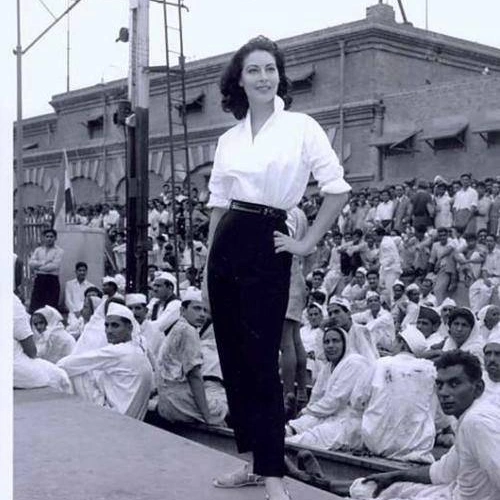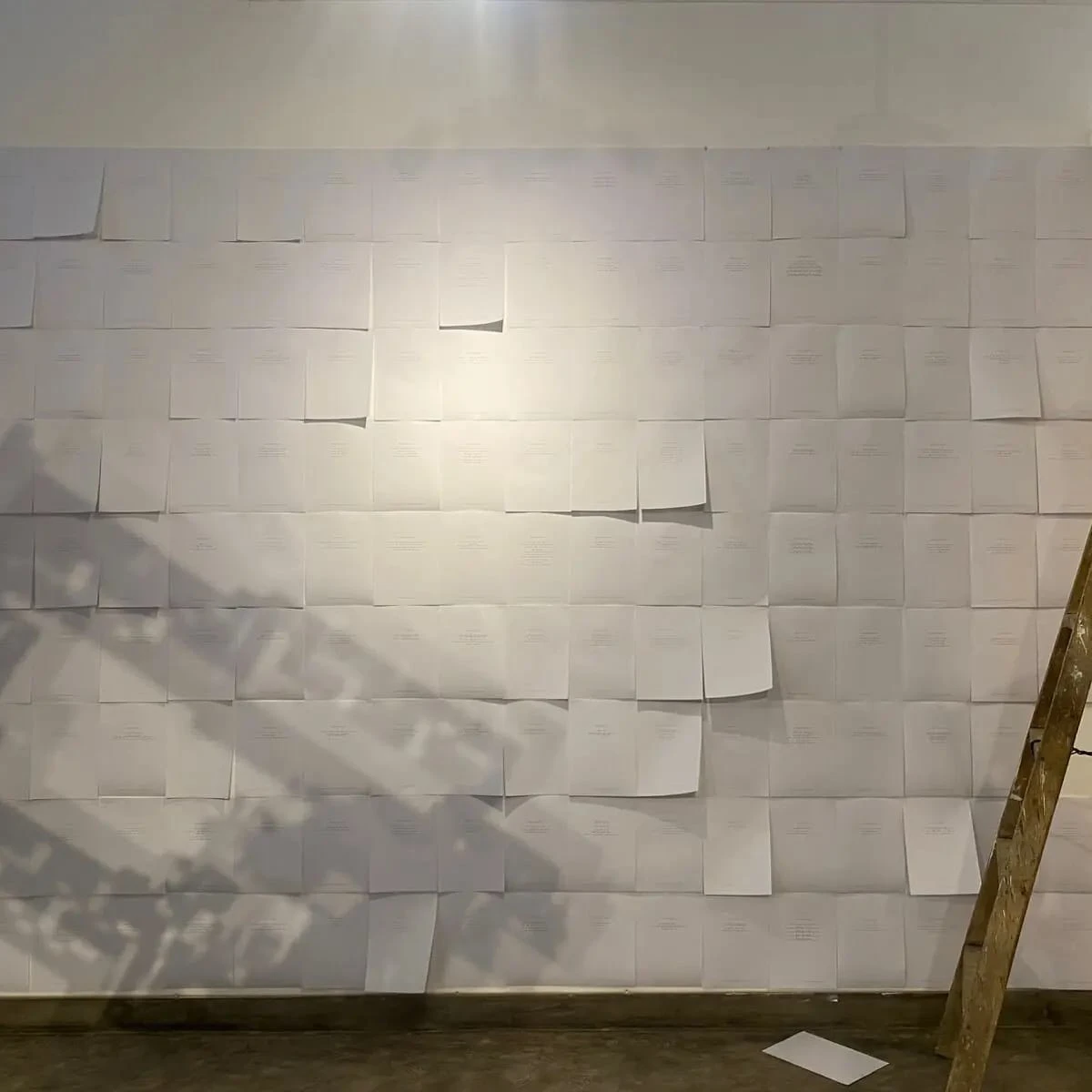
The Karachi Biennale 2027 curtain raiser and exhibition Aaj aur Kal welcomed a diverse group of artists, patrons, curators, critics and visitors to the Gulgee Museum on Friday the 13th, February 2026. Noor Ahmed and Amin Gulgee co-curated a whirlwind 77-minute presentation of performance, installation and video works by 72 artists from 18 countries.
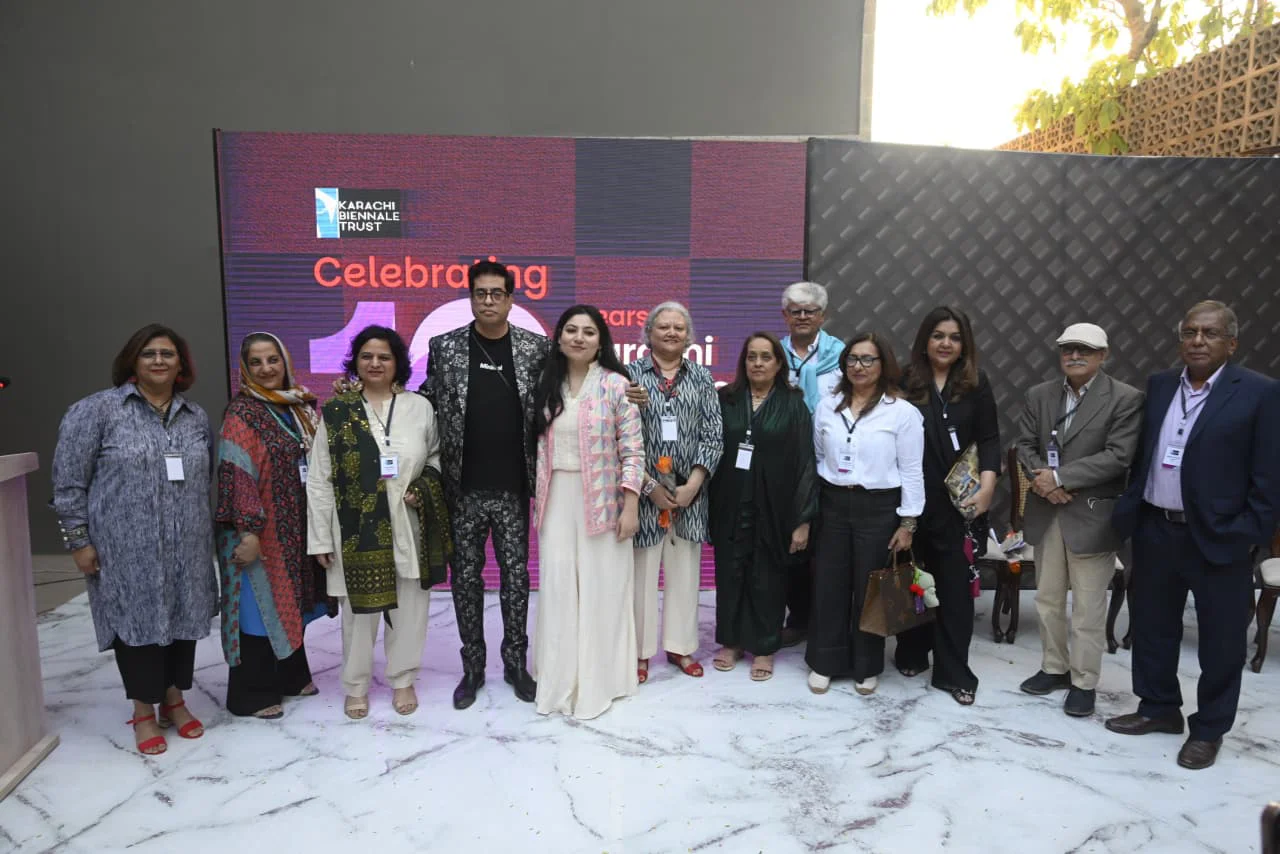
If Aaj aur Kal is a prelude to KB27 (curated by Noor Ahmed and scheduled for 16-31 January 2027) audiences may expect emerging voices and politically engaged work. If the curtain raiser was a test run for KB27, then we look forward to a biennale that is a platform for experimentation. Amidst global and regional wars and instability, this kind of artist-centered gathering offers a rare space for collective reimagining.
The event also marked and celebrated the tenth anniversary of the Karachi Biennale Trust (KBT). In the last decade KBT has hosted four large-scale international contemporary art biennales, all open to the public and free of charge. How does a non-profit arts organisation without state backing survive in Karachi? How does an institution pull off a citywide cultural event in a city on the brink of infrastructural collapse: broken roads, sporadic electricity, extreme heat, water scarcity, security challenges and political upheaval? And what leads one to do it over and over again?
Niilofur Farrukh, former CEO and Managing Trustee of KBT, reflects on how KBT has sustained itself for the last ten years.
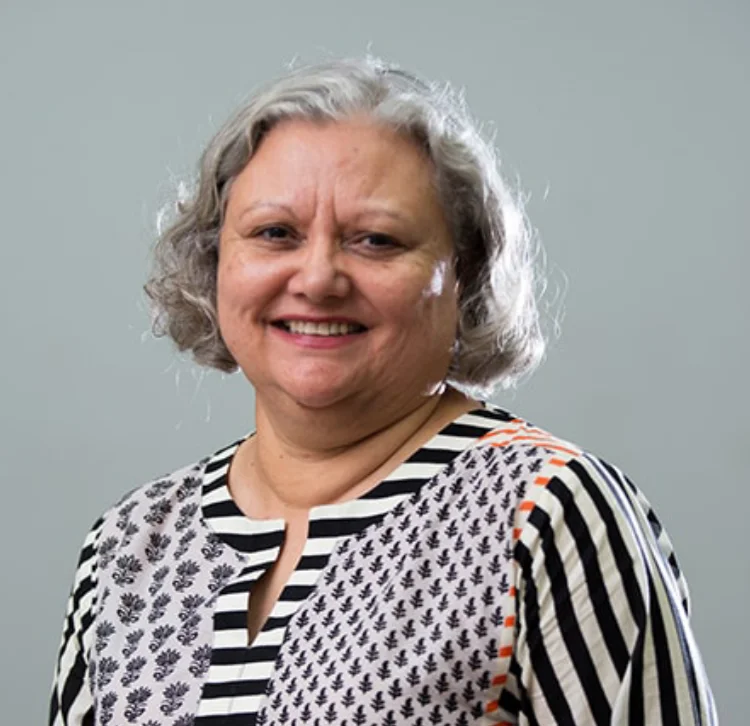
“Start small, focus your energy, and then build,” Farrukh says. The Karachi Biennale is not Farrukh’s first cultural initiative. She co-founded ASNA in 1997, a non-profit arts platform that hosted four Clay Triennales that bridged traditional craft and contemporary art practices; later she co-established NuktaArt, a biannual contemporary art print magazine (2004-2013). For Farrukh, ASNA, NuktaArt and KBT are all connected in how they “address certain gaps to reclaim our own intellectual and historical trajectories and identities.” Ultimately, these projects are as much about critical analysis as they are about presenting artworks in a South Asian context.
Farrukh explains that prior to the formation of KBT, “Many gallerists, art critics and artists had entertained the idea of holding a biennale, but they could not follow it up.” Eventually, a smaller group of art and culture workers founded KBT with the mandate to create a platform connecting art, the city and its people.
“It was a mammoth task,” Farrukh remembers, “because there was no template for it.” The founders set up the trust with a clear governance structure in which trustees serve in a voluntary capacity, maintaining other professional work. A few members had been a part of ASNA and consequently there was already a level of trust and commitment between them as professionals and friends.
“The whole biennale is built on relationships,” Farrukh states. It also depends on sustaining them. Internal disagreements, curatorial differences and artist conflicts are inevitable in biennale organising and resolving these requires experienced leadership. “Experience was very much on my side.”
Farrukh explains that prior to the formation of KBT, “Many gallerists, art critics and artists had entertained the idea of holding a biennale, but they could not follow it up.”
Farrukh then proceeds to delve into the financial structure of KBT, “We want the biennale to be an independent platform and not take money from the state.” The biennale website lists several tiers of partners, ranging from individual patrons and corporate sponsors to universities, media organisations, banks, foreign missions and international and local cultural institutes. “The generosity of people always surprises you,” Farrukh says.
However, funding is becoming increasingly precarious; it is quite difficult to convince people to give to arts and culture when they may instead opt to donate to health or education. She points out that the biennale is a public educational platform that also runs an art and wellness program. “You have to call up everyone you know. You have to keep calling them. You will lose friends,” she warns. “Go to people who you feel are culture-friendly.”
In 2024, KBT began to restructure for long-term sustainability and introduced paid positions for an Artistic Director and Administrative Manager. The trustees introduced a succession plan. Farrukh was preparing to step back and see the biennale stand on its own feet, noting that the issue of “funding is something we can’t escape. Our financial instability is not going anywhere.” At the same time she is adamant that “we will not take any grants that we are unhappy with,” unwilling to compromise on the core values of the institution. For instance, despite the significant effort fundraising requires, Farrukh remains reluctant to allow overt branding by sponsors.
Farrukh cites love for Karachi as a key motivating factor that drives those involved in sustaining the Karachi Biennale. She is sympathetic to a newer generation of art workers who have their own constraints as they navigate life in this city.
For Farrukh, the opening day of each biennale remains the most memorable, when months of preparation finally come together in public. She points to KB24, which took place in a post-pandemic world, “we were hoping that this biennale would really open their (young people) minds up to new possibilities, becoming a catalyst for optimism.” A biennale is a chance for the public to interact with and interpret artworks intentionally placed in relation to one another. KBT covers the materials, production and transportation costs of exhibiting Pakistani artists. International artists secure grants from cultural institutions in their home countries. In the last decade the Karachi Biennale Trust has become a key actor in Karachi’s art ecosystem. KBT has created jobs, commissioned artworks, run educational programming for schools, organised discursive events, documented and published materials and led research projects such as the Karachi Art Directory.
Farrukh cites love for Karachi as a key motivating factor that drives those involved in sustaining the Karachi Biennale. She is sympathetic to a newer generation of art workers who have their own constraints as they navigate life in this city.
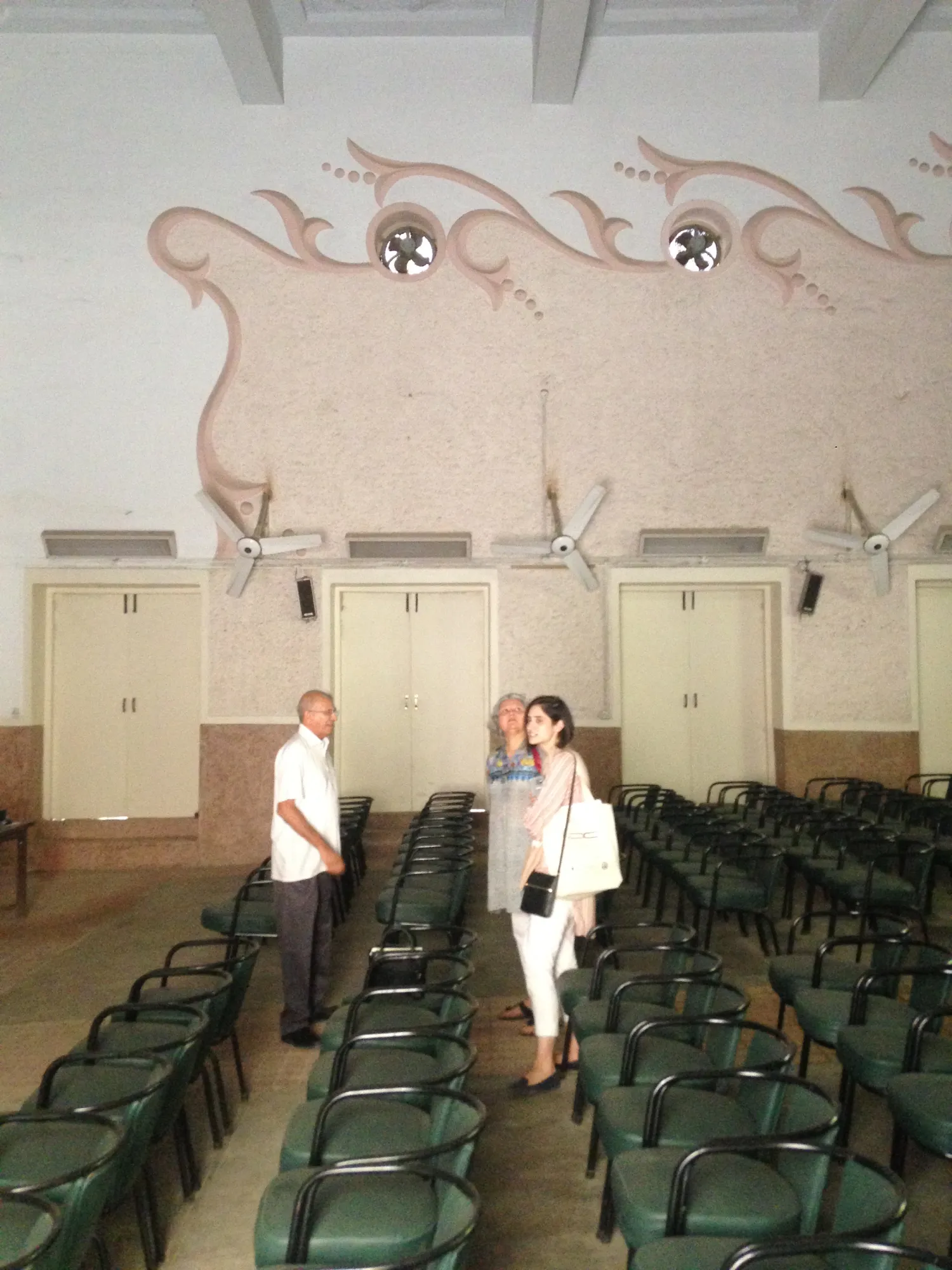
“I grew up in a different time, and because of that, I have a different way of looking at the city. And when I’m working with young people, I understand where they come from,” she adds, “they are prevented from creating a deeper relationship with the city.”
If she could go back in time, she would advise her 2016 self the following: “There are two ways of looking at it. One is to go blind and find your way out. You’ve got to swim to the shore. The second one is that you come into it with your commitment and experience and say, ‘Okay, I’m going to do my best.’ It is extremely rewarding, the most memorable ten years.”
She describes her idea of a successful biennale suited to Karachi: “Have it small, focus on the art. Don’t compromise there. The work should be complex and layered. We should push creative ideas as much as we can so that the new generation of young people benefit. It can provoke and inspire them. It’s not just an event, it’s a platform. It has got a horizontal spread, reaching into the community.”
The Karachi Biennale has sustained through individual persistence, friendships, networks of trust, social and cultural capital and a shared belief in the public value of art. This means showing up over and over again, even when there is personal conflict or political turmoil.

Kulsum Ebrahim is a visual artist and researcher working in animation and film based between Karachi and London. She is interested in cities, health, mobility, and ecology, and believes in the revolutionary potential of animation. She graduated with a BA in International Relations and Art from Pomona College in 2015, and an MA in Animation from the Royal College of Art in 2023.