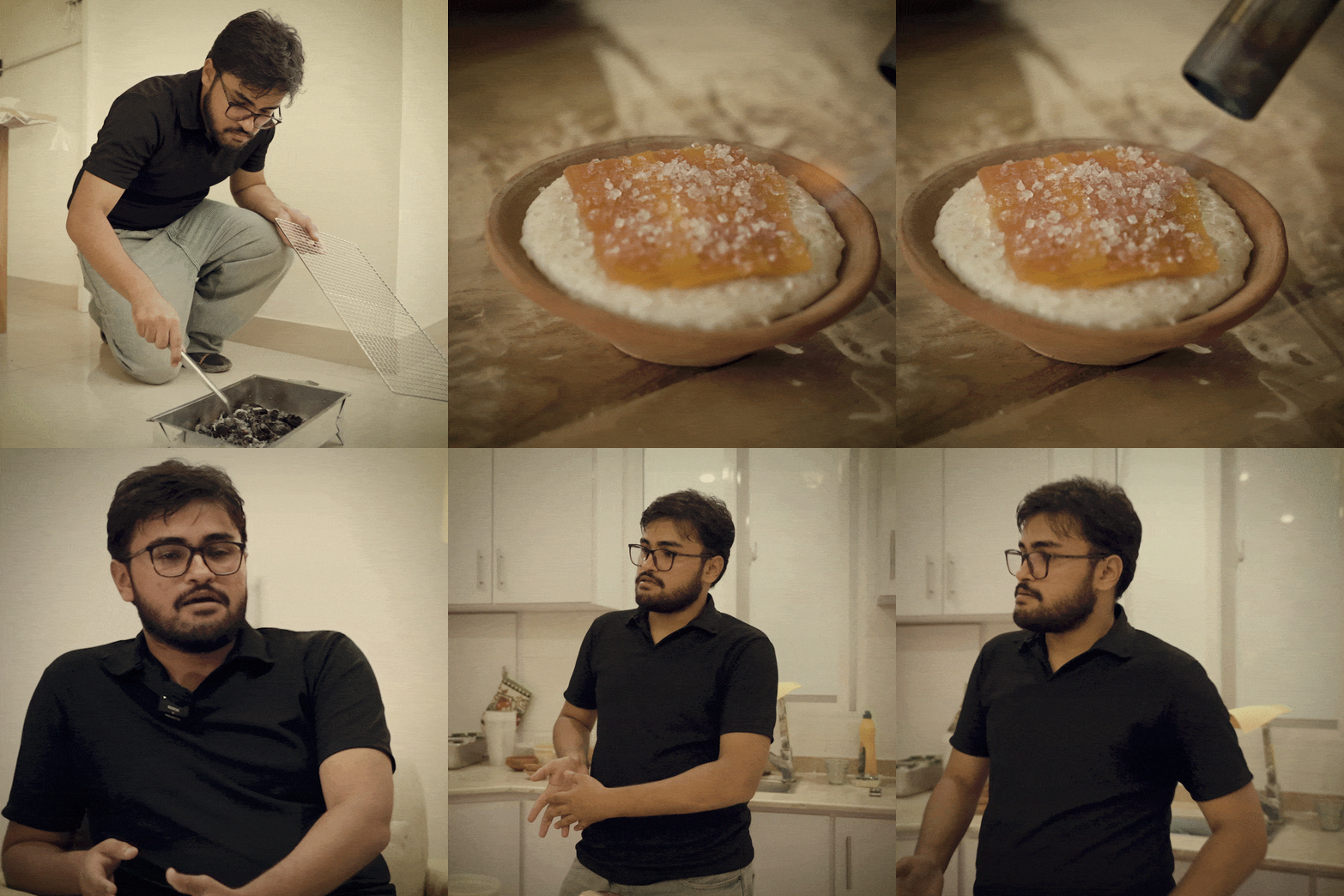
Two raw cow hearts sit glistening on the kitchen counter, along with a syringe and a silicone tube. Instead of simply soaking the hearts before cooking them, Muhammad Zain — known to most Pakistanis as Chef Zain from Masterchef Pakistan — tells me he is going to attempt ‘perfusion marination’, a technique in which the marinade is introduced through the vascular system so that it evenly reaches all parts of the meat. The marinade consists of homemade shiitake garum, chickpea tamari and soy sauce. The process is fascinating to watch. You can see the heart swell up as the marinade becomes visible in the vessels. More than skill and finesse, this process requires knowledge and curiosity, two qualities that made Zain a standout contestant.
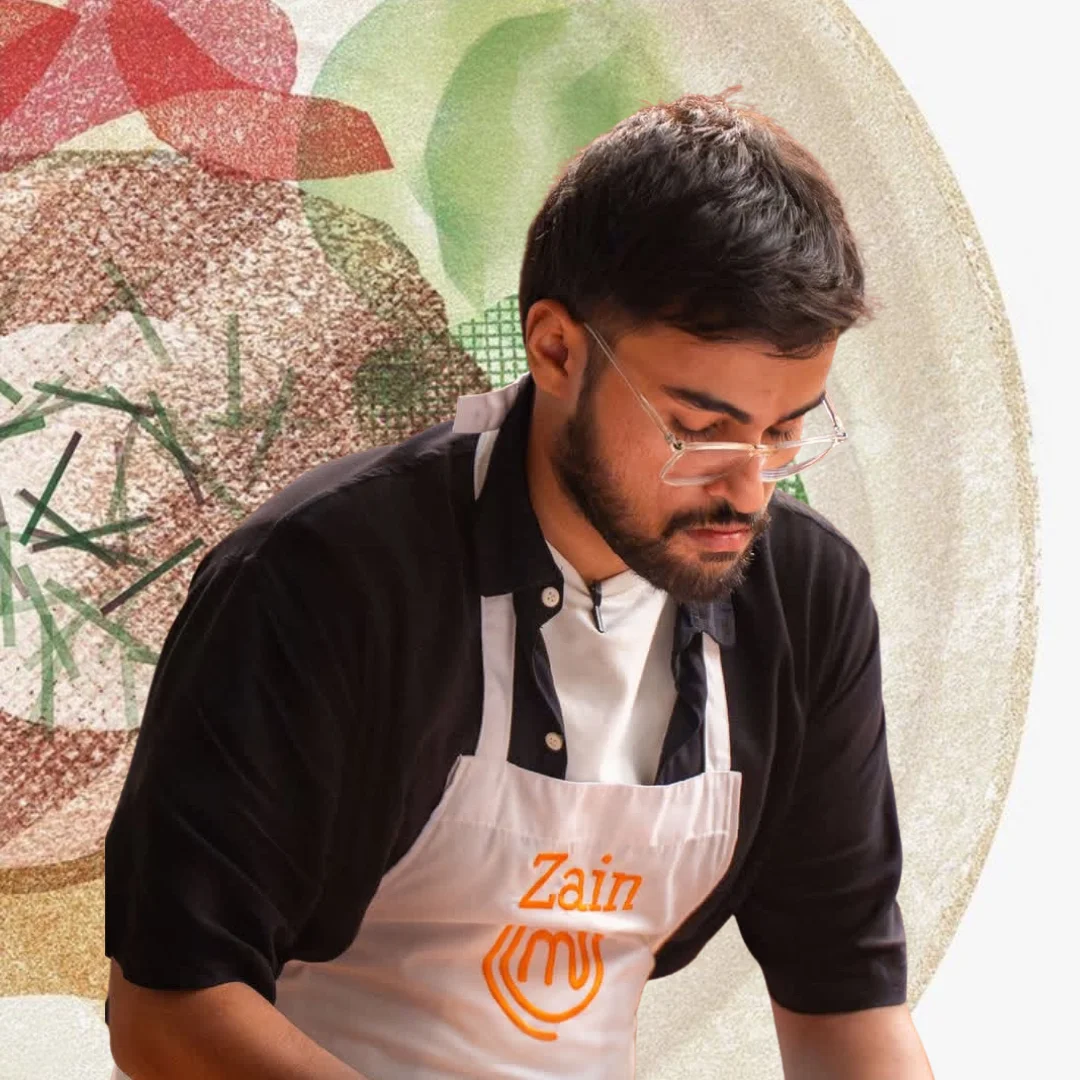
Even though he ultimately finished as the second runner-up in Season 2, Chef Zain was a true fan favourite, particularly because of his exact and scientific approach towards cooking and his penchant for fusion cooking. Zain has promised a cooking demonstration as part of our interview today. To that end, he has brought several ingredients with him in identical plastic containers, all neatly stacked, a charcoal grill and of course, the aforementioned showstoppers: cow hearts in a big, blue plastic bag.
Inspired by Italian and Japanese cuisine, Zain created fusion dishes on Masterchef that were a treat to watch. Matar pulao arancini combined Sicilian and Pakistani cuisine in rice balls that made for a perfect snack. His mushroom khichdi risotto was a nod to his Dadi’s well-loved khichdi, which he learned to cook from her. Paired with jheenga shami, soy cured egg yolk and cranberry chutney, this finale dish had an unmistakable sense of comfort. But the dish that he’s most proud of is the cumin smoked miso malai boti with avocado chutney, coriander oil and yakitori eggplant — a fusion of basic Pakistani flavours with a Japanese dish that has the potential to convert the biggest eggplant sceptic.
As a kid, Zain would watch Masala TV with his mother, who would note down all the recipes in her diary, one he still refers to.
“There’s a fine line between fusion that works and fusion that turns out to be strange and confusing. How do you draw the line between the two?” I ask.
“There’s no line!” Zain tells me. “There is a maker and a consumer. And if it works for both of them, then it simply does. It just has to taste good. Even when I’m cooking, I tend to easily blur boundaries between at least four different cuisines. I experiment because I believe that food has to have a sense of fluidity.”
I name some long-running fusion items popular locally, such as tikka pizza, pizza paratha, zinger roll, and Zain nods at each. But when I sneak in ‘chapli sushi’ to the list as a fusion dish (one that Sanam Maher talks about in an essay on sushi in Pakistan), Zain looks startled for a moment and the whole room cracks up in amusement. “So, there is a line?!” I ask, hopeful that I’ve cracked his conviction, but he’s firm on it. “I was just wondering how we could pair minced beef with fish. Maybe some sort of a chapli tartare? This has actually given me an idea.”
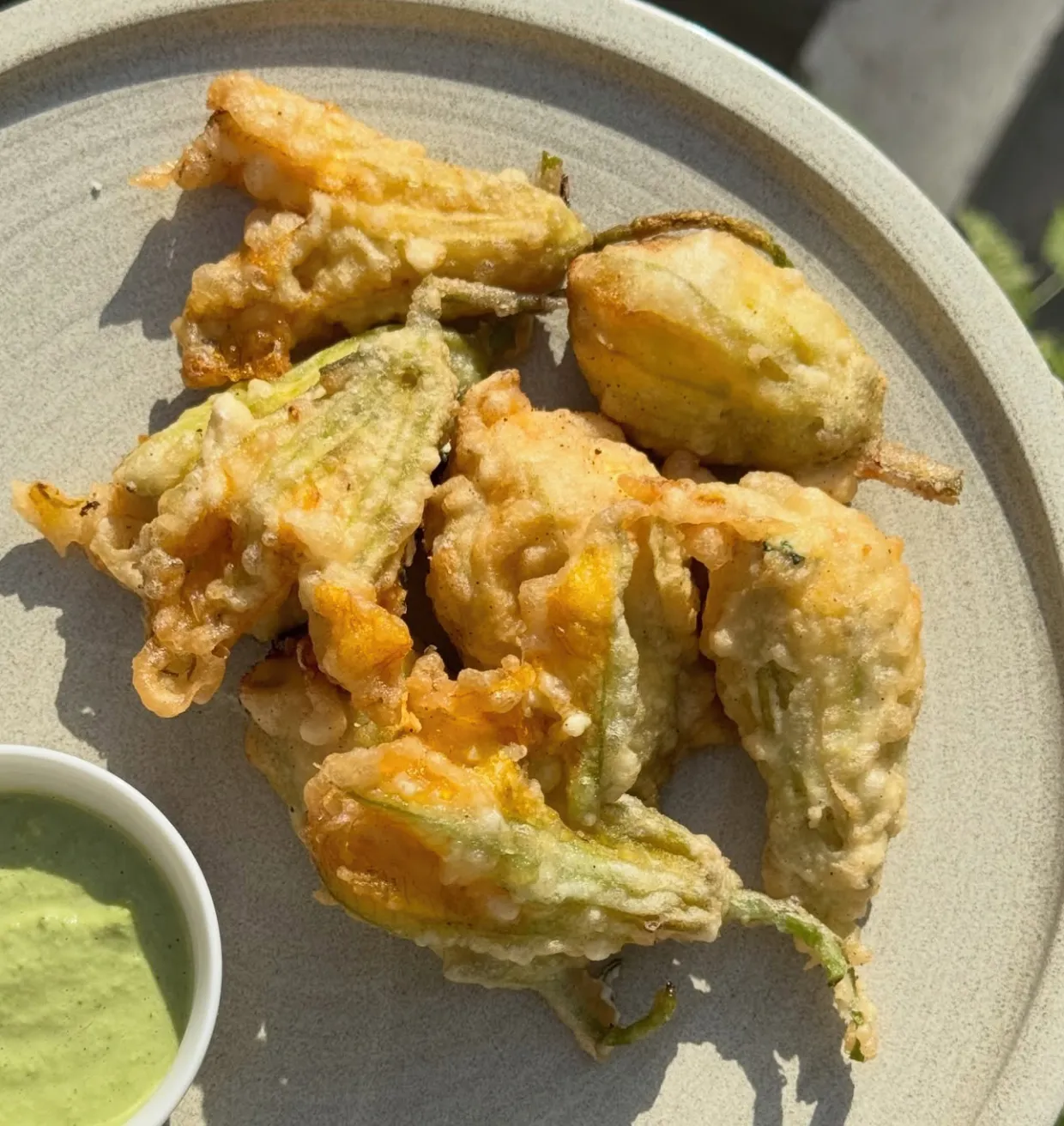
Fusion cuisine is a perennial feature of human civilisation. We evolve and move, and so does our food. For Zain though, fusion does not only stem from curiosity or creativity, but also as a means of resourcefulness. “Use everything that you have in your kitchen (or that you can grow),” he tells me. Zain loves the infamous desi macaroni, or the idea behind putting your leftover chowmein in a roll, because these unlikely fusions essentially help reduce food waste.
In line with his food philosophy, Zain has also brought with him a leaf from a cactus plant at his home, called Nopales. Mostly used in Mexican cuisine, the leaf (Nopal) is scraped off, diced and cooked, before adding it into a salad. In one of the plastic containers, he shows me the kachumar salad made with the cactus, and its tanginess immediately spikes the air. You can smell it from inches away. Going by looks alone, though, it looks like a common kachumar salad that most households have with daal chawal everyday.
Long before the first season of Masterchef arrived in Pakistan in 2014, most households tuned into Masala TV. Launched in 2006, it was the first 24-hour food channel in Pakistan, broadcasting a wide variety of food; it became many Pakistanis’ window into elevated cooking. As a kid, Zain would watch Masala TV with his mother, who would note down all the recipes in her diary, one he still refers to. “One thing about her is that she was always very resourceful. She taught me that you don’t have to follow the recipe to a T, and so if I don’t have a specific ingredient, I'll just use something else instead.”
At the age of nine, Zain was going through his mother’s recipe notebook when he came across a recipe for cupcakes. This was his first time baking a batch of chocolate cupcakes from scratch — there was no stopping his kitchen experiments from there. The journey from Masala TV to Masterchef came about naturally for him. Despite the mixed reviews that the show received in the earlier stages of its run, it did end on a good note, with contestants displaying expertise and versatility in their dishes. For him, “Masterchef was never competition-competition. It was fun, and always a test of my own skills.”
Given his scientific approach in the kitchen, it does not come as a surprise that Zain is actually an astrophysicist with a specialisation in aerospace. His background in science seeps into his dishes, and pops up in his techniques and plating: in the nihari beignets or ravioli, in his molecular paani puri, and in the way he merges two cuisines with a measured generosity. It is also evident in his culinary passions. He’s currently fixated on koji, a mould known as Aspergillus Oryzae, that is inoculated on rice or other types of grains, which converts the starch in the rice to sugars, giving it a rich umami and a subtle sweet flavor. The rice is first steamed, and then sprinkled with spores which can be imported, but Zain is now growing his own spores too. The entire process requires extreme meticulousness: from the temperature to the humidity, everything needs to be checked precisely for the spores to thrive.
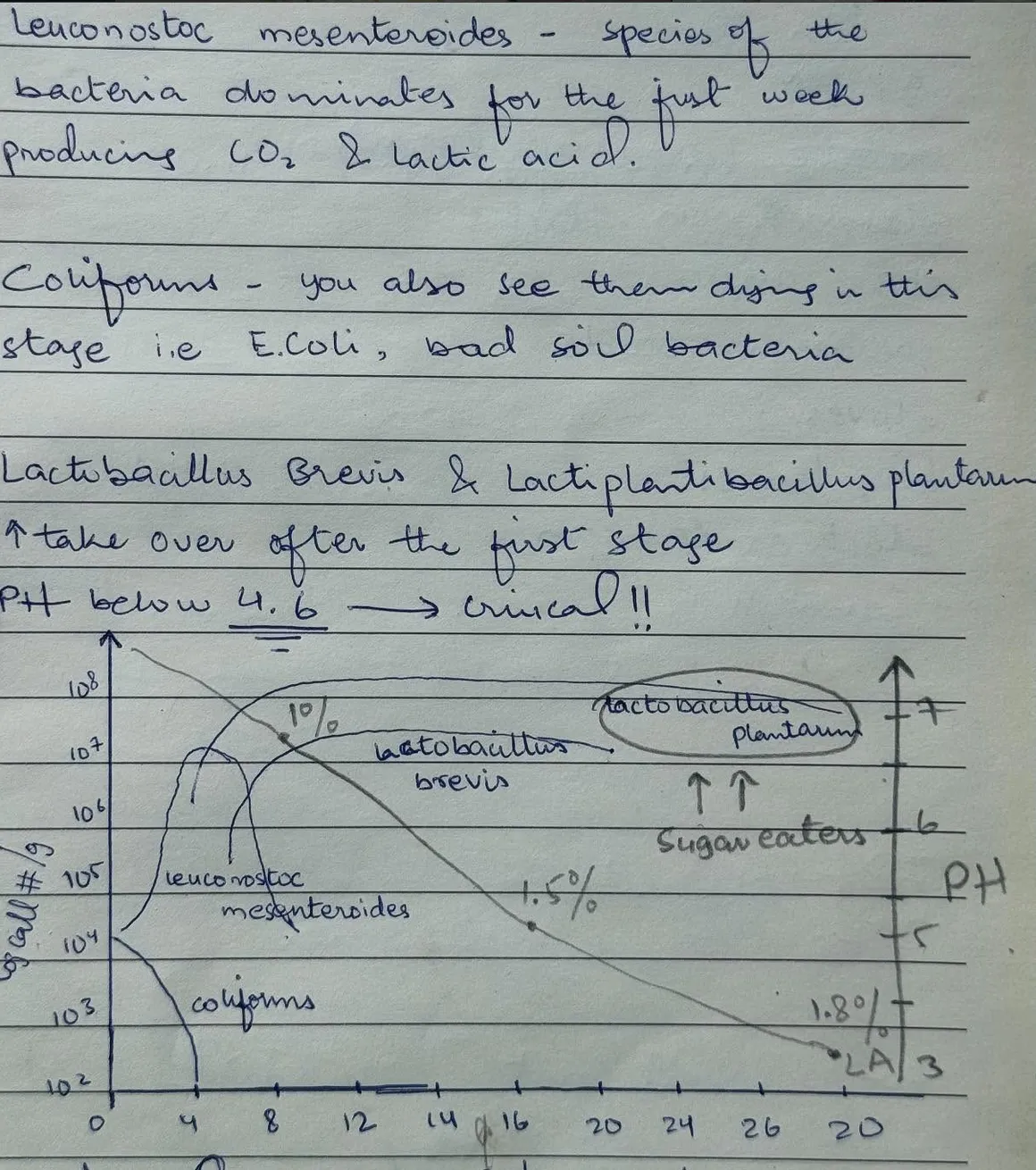
“Fermentation teaches you a lot as a chef and as a person. It teaches you about life! That everything takes time. And if you give this certain thing the right temperature and environment, it will eventually thrive.” Zain has spent the last two years making koji and fermenting miso from scratch at home. He’s currently reading ‘The Koji Alchemy’ by Rich Shih and Jeremy Umansky, and has even built his own chamber for its production.
“All things Japanese are trending nowadays, and so people are using miso in their food, but I’ve never seen anyone actually make miso. I may be the only miso and koji maker in Pakistan,” Zain tells me.
Koji rice has a fuzzy texture and a funky smell. With its distinct umami flavour, it is difficult to tell if koji will sit well with our palate and thus tricky to gauge if there is a market for it. Zain is only making koji for himself at the moment, but hopes to build a koji community in Pakistan. And what could be a better way of introducing koji to our palates than to lean on a fusion dish that feels exploratory yet familiar? For dessert today, Zain is making koji kheer. He puts milk in a pan with a generous amount of koji and sprinkles in some nutmeg. The kheer is left to cook slowly.
Given his scientific approach in the kitchen, it does not come as a surprise that Zain is actually an astrophysicist with a specialisation in aerospace. His background in science seeps into his dishes, and pops up in his techniques and plating: in the nihari beignets or ravioli, in his molecular paani puri, and in the way he merges two cuisines with a measured generosity.
“In Pakistan, I don’t think there is anything that goes to waste. If we look at chicken, every part of the chicken (feet, gizzards and wings) gets sold and is eaten,” Zain says. When I ask him about his future plans, he tells me he hopes that he gets to work at the Fish Butchery founded by Josh Niland in Australia, a restaurant that solely serves fish, and is known for working with every part of the fish, from the liver to intestines and eyeballs. In a world that is battling food inequity and food waste, it is important to think and rethink what we’re willing to put on our plates.
The right dish comes together with intent and clarity, two core tenets that Zain swears by. You can see that in his choice of ingredients and the way he moves around the kitchen: poised, never in a hurry, and always ready to entertain curiosity.
Once the cow heart is marinated, Zain dices it into cubes, skewers the meat, and sprinkles with homemade tandoori masala, and proceeds to cook it on a charcoal grill. Zain has made palm-sized tortillas from maize flour and wheat, which he has cooked on the grill as well. Tortillas filled with grilled cow heart, kewpie mayonnaise and kachumar salad all come together in the form of a taco, which looks vibrant and perfect for a summer day. The koji kheer is doled out in small clay plates, garnished with thinly sliced carrots cooked in a sugar syrup, and with brûléed sugar on top.
Both the taco and the kheer may feel familiar, and yet deceptively so. There’s koji, cactus and a heart on the plate; a fusion of intent, resourcefulness and creativity. All components blend together seamlessly, so it's difficult to tell where one idea begins and the other ends. Or as Zain would say, “There’s no line. Food has to have a sense of fluidity!”
Duaa Amir is a writer based in Karachi and writes about food and culture surrounding migrant identity. Her work has appeared in Dawn Images, Geo Big Picture, Lakeer, Poorvanchal and Palayan (a virtual storytelling project). She was a South Asia Speaks 2022 Fellow. Duaa is also a doctor and a passionate advocate for health equity.