Pakistan's fashion industry has always had ambition in abundance. What it has never had is infrastructure. Or, more precisely, the will to build infrastructure that serves anyone beyond a very specific room of people.
For decades, the business of Pakistani fashion operated as a kind of members-only club. The membership criteria were never written down, but they were understood: you needed to be ideally in Lahore or Karachi; you needed to know which designer was worth the wait and which tailor could replicate the work for a third of the price; you needed invitations to the right shows, access to the right multi-brand stores and proximity to the women who set the aesthetic agenda. If you had all of that, Pakistani fashion was a rich and rewarding world. If you didn't, if you lived in Multan or Quetta, or in Manchester, Houston or Toronto, it was a world you could admire from a distance, but never quite enter.
The Pakistan Fashion Design Council was the institutional expression of this dynamic. Those who worked within it, or close to it, understood the reality that rarely made it into the press. It stamped every show with the same promise: that it was the business of fashion — PFDC was not, at its core, an industry body in any meaningful sense. It was a curator of a particular social world, and its fashion weeks, practically, were more about consolidating the status of those already inside the “it” circle. The multi-brand store it operated served Lahoris. The shows it mounted drew the same names, the same faces, the same audience, season after season. When PFDC lost momentum and eventually faded, it did not collapse because of a logistics failure or a funding crisis. It collapsed because exclusivity is not a business model. A club that refuses to grow its membership eventually runs out of reasons to exist.
LAAM arrives, nearly a decade later, with a fundamentally different proposition. And on the evidence so far, the infrastructure it has built is real in ways that PFDC's never was.
What LAAM Has Built:
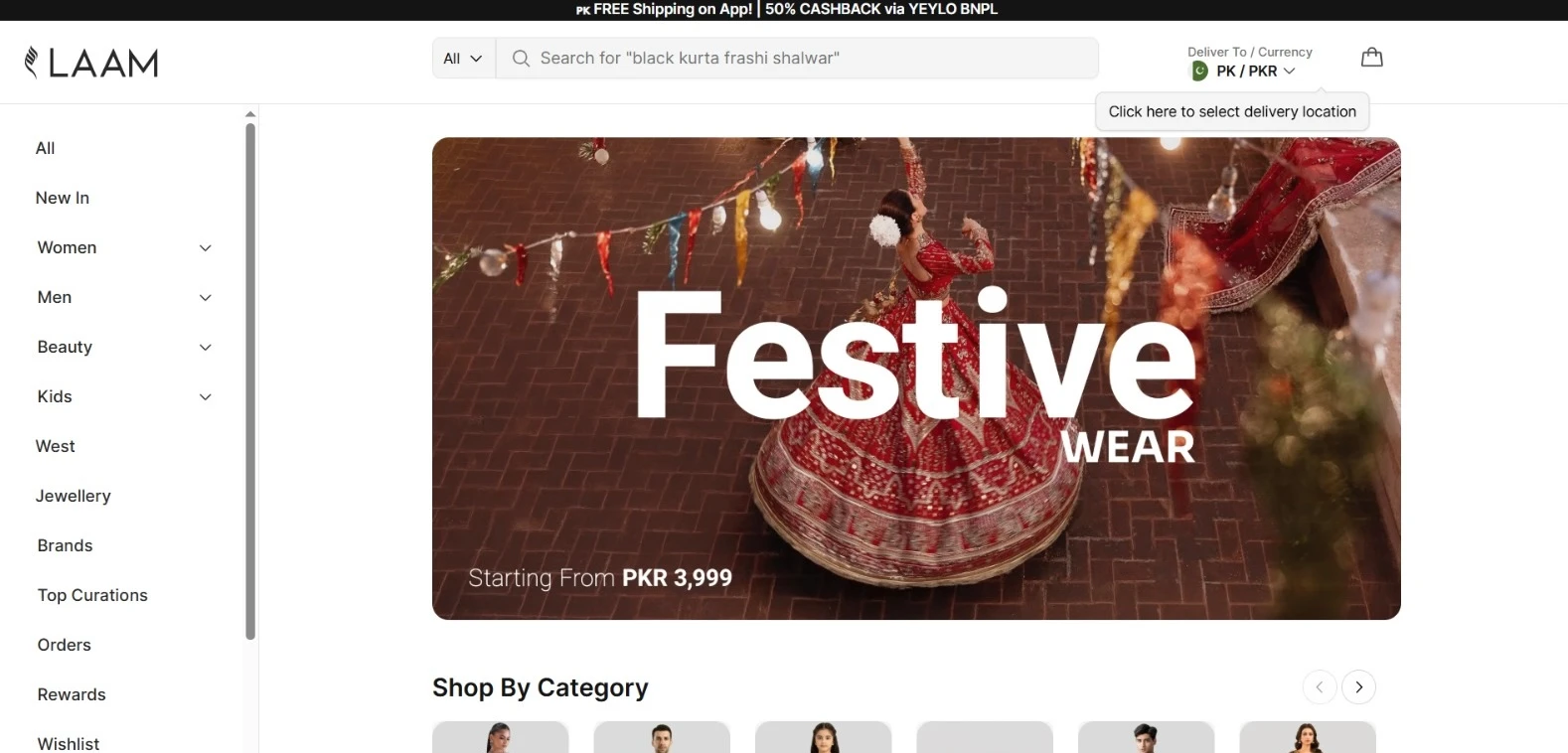
The platform's core achievement is deceptively simple: it has made Pakistani fashion purchasable. Not aspirationally available, not theoretically accessible, but actually, reliably, repeatably purchasable. A customer in Bahawalpur or Hyderabad can browse a unified catalogue of Pakistan's most significant fashion brands, see professional product photography, understand sizing, place an order and expect it to arrive. Returns are structured. Customer experience is standardised. The friction that made online premium fashion feel risky in Pakistan has been, to a meaningful degree, removed.
This matters enormously. Pakistan's fashion market, despite generating revenues that run into billions, was conducting most of its business through the equivalent of a handshake economy for most of its history. Brands maintained their own customer relationships, manually, and largely within their home cities. There was no reliable discovery mechanism for a consumer outside the major urban centres, and no reason for a brand to invest in reaching the customer when the familiar returning clientele was easier to serve.
LAAM seems to have changed the calculation. By aggregating brands onto a single platform with a functioning logistics layer underneath it, it has made the previously inaccessible consumer worth reaching. This is a structural shift, not a cosmetic one.
The platform's core achievement is deceptively simple: it has made Pakistani fashion purchasable. Not aspirationally available, not theoretically accessible, but actually, reliably, repeatably purchasable.
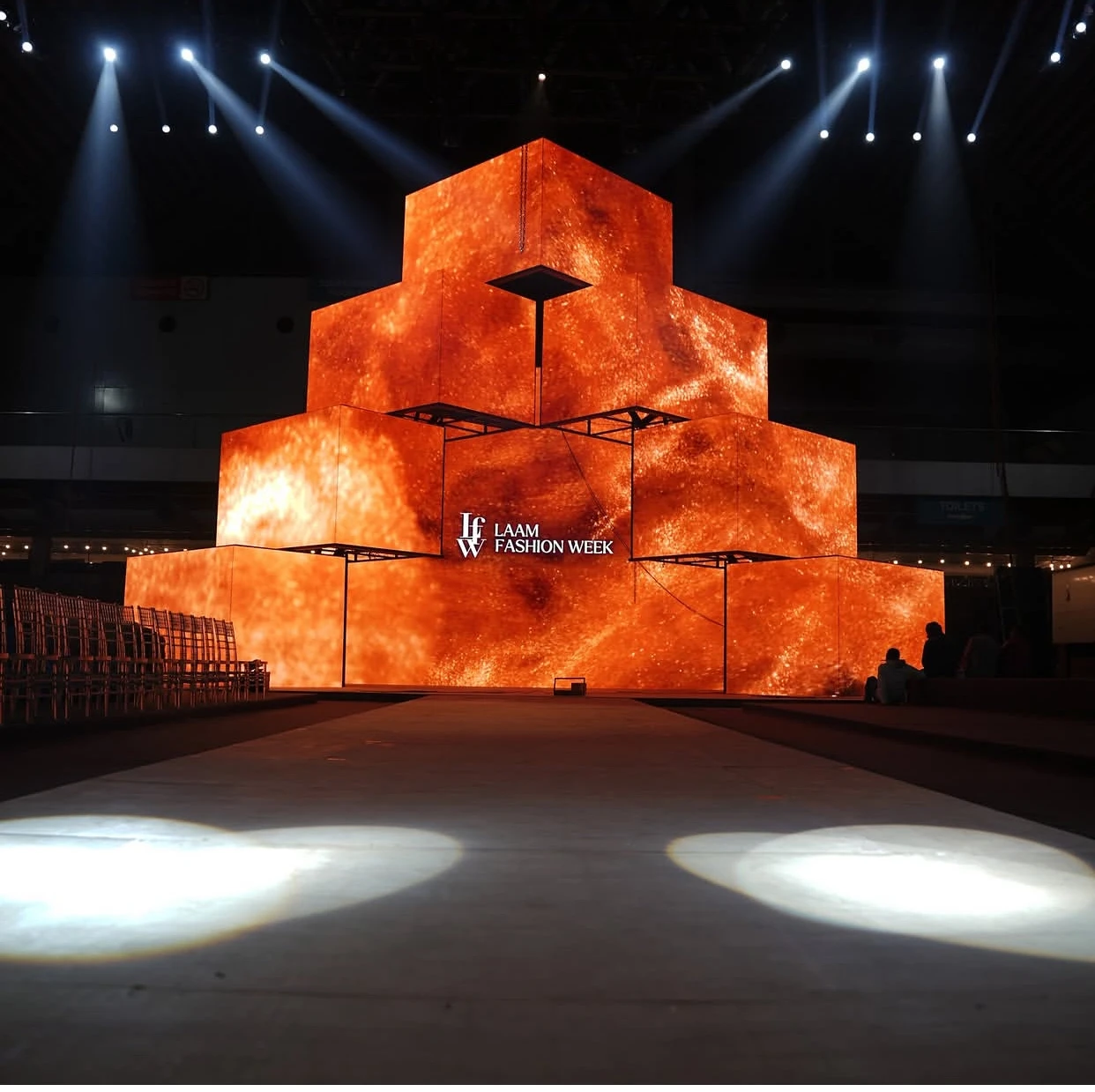
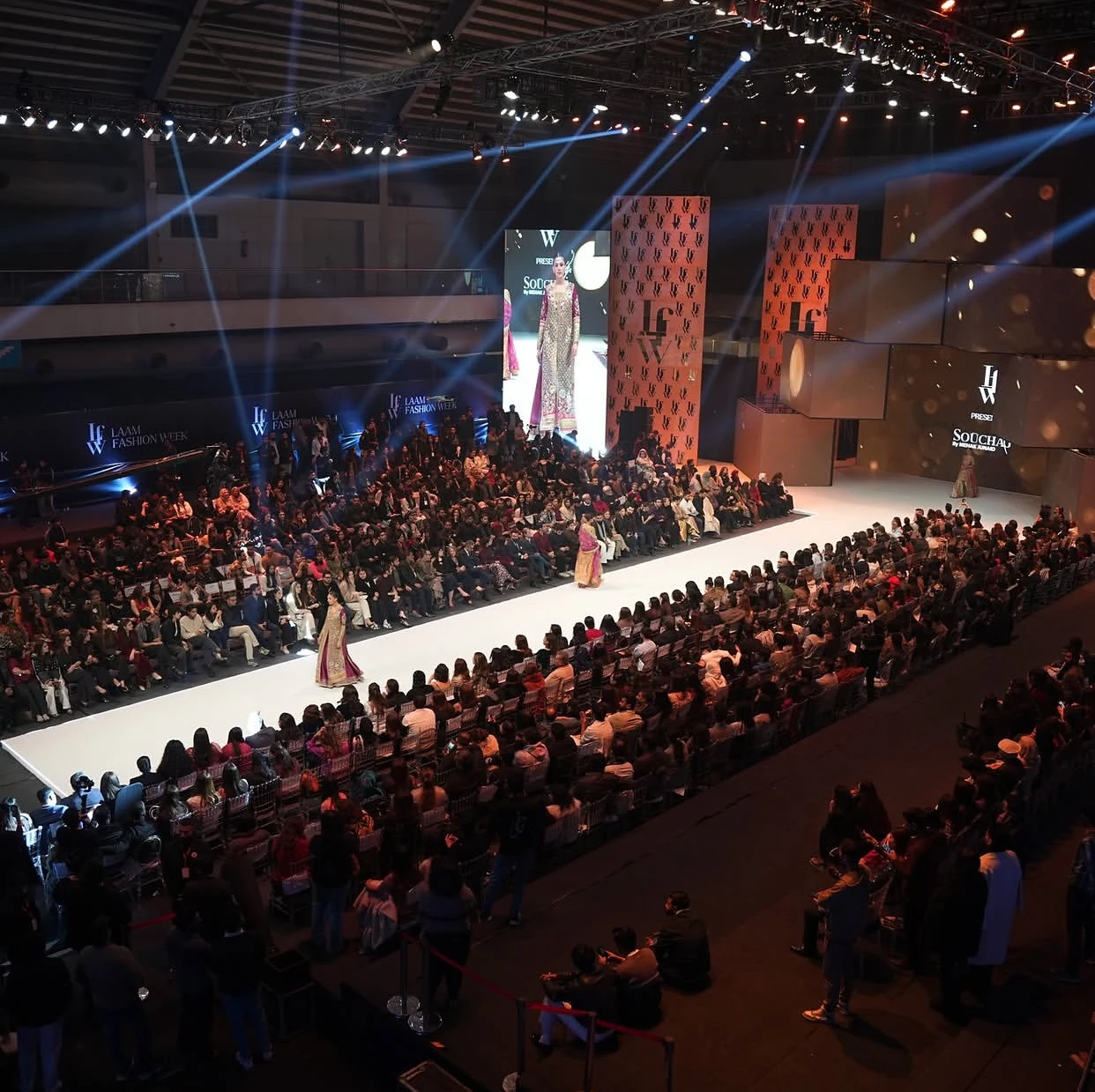
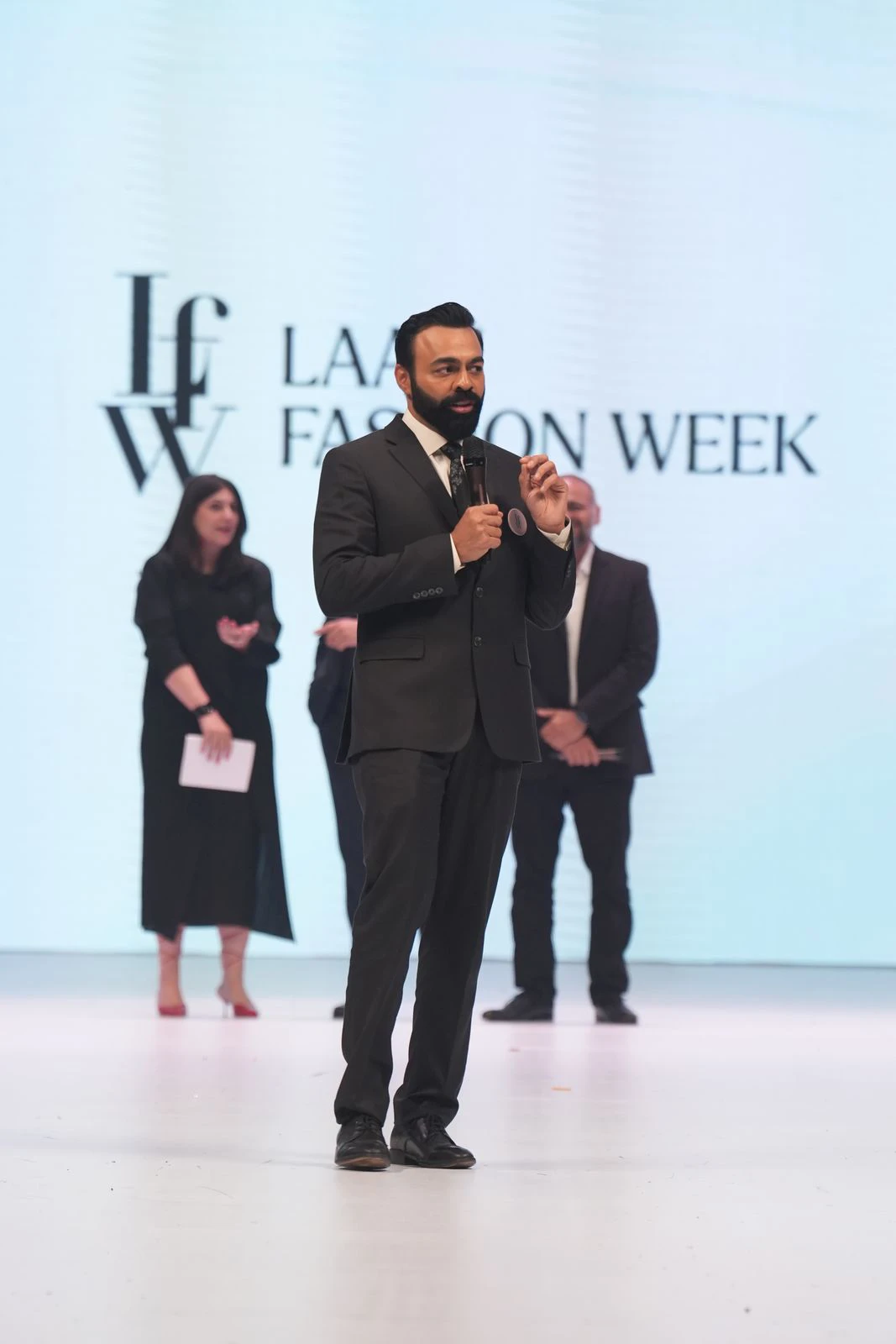
The inaugural LAAM Fashion Week 2026 reinforced this. Held in Lahore seven years after the last PFDC Fashion Week, it brought more than 35 designers and brands to the runway over four days. What separated it from every fashion week Pakistan had seen before was the direct integration of commerce. Collections were simultaneously available for purchase or booking through the LAAM app, including couture orders with free shipping, as the shows were happening. The event was live streamed in over 120 countries and the runway became a product launch mechanism, not merely a spectacle. They then moved onto a solo show for Hussain Rehar and a LAAM Festival. That is what separates a platform from an event organiser. The infrastructure underneath the fashion week made it mean something commercially, not just culturally.
Arif Iqbal, LAAM’s co-founder and chief executive, frames the platform in exactly these terms:
“When we set out to build LAAM, we were not building a store. We were building infrastructure for an industry that had never had it. Every layer we added, from AI-driven personalisation to warehousing to cross-border logistics, was designed on a single assumption: that Pakistani fashion deserved the same digital sophistication global fashion has taken for granted for years. LFW is a natural extension of that thinking. It was not an event bolted onto the marketplace. It is another expression of the same platform, where technology, content and distribution work together to give South Asian fashion a global stage. The ecosystem we are building today, with LAAM at the centre and LFW, LFW Presents and LAAM Festival around it, is what happens when you treat fashion as a technology problem as much as a creative one.”
The Question Nobody Is Asking
LAAM has seemingly solved the domestic reach problem more convincingly than anything that preceded it. The customer in Bahawalpur can now participate in Pakistani fashion in ways they could not before — this is genuinely significant.
What LAAM has not yet demonstrated is whether it can escape the gravitational pull of the same elite curatorial instinct that ultimately hollowed out PFDC.
Take for example the shows at LAAM Fashion Week.
The opening roster read like a hall of fame of Pakistan's most established names. Ali Xeeshan, Élan, HSY, Sania Maskatiya, Hussain Rehar, Nomi Ansari, Zainab Chottani and so on. These are not bad choices. They are the choices that fill seats, generate press and signal legitimacy to a particular audience. But they are also, almost entirely, designers whose primary customer is a woman in bigger metropolises with the income and social context to buy couture or premium pret.
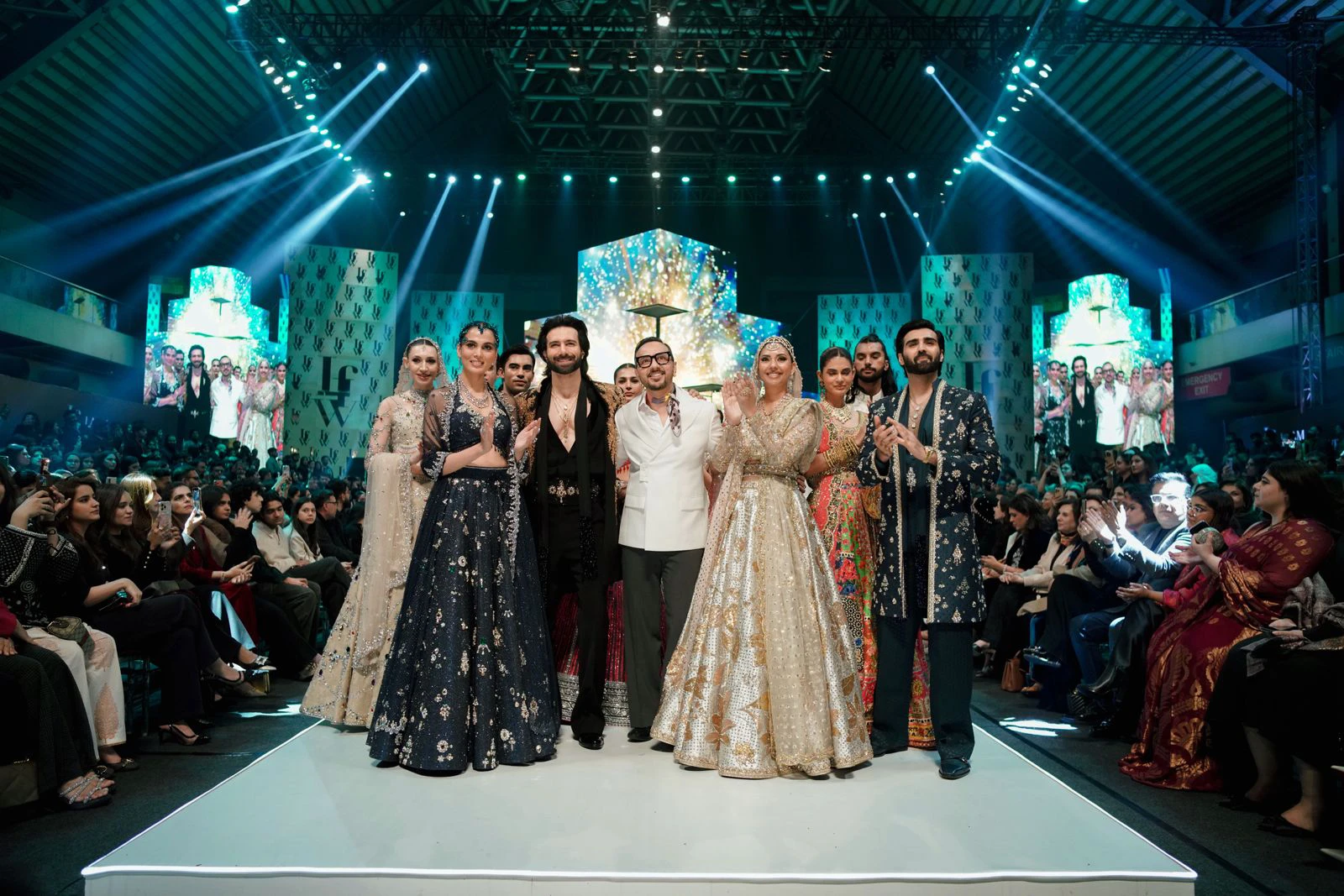
The LFW Hot List, which spotlighted emerging designers from art and fashion schools, offered a glimpse of something more expansive, and in several instances, in my opinion, the emerging talent outperformed the established names on the runway. But a Hot List gesture is not the same as a structural commitment to widening whom the platform serves.
The production told a similar story. From public relations to event management to logistics, and in the direction of the show itself under Saad Ali, LAAM Fashion Week was delivered by the same tight network that stages most of Pakistan's marquee fashion events. The same people, in other words, putting on the same kind of show. The difference, this time, was what sat underneath it. Where PFDC had glamour and little else beneath it, LAAM Fashion Week had an infrastructure holding the spectacle up, and that is the hope worth naming plainly: that the glitter of show night does not become the whole point. It became apparent that the real business of fashion, the thing PFDC gestured at for years and never built, was finally becoming the load-bearing structure, rather than remaining an afterthought.
Saad Ali, founder of Design651 and co-founder of LAAM Fashion Week, makes the case for what it is meant to represent:
“LFW was never designed as a fashion week in the traditional sense. It was built as a platform for the business of fashion in Pakistan. What we stand for is a country whose creative industries are treated as an economy in their own right: designers as brand builders, ateliers as export houses, craft as intellectual property. A brand-led Pakistan is not a marketing line. It is the most credible growth story we have to tell the world, and fashion is one of the few industries that can carry that story with commercial weight and cultural authority in the same breath. LFW exists to hold that space, season after season, and to make sure our industry is measured by the scale of what it builds, not only by the applause on show night.”
The risk LAAM faces is the same one PFDC never resolved: mistaking the curation of excellence for the building of an industry. Curating the best of what already exists is easy, but building the infrastructure that allows what does not yet exist to emerge is harder, slower, and less immediately rewarding. PFDC chose the first path almost exclusively. The question is whether LAAM is genuinely committed to the second.
The Expat Market: Fashion's Largest Untapped Room
There is a more pointed version of this question, and it concerns a market that Pakistani fashion has never made a serious concerted attempt to serve: the diaspora.
Pakistanis abroad number in the millions. The United Kingdom, the United States, Canada, the Gulf, Australia. In every one of these markets, there are Pakistani communities with significant disposable income, deep cultural attachment to home and an appetite for Pakistani fashion that has historically been met by suitcases, by aunties visiting from Lahore, limited access trunk shows and by the occasional luck of a brand that ships internationally. The global Pakistani consumer has, for the entirety of the industry's history, been a secondary concern.
The diaspora, though, is not a niche customer now. The Pakistani diaspora collectively remits tens of billions of dollars to Pakistan every year, a record 41.6 billion dollars in the 2026 fiscal year. These are not people who have lost their connection to Pakistani culture — in many cases, the distance intensifies it. A woman in Birmingham or Dubai does not need to be convinced that Pakistani fashion is beautiful or worth buying — she already knows. What she has never had is a reliable, trustworthy, well-stocked platform through which to buy it.
The risk LAAM faces is the same one PFDC never resolved: mistaking the curation of excellence for the building of an industry. Curating the best of what already exists is easy, but building the infrastructure that allows what does not yet exist to emerge is harder, slower, and less immediately rewarding.
LAAM, in theory, is positioned to be exactly that. The livestream of the fashion week reaching over 120 countries was a signal that the platform understands the global audience exists. The question is whether that understanding translates into genuine commitment. To international shipping infrastructure, to pricing that accounts for cross-border economics, to a product mix that serves the diaspora consumer's actual lifestyle rather than just her nostalgia.
Amir Iqbal, LAAM’s co-founder and chief operating officer, makes the case for its global reach directly:
“For decades, the business of fashion in Pakistan operated within the walls of a store or the pages of a magazine. Which meant, brilliant creatively, but constrained commercially. LAAM was built to change that equation. In an e-commerce-led world, a designer in Lahore should be as reachable to a customer in Toronto or Dubai as any global label, and the technology, logistics and discovery layer that makes that possible is what we have spent years building. 9 million quarterly users, 120,000+ products and shipping to 120+ countries is not a vanity number. It stands as proof that South Asian fashion has global demand when it is given global access. Platforms like LAAM are what turn Pakistan’s creative talent into scalable businesses, and that shift, from creativity to commerce at scale, is the real story of the industry right now.”
Because here is the honest complexity of the expat market. It is not simply a replica of the domestic market relocated. A Pakistani woman in London is buying Pakistani fashion for different occasions, in a different climate, with a different relationship to formality and occasion-wear. She may want the embroidery and the craftsmanship, but she also needs pieces that travel between contexts, pieces that work at a dinner party in Bayswater, not just a wedding in Lahore. The heavily occasion-wear orientation of Pakistan's premium fashion market, which serves the domestic consumer well enough, may not be what converts a diaspora customer into a loyal one.
If LAAM is serious about the global audience, it will need to think about this not just as a logistics problem, but as a curatorial and creative one. It will need to ask which designers are making work that travels, which price points make sense when you add shipping and import duties and which customer experience standards are required to compete with the global platforms a diaspora consumer already uses with comfort and trust.
Is it the Dawn of Something New or Merely a Repetition?
Pakistani fashion has genuinely never had this moment before. A platform with real infrastructure, a fashion week that is commercially integrated rather than commercially adjacent and at least the stated ambition to reach a global audience. These are new conditions and they deserve to be taken seriously.
But new conditions do not automatically produce new instincts. The fashion industry anywhere in the world has a powerful tendency toward self-replication. The same gatekeepers, the same aesthetics, the same social world. These persist not because anyone actively chooses exclusion, but because inclusion requires deliberate effort that disruption and familiarity do not.
PFDC is the cautionary tale here. It had cultural authority, institutional legitimacy and the goodwill of the industry's best designers. It squandered all of it by refusing to grow beyond the room it had already filled. By the time it understood what it had lost, the moment had passed.
If LAAM is serious about the global audience, it will need to think about this not just as a logistics problem, but as a curatorial and creative one.
LAAM is a better-built machine. It has real commerce underneath the spectacle, real reach beyond the familiar cities and a platform architecture that is, in principle, capable of serving the Pakistani consumer wherever they are in the world. Whether it fulfills that potential depends on choices that are not technical; it depends on whether the platform is willing to back designers who do not yet have famous names, to serve consumers who do not only live in the major Pakistani metropolises and to build a global Pakistani fashion identity that is more than an export of local occasion wear.
The infrastructure exists. The audience, domestic, diaspora, global, is waiting. What comes next will reveal whether LAAM is building a fashion industry or merely a better version of the club that came before it.
Photo credits: Waqar Ahmed Butt and his team at Paragon Studio, courtesy Lotus PR.
Foha Raza is a writer and communications professional with a background spanning fashion, culture and corporate affairs. She has written for Dawn, Hello! Pakistan, and HUM News.