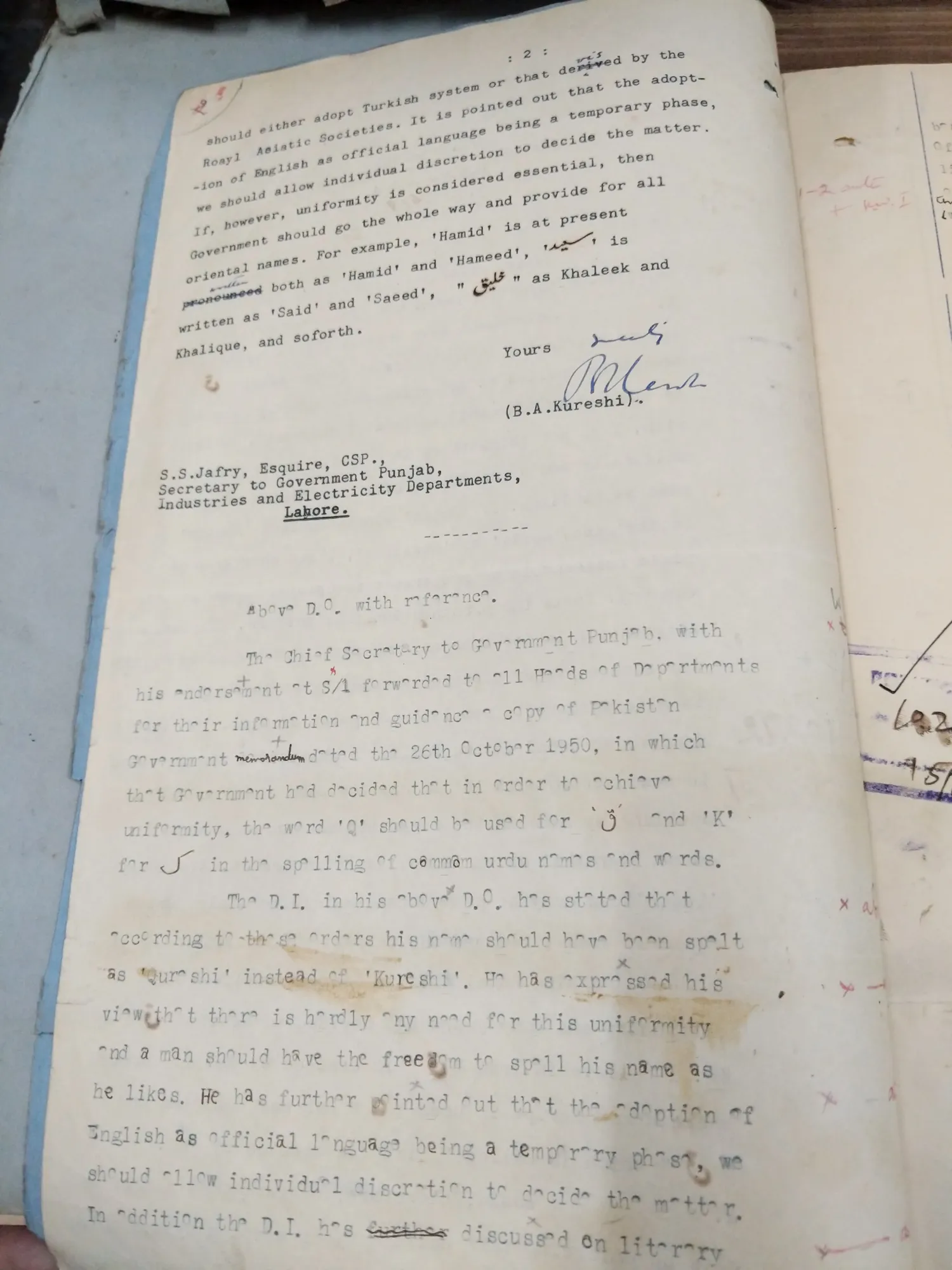
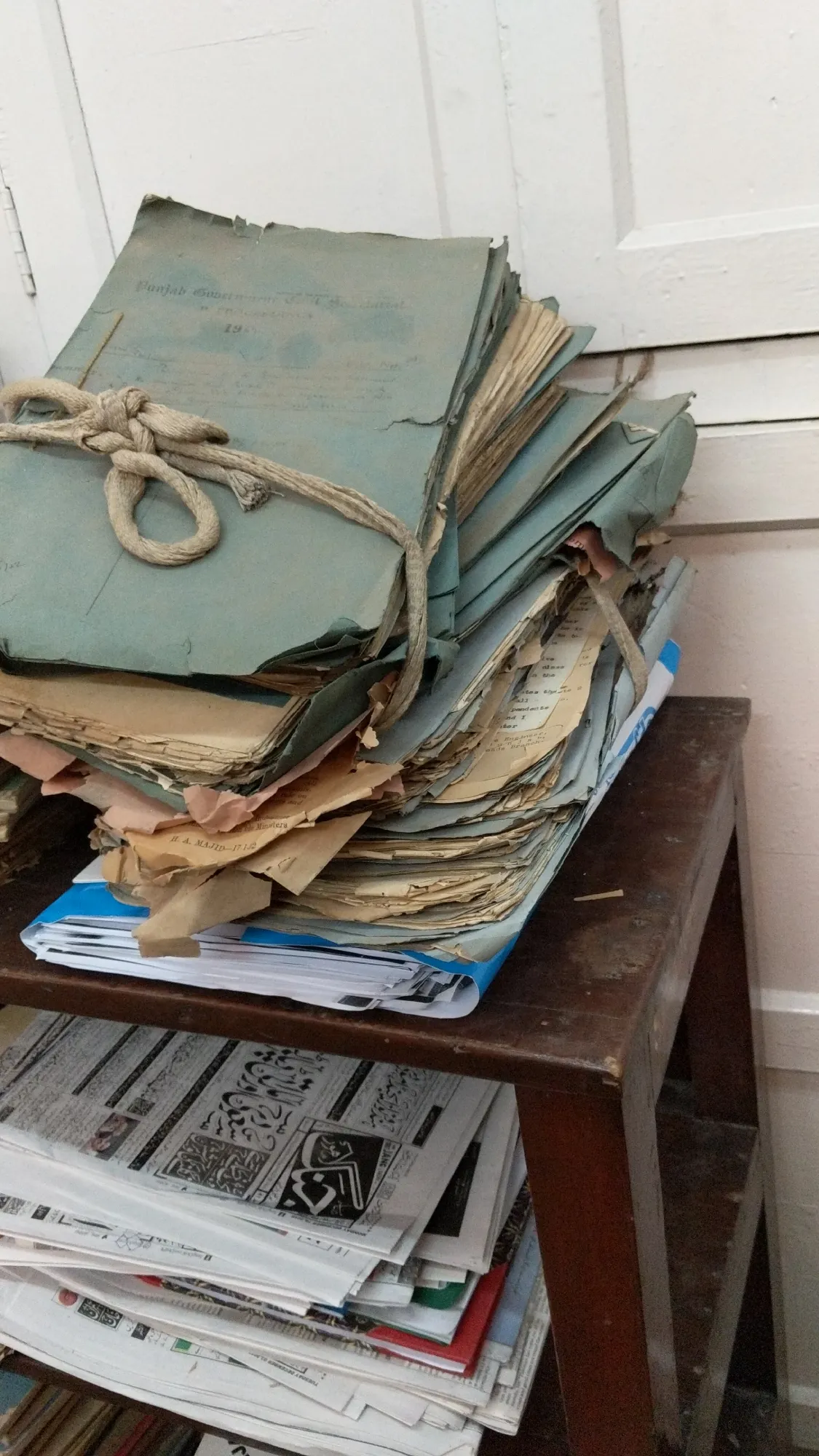
On 19 October 1951, the Director of Industries for Punjab wrote to his department secretary in Lahore to explain why he would not be changing the spelling of his name.
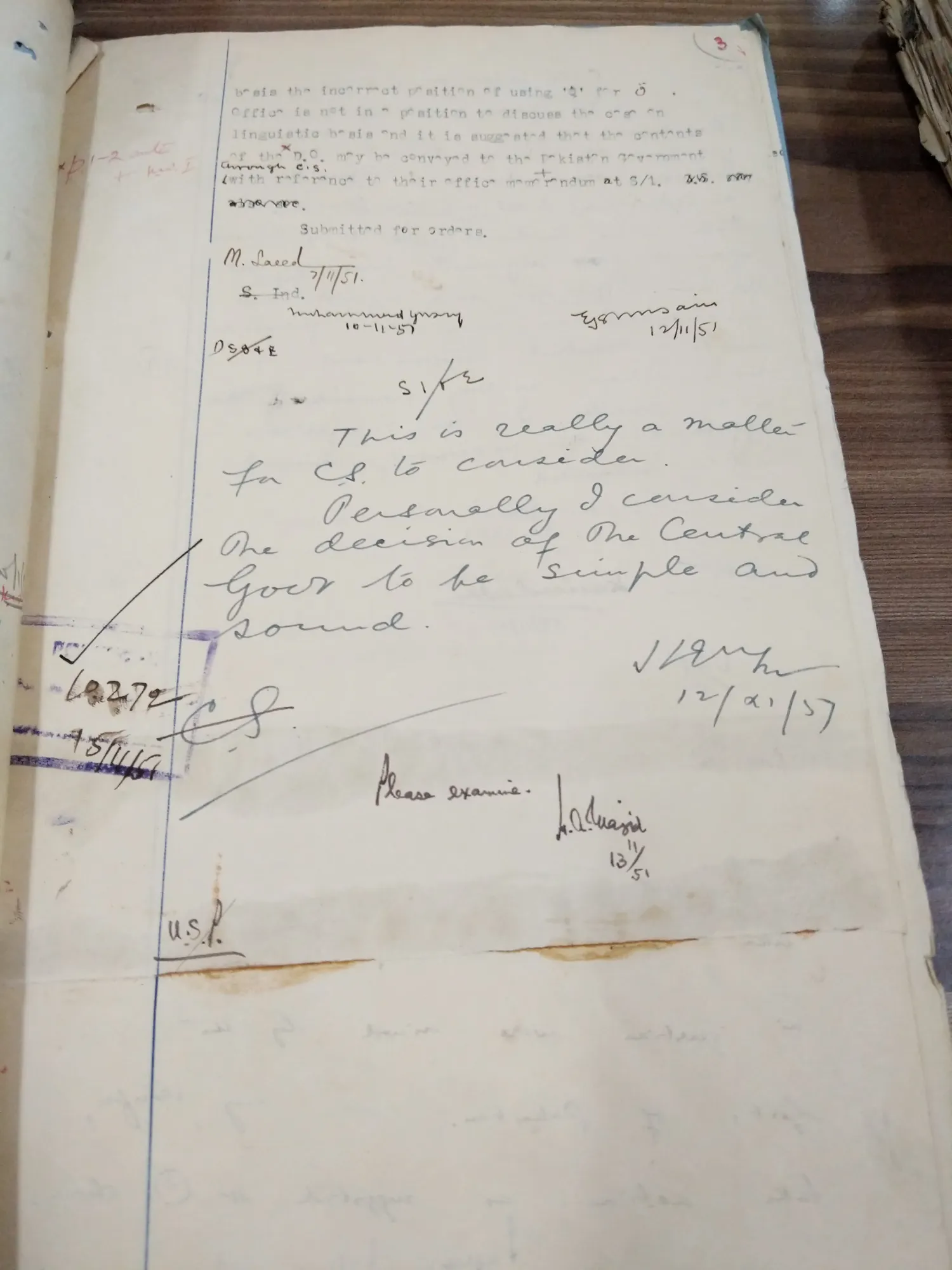
The government had issued an endorsement in the interests of uniformity. The Urdu letter ق would henceforth be rendered in English as "Q". The Director of Industries, who had spent his life as Kureshi, was now required to be Qureshi.
He objected on principle first. "I do not think there is anything to be said for this uniformity," he wrote, "and a man should have the freedom to spell his name as he likes. If 'Smith' can be spelled 'Symthe' or 'Psmith' and 'Carly[le]' as 'Carlisle', I see no reason why rigid rules should be prescribed for proper names in this country."
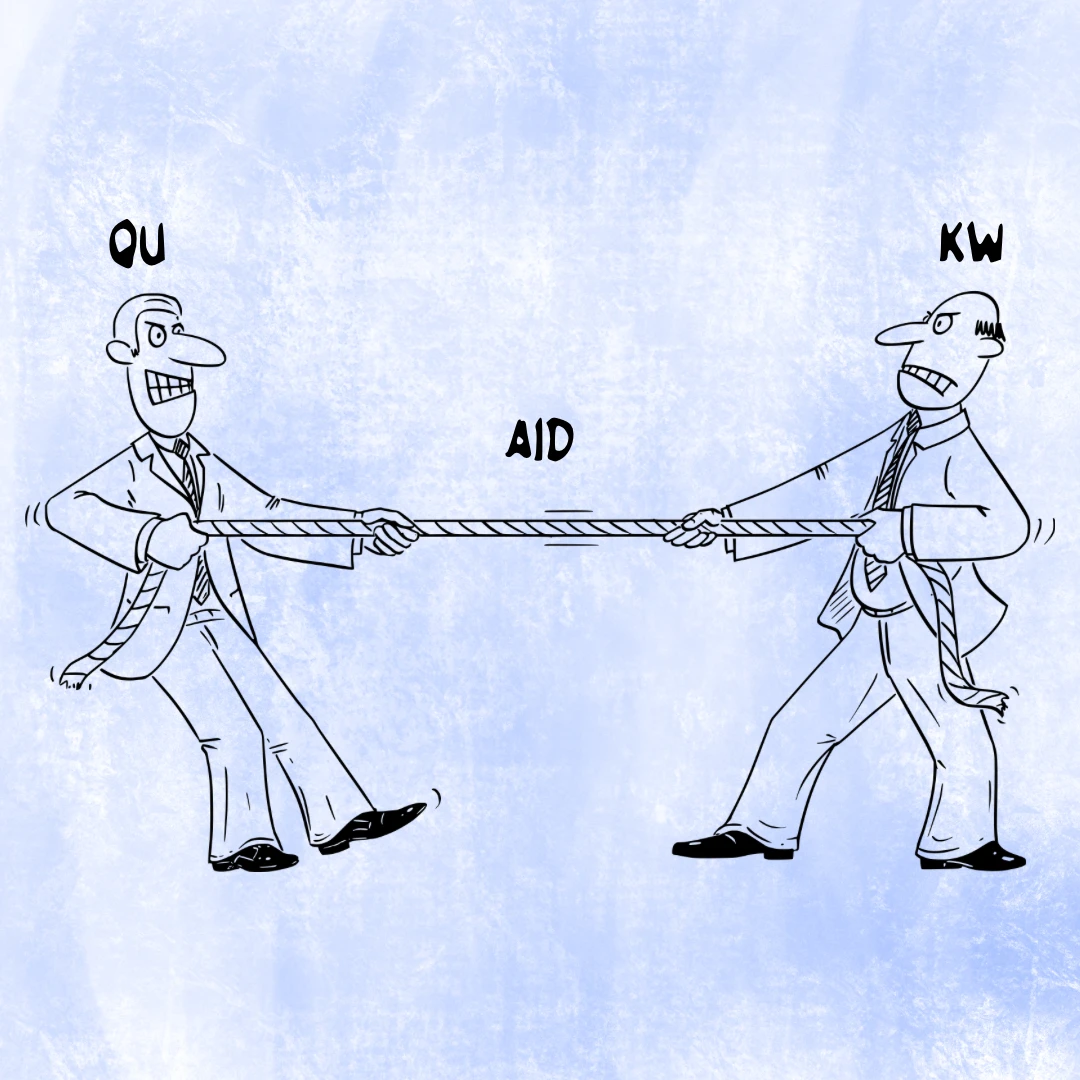
He then objected on technical grounds, where his case was stronger. "'Q' itself denotes no sound in the English alphabetical system," he wrote. "Used in conjunction with 'U' it has the same sound as 'kw'." Under the government's own rule, his name would now be pronounced Kwreshi.
He followed the rule one step further. If ق must always be Q, then "Quaid can only be pronounced Kwaid (like Qualm)... because the correct pronunciation is 'Kaid'."
In the interest of national uniformity, the Punjab government had issued an order that mispronounced the title of the founder of the nation.
[T]he daily business of government had to stop happening in English and start happening in Urdu: the notes on files, the revenue records, the departmental codes, the letters between a deputy commissioner and his commissioner.
The letter raises questions that go well beyond one man's surname. Why was a provincial government legislating on the letter Q? Who had drafted a transliteration rule without asking anyone who knew the phonetics? And what was the state attempting that made the spelling of official names a matter for government orders at all?
Urdu had been made the national language, most publicly by Jinnah in Dhaka in March 1948, and the argument over that decision would become one of the defining fractures of the country. But a declaration is only a sentence. Making it come true meant that the daily business of government had to stop happening in English and start happening in Urdu: the notes on files, the revenue records, the departmental codes, the letters between a deputy commissioner and his commissioner.
Crucially, however, nobody had quite worked out how.
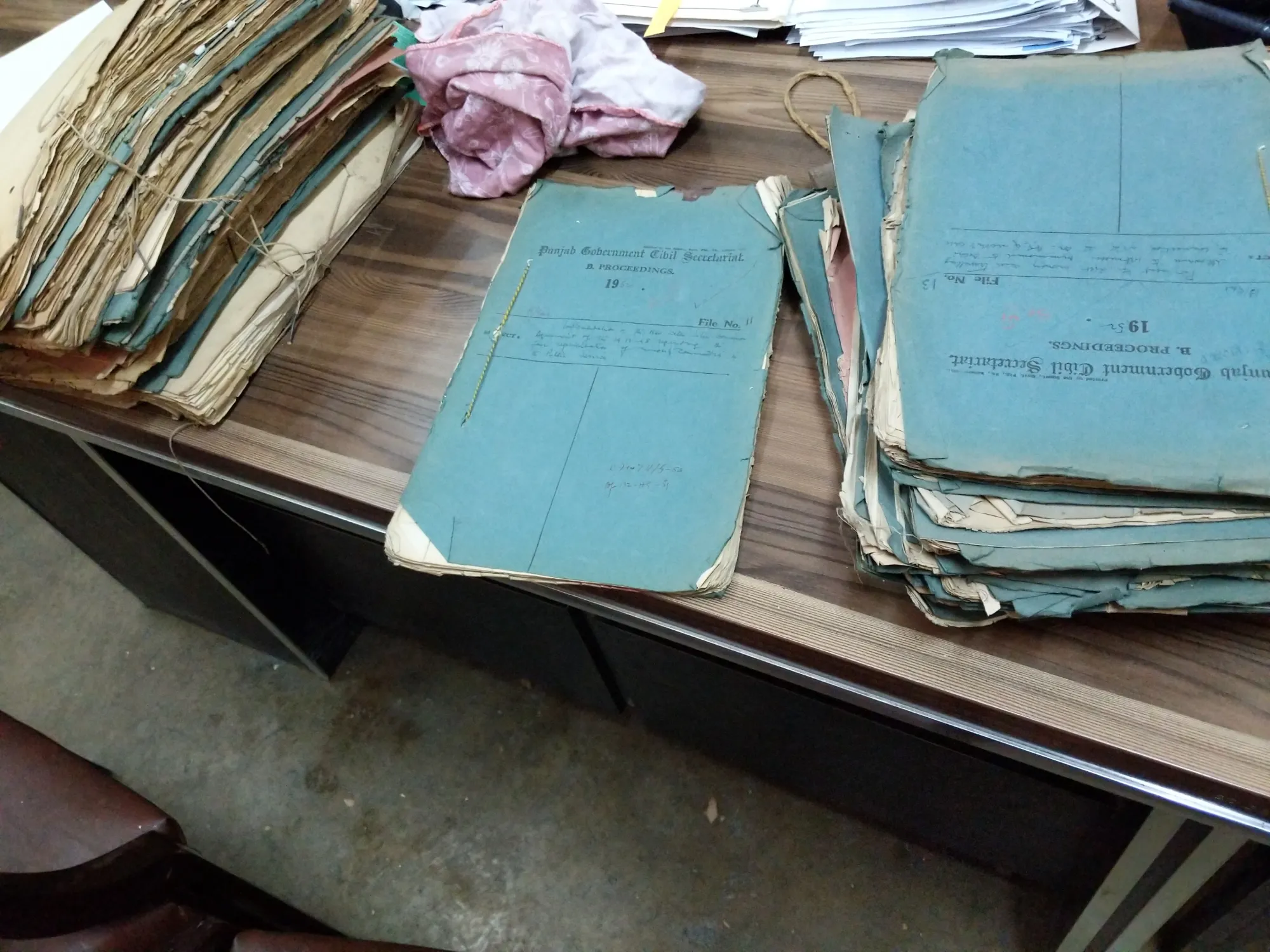
The Punjab Civil Secretariat ordered the substitution in August 1950. Two and a half years later, on 13 March 1953, the Chief Secretary of the Punjab, H.A. Majid, wrote to every Deputy Commissioner in the province with an assessment of progress.
There had been none.
"In a majority of cases," he reported, "the office notes are still being written in English and no serious effort is being made to bring about any improvement." He attributed this to "apathy towards Government orders."
He then made the case for the defense himself. The district staff faced genuine difficulties, he acknowledged, chief among them "the absence of Urdu equivalents of the English terms and the non-availability of Urdu typewriters."
A booklet was compiled containing the approved Urdu translations of government terms and phraseology. This was the state's attempt to supply within one volume the words it had not previously thought to invent.
The government had not supplied the words. It had not supplied the machines.
Both would arrive shortly, the Chief Secretary wrote, and the government was "doing everything possible to get the translation of codes etc. completed and to make Urdu typewriters available at as early a date as possible." In the meantime, the difficulties "may be real," but they could not be accepted as an excuse. Deputy Commissioners were to refuse any file not submitted in Urdu, and to take suitable action against officers who disregarded the order.
Clerks across the Punjab were now required, on pain of disciplinary action, to write in a vocabulary that did not exist, on typewriters that had not been bought.
The Chief Secretary was not unsympathetic. Staff would "no doubt feel handicapped in expressing themselves in Urdu," he conceded, "but that will be a temporary phase. With a little experience they will be able to surmount all difficulties."
The vocabulary problem did receive attention. A booklet was compiled containing the approved Urdu translations of government terms and phraseology. This was the state's attempt to supply within one volume the words it had not previously thought to invent.
In December 1952 a copy was dispatched to the Constituent Assembly of Pakistan.
It never arrived.
The file records that the enclosure "was duly despatched from here and might have been lost in transit or misplaced in the office of the C.A. of Pakistan." Further copies, it was suggested, could be obtained from the Government Book Depot in Lahore, on payment.
The national legislature was invited to buy its own dictionary.
Taken on their own, these files are a comedy of administrative self-obstruction, and a good deal of the archive of early Pakistan reads the same way. This particular policy cannot be left there. While the Punjab secretariat was failing to procure typewriters, the same policy was producing something else a thousand miles to the east.
On 21 February 1952, thirteen months before the Chief Secretary's letter, police fired on students in Dhaka who were demonstrating for the recognition of Bengali. Bengali was the first language of the majority of Pakistan's citizens. The demand was that it be given equal status with Urdu. The answer, then and for some time afterwards, was no.
The state that could not tell a tehsildar in Sargodha the Urdu for a revenue term, and could not get him a typewriter, was at that same moment insisting that Urdu alone could hold together a country divided by a thousand miles of India, and was willing to shoot people over it.
These are not two stories. The state that could not tell a tehsildar in Sargodha the Urdu for a revenue term, and could not get him a typewriter, was at that same moment insisting that Urdu alone could hold together a country divided by a thousand miles of India, and was willing to shoot people over it. The incapacity and the certainty were not in tension. They were one conviction, seen from the district and from the centre.
Which is why the Director of Industries is worth reading now. He was not a dissident. He was a senior official writing through official channels, on state issued paper, about his own name. His objection was not that Urduisation was wrong, but something narrower and harder to answer. That the men issuing these orders had not thought them through. They had not asked anyone who knew the phonetics. The Royal Asiatic Society had faced the same problem years earlier and solved it differently. Persian practice differed again. Turkey had dispensed with Q altogether. The result of not asking was a rule that mangled the title of the Quaid.
Either give up enforcing this uniformity, he proposed, or adopt a system that works.
Official Pakistan still issues periodic directives requiring Urdu in government offices, and government offices still, for the most part, work in English. The equivalents are still improvised. The compliance is still notional. And in the Punjab Archives, there sits a letter from a man who tried to tell them, in 1951, that they were spelling his name wrong.

Rohail Salman holds a PhD in history from George Washington University, where he wrote on state-making and nation-building in Pakistan's first decade. His work on Pakistan's language policy has been published in South Asia: Journal of South Asian Studies (2024).