In Javed Iqbal: The Untold Story of a Serial Killer, there is never any doubt about who killed the children. Javed Iqbal's horrific pursuit of "one hundred children" to molest, murder and dissolve in acid in 1999 remains one of Pakistan's most infamous crimes. If it has returned to the public imagination with renewed force, much of the credit belongs to the internet's abiding fascination with true crime.
Writer-director Abu Aleeha seems keenly aware of this. The subtitle itself invokes one of the internet's most exhausted formulas: The Untold Story of X. Type the phrase into a search bar and you'll find everything from MS Dhoni and "Project Imran Khan" to Brexit and the New Testament Church. The phrase promises hidden revelations, and yet rarely delivers them. Far from being untold — if such a thing is ever possible — Javed Iqbal joins this crowded cohort with yet another retelling of the serial killer. Unlike most ‘Untold Stories,’ however, this one barely coheres into a story at all.
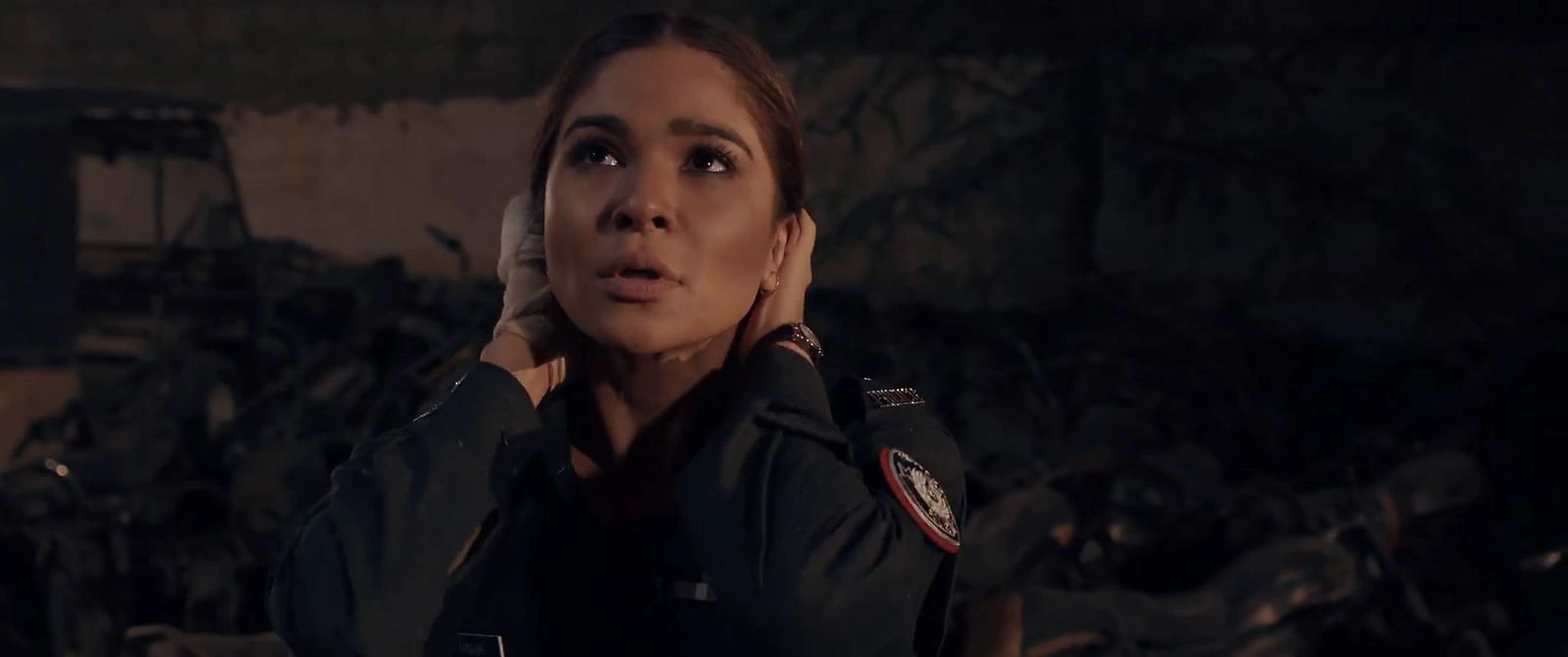
Originally slated for release in 2022, the film became embroiled in a months-long tussle with Pakistan's censor boards before eventually premiering a censored version in 2023 under the title Kukri, Iqbal's real-life nickname. The uncensored cut finally appeared on May 27 on the SeePrime YouTube channel, timed to coincide with Eidul Azha. Starring Yasir Hussain as Iqbal and Ayesha Omar as Zara, a fictional police officer leading the investigation, the film unfolds largely inside a decrepit holding cell populated by comically incompetent, or outright villainous, policemen.
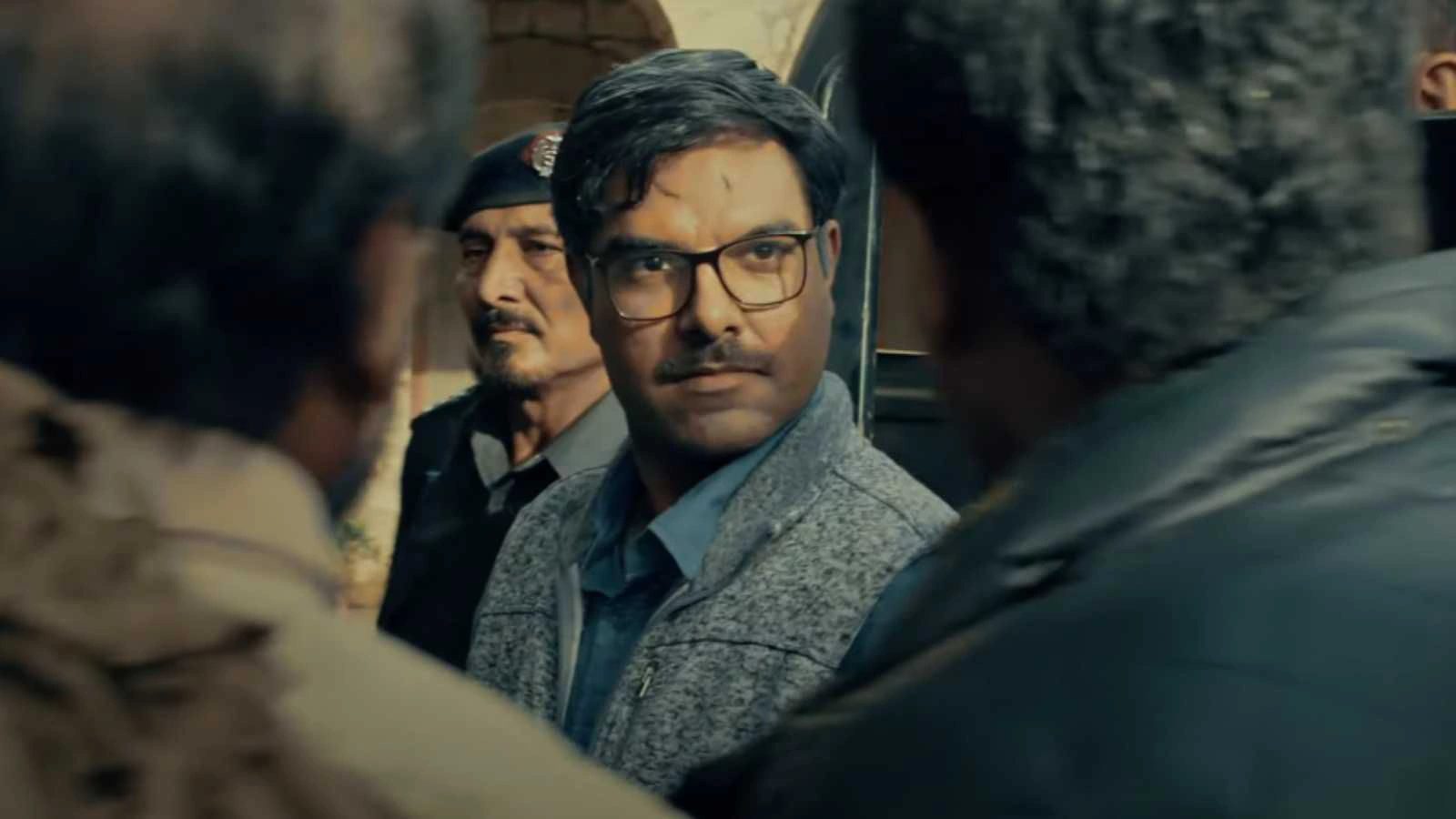
Like much of Aleeha's filmography, Javed Iqbal suffers from an inchoate identity crisis. Where Taxali Gate (2024) strained to reconcile rape-revenge cinema with courtroom melodrama, this film jumps between police procedural, public-awareness campaign and psychological thriller. These ambitions need not be mutually exclusive, but Aleeha never vivifies any of them. Instead, they stay in constant competition, yielding a desultory screenplay, and performances that seem stranded without a coherent register.
Rather than confronting viewers with the banality and grotesquerie of evil, the film grants Iqbal an almost anti-heroic pathos that sits uneasily beside his real-life counterpart, whose diary dwelt obsessively on the mechanics of his crimes and sexual fetishes.
The crisis of visual storytelling in Pakistan is a whole other grievance, one that will find few mourners within the industry. Between Javed Iqbal's theatrical release and its YouTube premiere, the teal-and-orange palette and its jaundiced discontents have become a catch-all shorthand for "good production," a consensus shared, somewhat dismayingly, by film undergraduates and industry professionals alike. In this climate, content, and the marketing of a film as bold, necessary or socially urgent, far outweigh any sustained engagement with film form. It may therefore be beside the point to deliberate on Javed Iqbal's status as cinema when it seems content merely to be a story.
An extended, typo-riddled disclaimer opens the film, insisting that its purpose is to "educate" parents and children about predators and "potential pedophiles." Noble ambitions, certainly. But one labours these distinctions because the film's chosen educator turns out to be the serial killer himself. Between corrupt, incompetent policemen and a child murderer, the latter emerges as the closest thing the film has to a moral instructor.
The image of The Silence of the Lambs lurches to mind, not because the two films share similar ambitions, but because it demonstrates how familiar ingredients can acquire genuine dramatic force through precision and restraint. The relationship between Inspector Zara and Iqbal, however, bears little resemblance to that between Clarice Starling and Hannibal Lecter.
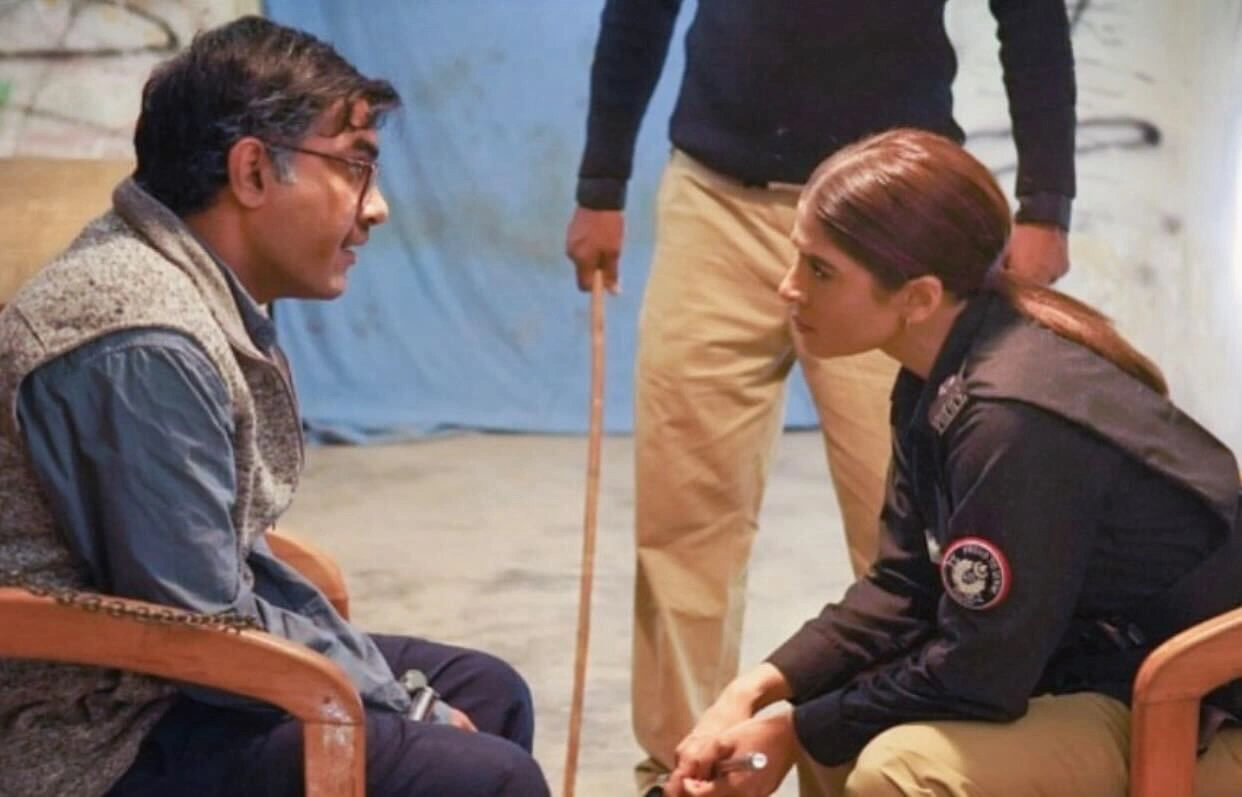
Omar delivers the film's most discomfiting performance. Her line readings are stiff, her authority unconvincing, and even the way she carries herself with a baton oscillates between unintentionally comic and merely awkward. The internet has predictably singled her out for ridicule, but more puzzling is the praise lavished upon Hussain. Then again, neither actor can be fully blamed for their shortcomings when the screenplay is an albatross around their necks.
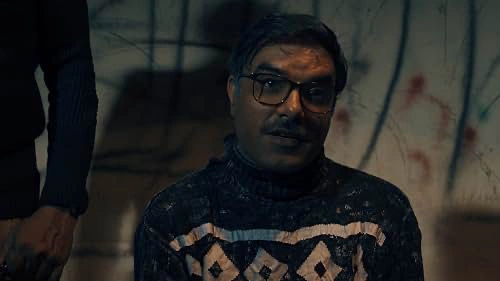
Hussain occasionally summons flashes of Anthony Perkins' unnerving grin, but his Iqbal spends less time inhabiting the psychology of a predator than mythologising himself as the apotheosis of society's moral failure. When he is not erupting into fitful laughter or fishing for another cigarette, he is delivering speeches directly to the audience's conscience. In conspiratorial monologues, he laments the missing children, the indifferent parents, the apathetic authorities, wondering why no one bothers to ask whether any of the kidnapped boys might still be alive.
The result is a strange transfiguration. Rather than confronting viewers with the banality and grotesquerie of evil, the film grants Iqbal an almost anti-heroic pathos that sits uneasily beside his real-life counterpart, whose diary dwelt obsessively on the mechanics of his crimes and sexual fetishes.
A similar confusion animates Zara. She is introduced prowling Lahore's streets undercover, baiting a serial harasser before single-handedly beating him senseless in action scenes so clumsy they border on slapstick. Afterwards, she solemnly declares, "There must be many beasts like him who go out at night to hunt women," before abruptly switching to English: "I can take care of myself."
[N]either actor can be fully blamed for their shortcomings when the screenplay is an albatross around their necks.
When she is not punctuating scenes with oddly emphatic bursts of English, Zara is perfunctorily flogging a strangely submissive Iqbal, whom the film renders so passive he appears almost eager for the punishment. The film is decidedly uninterested in the sexual pathology that motivated its subject. Instead, it shunts those questions off into generic exchanges between detective and suspect.
Mostly, however, Zara exists to be humiliated. Everyone seems in on the joke about the police, bureaucracy and the state – even Iqbal – except her. By now, at least two films associated with Pakistan's “New Wave” — Javed Iqbal and Chikkar— have projected the same binary: the polished, Urdu-English-speaking officer versus the unruly Punjabi policeman. Both populate their precincts alongside the same stock figures: slimy, wiry officers and pot-bellied comic relief. Terrible extras continue to be a persistent infirmity of this new cinema, though they are hardly Javed Iqbal's greatest weakness. Even its main cast seem abandoned by the director's uncertain vision.
It is highly unfortunate that the historical record tells a far more compelling story. As reported by TRT World, Iqbal first mailed a confession to Lahore police detailing the sexual assault and murder of one hundred boys. Deputy Superintendent Tariq Kamboh paid only a cursory visit to the house, leaving without conducting a proper search. It was this institutional indifference that prompted Iqbal to send the same letter to the newspaper Jang. There, crime editor Jamil Chishti and a colleague visited the house themselves, uncovering human remains, vats of acid, children's clothing and toys.
Aleeha recreates this discovery, but transfers it wholesale to Inspector Zara. The senior officers, we are told, are corrupt and compromised. Zara alone possesses the courage to defy them, leading her men into the devil's lair where they discover decomposing bodies suspended in acid-filled containers. She weeps, she vomits. Her men have stronger stomachs. Back at the police station, a fatuous loafer lurking around for confidential scraps of information is revealed to be a crime reporter assigned to the case.
Why omit the press? Is Zara meant to expose the police force's failings or embody its last vestige of integrity? Is Iqbal a vile sociopath or a mordant mirror held up to society's failures? Javed Iqbal gestures toward each possibility, only to summarily dispatch it before any can acquire dramatic or moral weight. The film's most enduring asset, then, may well be the familiar afterlife of censorship. A bad film is ordinarily consigned to oblivion; a banned one is often relieved of that burden altogether. And in Pakistan, where film culture is still finding its footing, being censored is emphatically better than being forgotten.

Manahil Tahira is a Karachi-based journalist and writer whose work moves between fiction and nonfiction, tracing the intersections of bodies, spaces, visuality and technology. Formerly desk head of Lifestyle at The Express Tribune, their creative writing has appeared in Arzu Anthology, Fahmidan Journal, Lakeer, and is forthcoming in The Aleph Review (2025). They are also a Non-Fiction Editor at South Asian Avant-Garde (SAAG) magazine.