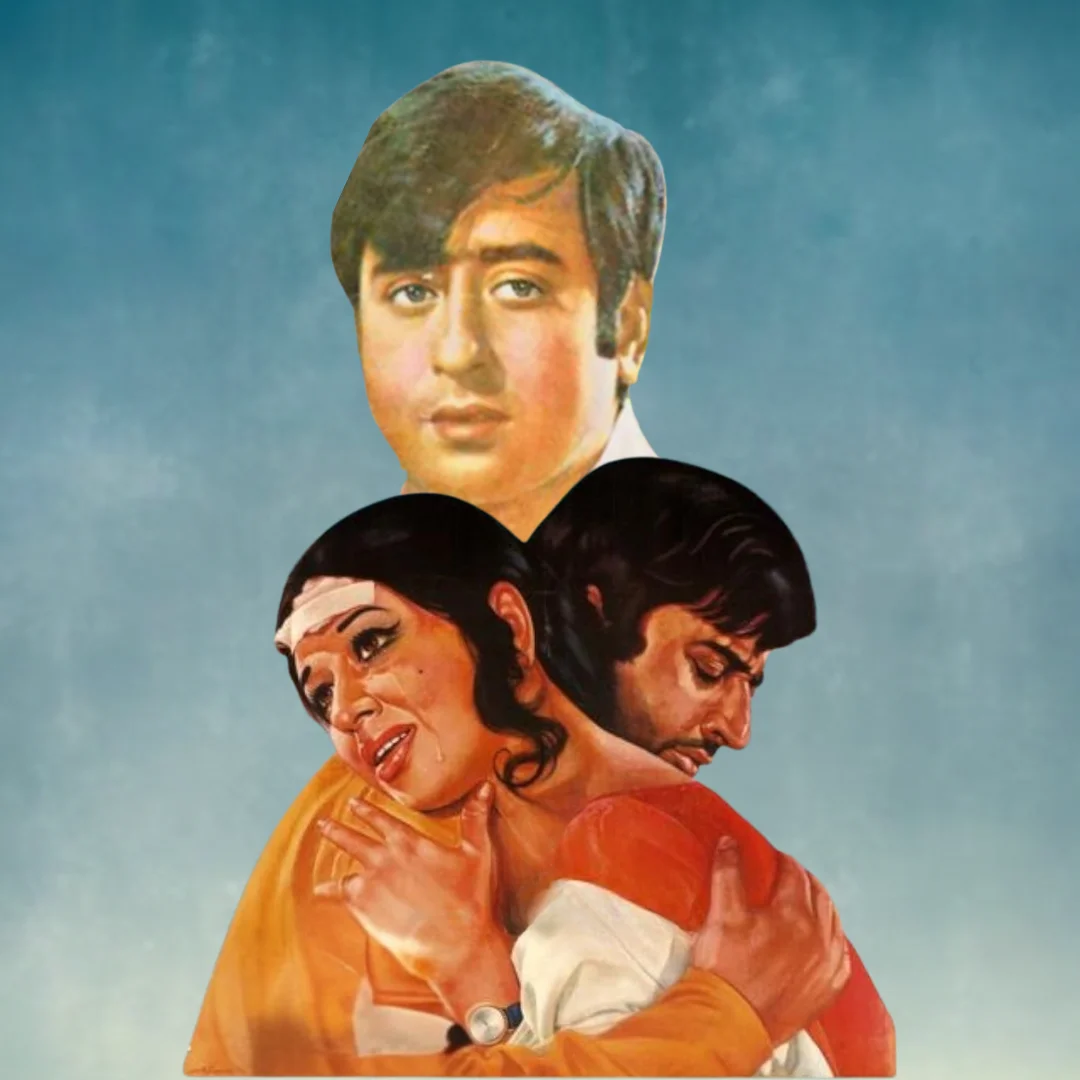
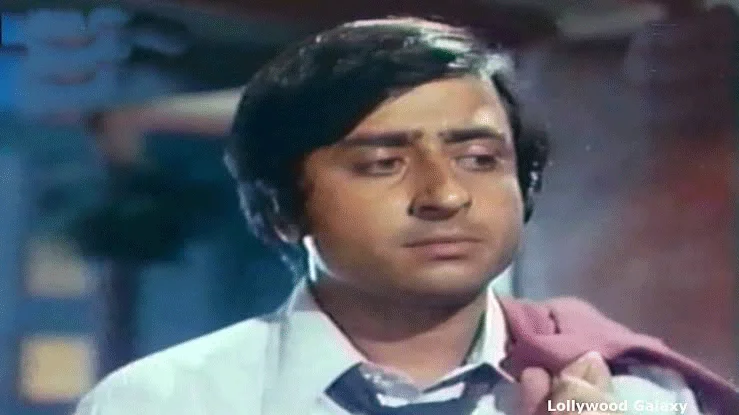
Close to the ninety-minute mark in Nazrul Islam's Aina (1977), Iqbal (Nadeem) returns to his single-bedroom house, hastily transformed by his mother-in-law in an attempt to disguise his working-class status. Bare floors have given way to plush rugs, wooden cots to cream-coloured sofas, empty walls to ornamental shelves. A drunken couple drifts through the living room in oblivious choreography. Iqbal stops at the threshold, one hand pinching the coat slung over his shoulder, his gaze taking slow inventory of the room, his jaw in a visible clench.
Iqbal meets his wife Rita's (Shabnam) eyes: his manifestly enraged, hers stricken with dread. He surveys the room once more, this time lingering over its new acquisitions. When his gaze returns to Rita, the anger has crumbled into raw, wounded vulnerability.
Despite his vast filmography, Aina remains Nadeem's most enduring blockbuster. A deceptively simple story of a wealthy heiress marrying a hotel receptionist against her parents' wishes, the film's conflict crystallises in this scene: Rita, torn between her husband's dignity and her mother's obsession with wealth, reluctantly hosts her family's wayward friends, much to Iqbal's displeasure. In the decades since its release, Aina has survived as a shorthand for Pakistani cinema itself, alongside the presumed camp of Maula Jatt (1979), though this discursive gripe does not make either film's quality suspect. Visibility, however, is the least interesting measure of a film's achievement. Just as Aina's canonical status does not make it the summit of Pakistani cinema, its extraordinary afterlife cannot contain Nadeem's craft as an actor.
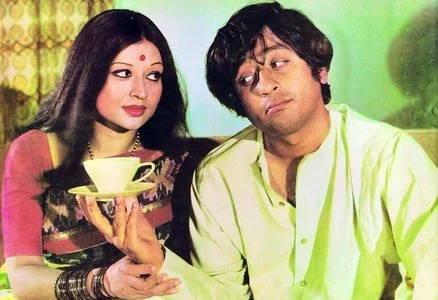
Among the many clichés that attach themselves to Nadeem, ‘versatile’ is the easiest. Its even more exhausted cousin, ‘chameleonic’, usually follows close behind. Actors spend entire careers pursuing both. Yet, versatility is the least interesting way to describe a performer. It measures range when the more revealing question is permeability: the ease with which an actor lets cinema pass through him. A more apt compliment is malleable. To let cinema in and be changed by it. Or, if one is inclined toward cinephile mysticism, to become a conduit for its most expressive possibilities. If malleability needs a contemporary emblem, consider the sprawling career of Daniel Day-Lewis: a wiry, racist gay punk in My Beautiful Laundrette (1985); a confined, drawling, erratic genius of My Left Foot (1989).
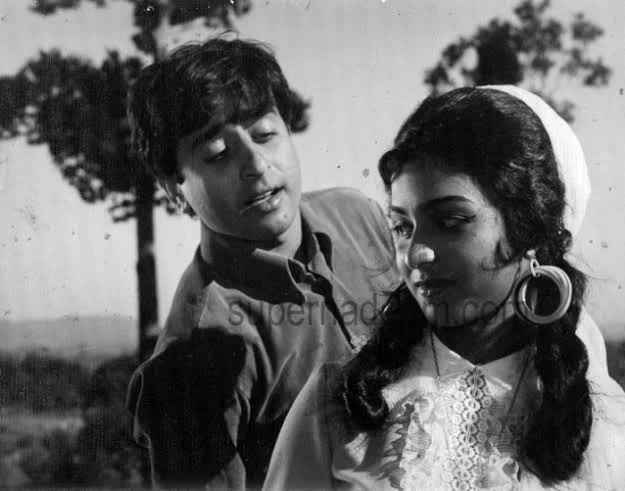
If this kind of malleability, in its most notorious form, has come to mean method acting, then Nadeem's career is enigmatically stripped back. One would be hard-pressed to find him disappearing into radically different genres or pursuing conspicuously transformative roles. Then again, this says less about Nadeem than it does about the grammar of Pakistani cinema itself. Its mainstream history offers relatively few examples of avant-garde experimentation, or genre departures such as the biopic. What thrives instead is the social film, organised around melodramatic romance, a convention even as it leaves surprising room for reinvention.
It is precisely melodrama's excess—of feeling, coincidence, and plot—that makes Nadeem the most malleable actor in Pakistani cinema. Against the romantic heroes of his generation, each of whom arrives with a readily legible screen persona, Nadeem remains unusually difficult to pin down. Mohammad Ali's characters come bearing gravitas, whether as the impoverished lover or the wealthy heir, but they are never naïve. Waheed Murad's irrepressible flamboyance follows him from role to role, making even his street-smart protagonists feel faintly theatrical. Shahid, meanwhile, carries a stubborn aura of vice, one that survives across tricksters, conmen, playboys, and adulterous drunkards alike. Despite the limited repertoire of roles circulating among Pakistan's leading men, Nadeem is unusual for arriving with so little of the baggage of a superstar. Rather than settling into a single screen persona, he allows the romantic lead to acquire a different emotional register from film to film.
Despite the limited repertoire of roles circulating among Pakistan's leading men, Nadeem is unusual for arriving with so little of the baggage of a superstar. Rather than settling into a single screen persona, he allows the romantic lead to acquire a different emotional register from film to film.
What makes a great actor? The answer has always hovered somewhere between abstraction and synecdoche. Is it someone who can cry on cue? Scream without restraint? Play madmen, murderers, lovers? Make villains irresistible and romantics suspect—or, occasionally, the other way around? We reach instinctively for words like presence, range, or the ability to inhabit a character's "essence," as though performance were simply a matter of accumulation. But the more interesting question is what an actor can do when there is almost nothing to do.
Reviewing Jean Renoir's French Cancan (1954), Roger Ebert writes of Jean Gabin: "One sign of a great actor is when he can be alone by himself on the screen, doing almost nothing, and producing one of a film's defining moments." Pakistani commercial cinema rarely affords its actors that luxury. It is too crowded—with songs, family dramas, comic detours, and melodramatic excess. Yet Ebert's observation becomes unexpectedly useful here. It asks us to separate great acting from dialogue, plot, even action, and in doing so reveals how abundant Nadeem's craft really is.
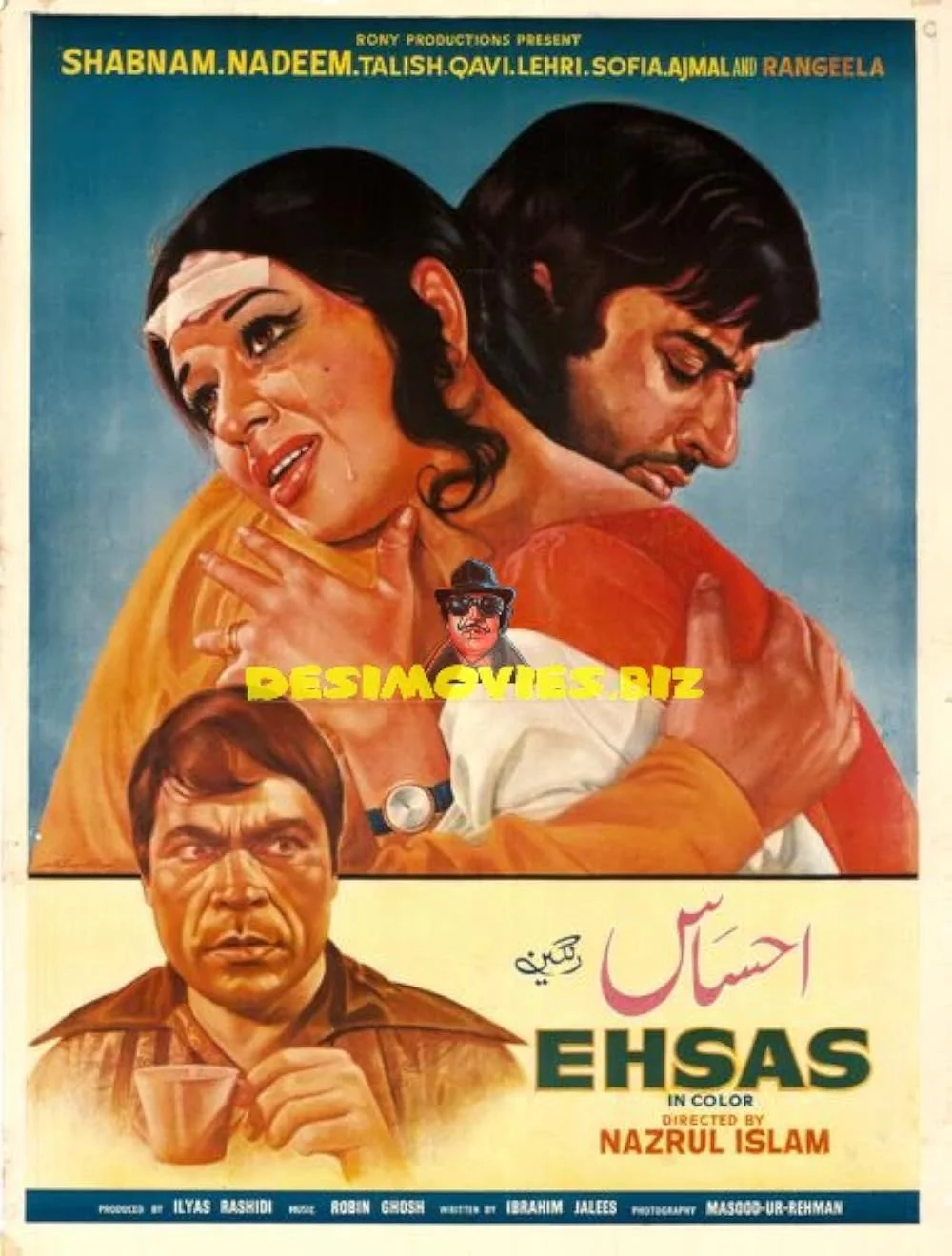
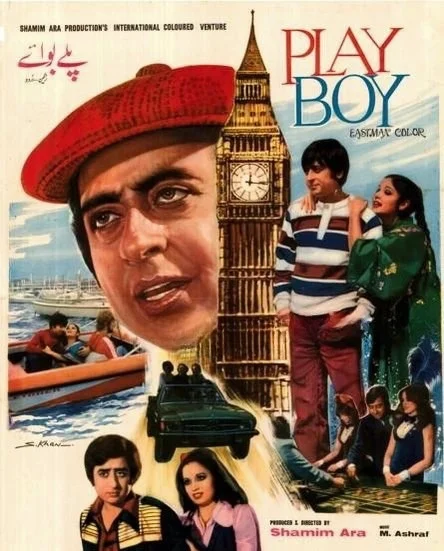
Whether he is the nawabzada, novelist, and lovestruck imposter of Ehsaas (1972), posing as a poor nobody to pursue the radio star, or the rogue hedonist of Playboy (1978), courting several women in London while a wife waits for him in Pakistan, he carries a paradoxical sincerity. His characters may lie, seduce, and scheme, but Nadeem rarely does.
Whether he is the nawabzada, novelist, and lovestruck imposter of Ehsaas (1972), posing as a poor nobody to pursue the radio star, or the rogue hedonist of Playboy (1978), courting several women in London while a wife waits for him in Pakistan, he carries a paradoxical sincerity. His characters may lie, seduce, and scheme, but Nadeem rarely does. Even if these films, in their formal and narrative logic, leave little room for contemporary notions of psychological realism, it is remarkably easy to inhabit the reality they construct. Nadeem never appears to persuade the audience. He persuades himself first. By the time the camera finds his face, the audience merely catches up.
If Ehsaas and Playboy reveal the different textures of Nadeem’s youthful charm, Sharafat (1974) reveals what happens when that charm is stripped of comfort. Here, he becomes Sajan, a petty thief whose cavalier swagger gives way to an unexpectedly raw sensuality after he falls for a courtesan. Unlike Pervez, whose desires exist in poetry and fantasy, Sajan carries the street with him. He is shaped by scarcity, by survival, by the knowledge that affection is something to be fought for. Yet the performance never turns him into a symbol of deprivation. Nadeem finds the fragile romantic buried inside the rough exterior. From pursuing the woman he loves to imagining a home with her, every gesture is animated by the same humble longing: not to escape into the future, but to persuade the present to last a little longer.
This sensitivity in his acting is particularly manifest in Mutthi Bhar Chawal (1978). Adapted from Rajinder Singh Bedi’s novella Ek Chadar Meili Si, the film casts Nadeem as Mangal Singh, the brother-in-law of Rano (Sangeeta). After a violent confrontation leaves her alcoholic husband dead, Rano is forced by village elders to marry an even more reluctant Mangal. The role offers little by way of theatrical flourish. Mangal speaks sparingly, carries himself with habitual gruffness, and rarely announces what he feels. He does not mistake silence for emptiness or awkwardness for indifference. Mangal may prowl the fields with a permanent frown, shrink from the advances of a village girl, or meet his parents’ lectures with visible impatience, but there is never any doubt that he cares.
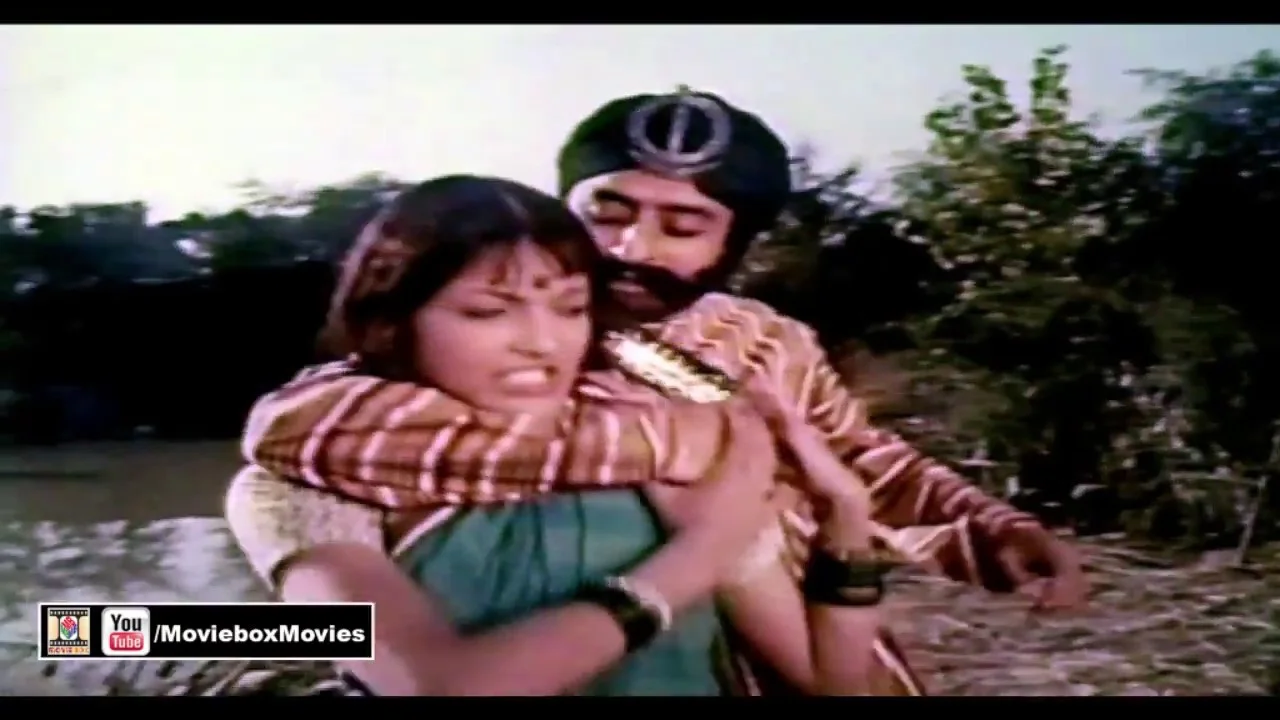
Over the course of the film, Mangal transforms from the carefree youngest son of the family into a reluctant breadwinner, reckoning with his brother’s death. When he marries Rano, a woman he has long regarded as a maternal figure, his grief and confusion deepen into resentment. As always, much of the performance unfolds across Nadeem's face, reaching a complicated expression near the film’s end. Wary of spending time with Rano, Mangal begins to spend his nights getting drunk in the fields. One night, his desire to escape takes a more desperate turn when he attempts to leave the house to drink and seek out another woman, only to find Rano blocking his path. As Mangal tries to wrest a bottle of liquor from Rano, their struggle escalates until he accidentally tears away her blouse. In a series of alternating close-ups, Rano looks directly into the camera. Mangal’s eyes drift lower.
Per convention—and as a familiar censorial detour—the close-ups give way to a love duet. The couple now dance in wedding attire, suspended in an undifferentiated elsewhere, before the film returns to the present: Mangal stands frozen, the torn red blouse still clenched in his fist. It is here that Nadeem's greatest gift as a romantic actor becomes unmistakable. He scarcely speaks. He hardly moves. Yet something in his face yields. The air between them seems suddenly charged, not with the practiced seductions of the romantic hero but with a desire that arrives before he can name it, awkward, instinctive, and disarmingly raw.
This is more than an actor meeting the demands of a role—that is merely the craft's minimum requirement. Great performances do not simply communicate what a character feels; they preserve, however briefly, the feelings that might have been. Nadeem possesses that rare gift. Whether Mangal stands frozen with a torn blouse in his hand or Iqbal returns home to find strangers drinking in his living room, he never appears confined to the script's immediate demands. That is what gives his performances their unusual vitality. They leave us with the impression that, for a fleeting moment, several lives were possible, and that we have watched one of them come into being.

Manahil Tahira is a Karachi-based journalist and writer whose work moves between fiction and nonfiction, tracing the intersections of bodies, spaces, visuality and technology. Formerly desk head of Lifestyle at The Express Tribune, their creative writing has appeared in Arzu Anthology, Fahmidan Journal, Lakeer, and is forthcoming in The Aleph Review (2025). They are also a Non-Fiction Editor at South Asian Avant-Garde (SAAG) magazine.