Raza Goraya, Editor-in-Chief
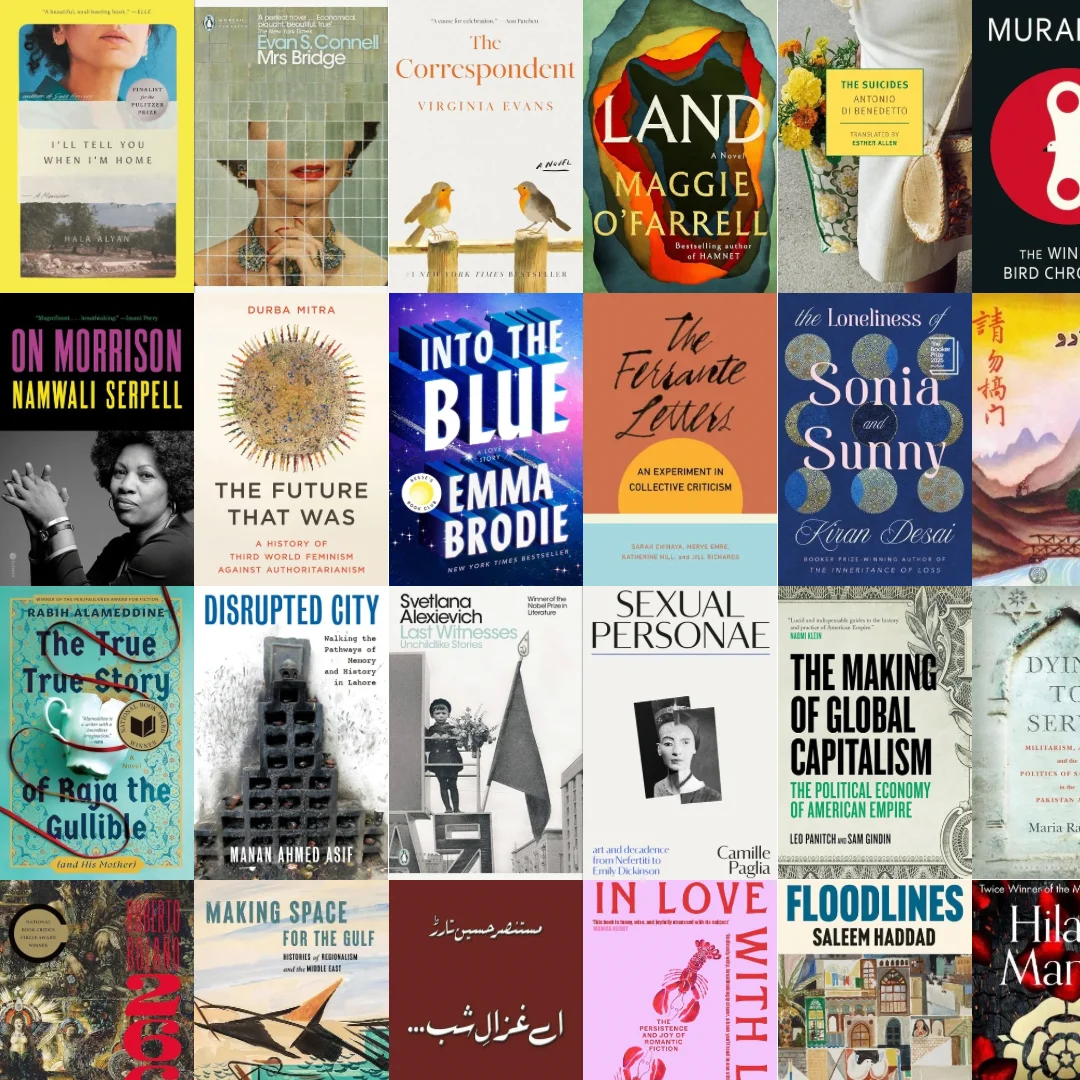
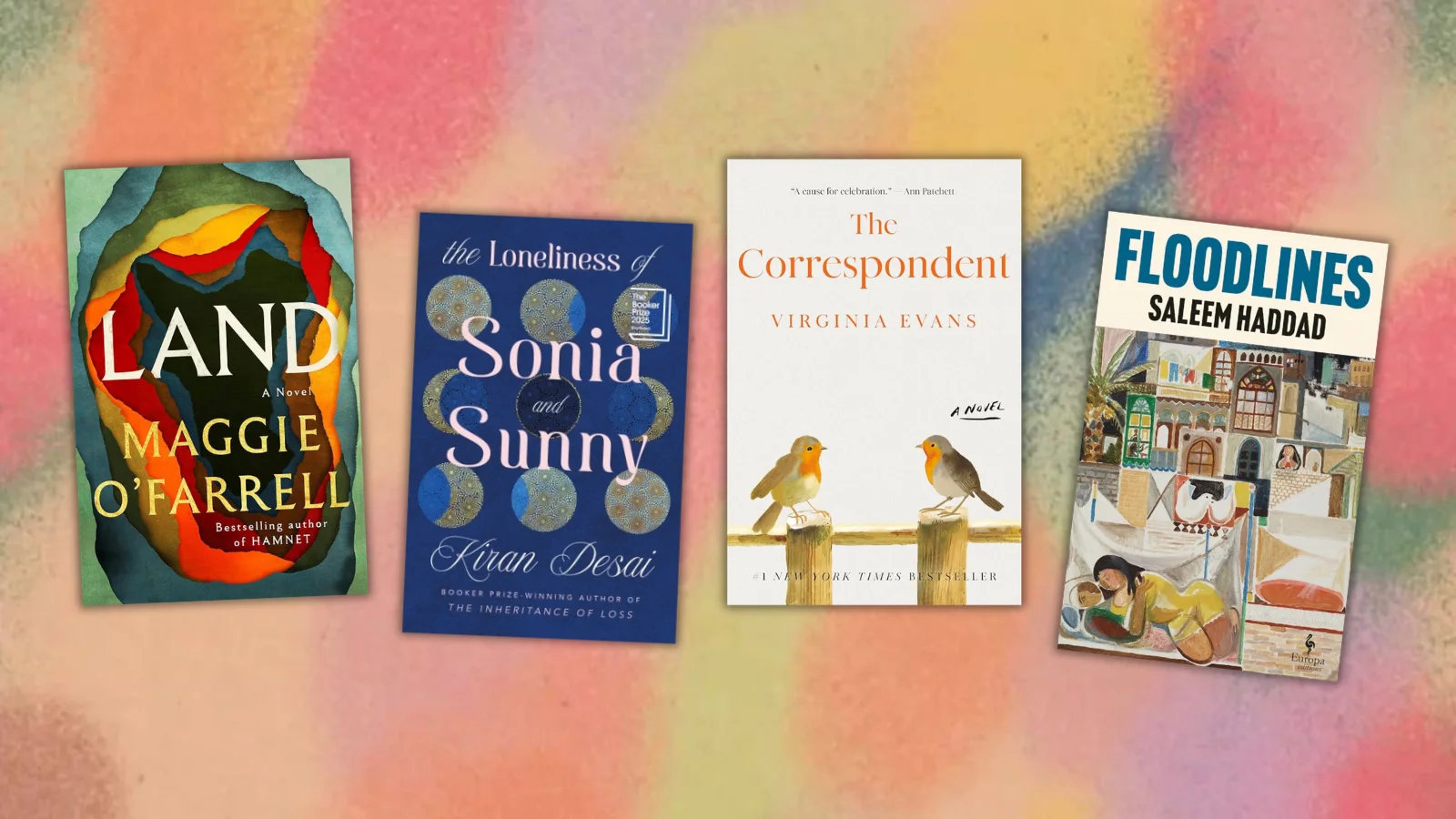
The Correspondent by Virginia Evans
I enjoy an epistolary tale, which is what this is, and also enjoy reading about characters in the legal profession.
Hira Azmat, Editor
The Loneliness of Sonia and Sunny by Kiran Desai
I love a slow-burn, character-driven, literary romance, and this thick one promises to deliver. Suddenly free from the shackles of school pick up and drop-off, summer seems like the best time to dig into it.
The Ferrante Letters: An Experiment in Collective Criticism by Sarah Chihaya, Merve Emre, Katherine Hill, and Juno Jill Richards.
I have been a Ferrante evangelist ever since I first read the Neapolitan novels ten years ago, trying to convince friends to read them just so I would have someone to discuss them with. So when one of my smartest friends recommended this book – a bonafide extended conversation about Ferrante among friends/colleagues – I had to immediately add it to my TBR.
Hassan Tahir Latif, Editor
Floodlines by Saleem Haddad
A multi-generational tale that moves between London and Baghdad, where three sisters reckon with the legacy of their father after the rediscovery of his long-lost paintings; a meditation on exile, memory and belonging. I savoured every bit of Haddad’s debut novel, Guapa, and I am certain this will be equally captivating.
The Beginning Comes After the End: Notes on a World of Change by Rebecca Solnit
A look at the last three quarters of the century and the massive social, political, scientific and cultural changes that have shaped our world and how progressive moments linked to these ideas have evolved over the years. Serving as a sequel to her equally impactful Hope in the Dark, Solnit examines our return to older ways and wisdoms, and how fragile (and interlinked) human lives and natural systems are. I’m hoping this can be another Solnit ray of hope in this dark world.
Manahil Tahira, Critic and Columnist (The Watchlist)
The Suicides by Antonio Di Benedetto (tr. Esther Allen)
The final part of the Trilogy of Expectation, and probably the bleakest, an unnamed reporter investigates strangers’ suicides, while measuring his own life against his father’s, who died at the same age he’s about to turn. Spectacularly morbid and funny.
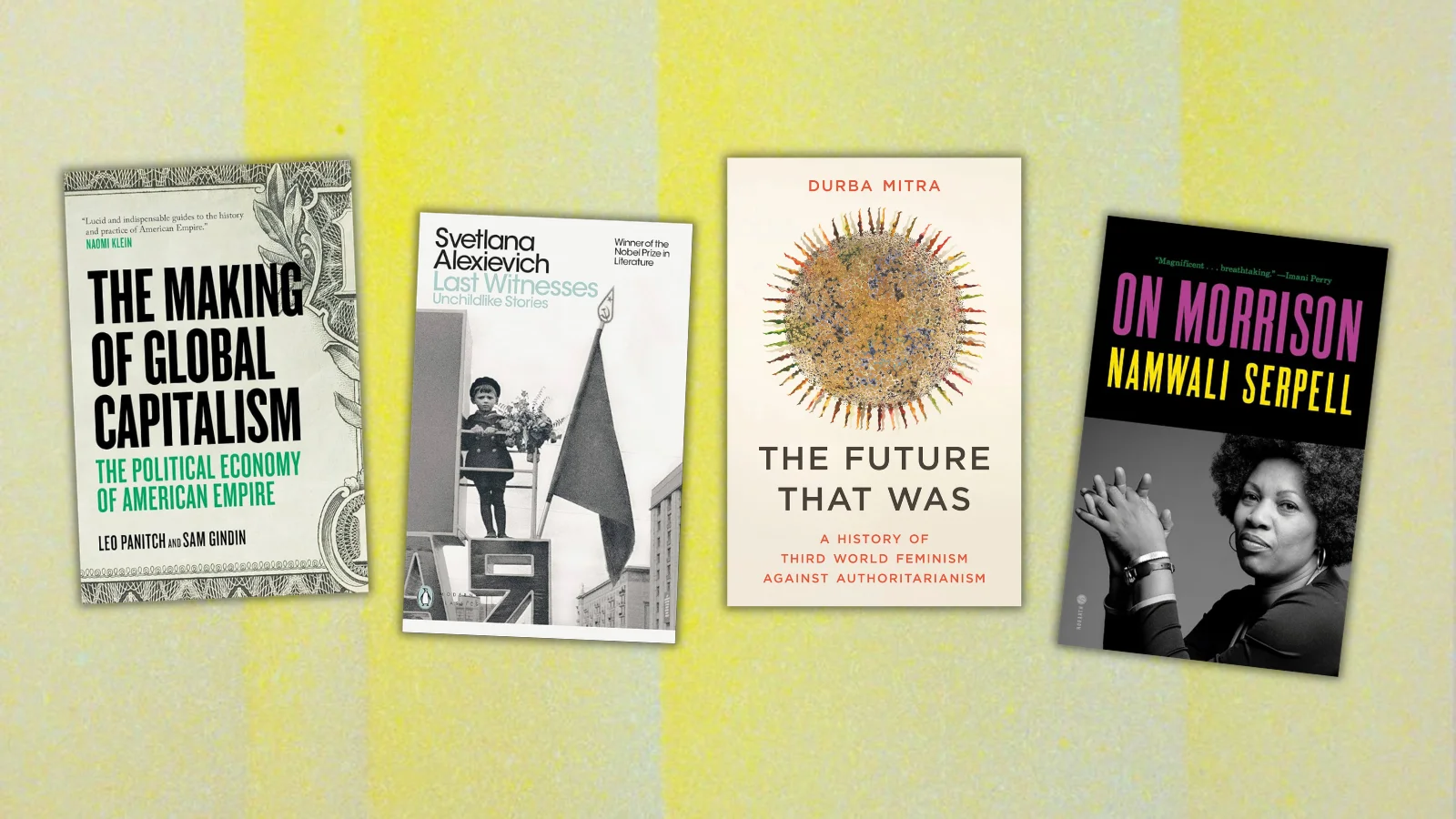
On Morrison by Namwali Serpell
Serpell’s insistence on reading Morrison’s difficulty as formal ambition rather than obstacle is a useful provocation for anyone wondering if “difficult writing” is an accusation or a defence.
Saba Imtiaz, Author and Columnist (Broken Record)
Land by Maggie O’Farrell
A deeply engaging story; part historical fiction, part magical realism.
Into the Blue by Emma Brodie
An incredibly moving, layered romance; an instant obsession. Possibly my favourite novel of 2026 so far.
In Love with Love: The Persistence and Joy of Romantic Fiction by Ella Risbridger
Why do we love reading about love? Risbridger analyses the genre and its evolution incisively, a must-read for anyone who loves romance (or good writing, really.).
Umair Javed, Sociologist and Columnist (In Interesting Times)
The Wolf Hall Trilogy by Hilary Mantel
Would cost any reader the entire summer.
The Making of Global Capitalism: The Political Economy of American Empire by Leo Panitch and Sam Gindin
A classic in the field of political economy. Though published in 2012, it sets the stage for what it means to live in a time of declining unipolarity.
Making Space for the Gulf: Histories of Regionalism and the Middle East by Arang Keshavarzian
A second, topical non-fiction recommendation set around the ever pertinent Persian Gulf.
Iman Iftikhar, Political Theorist and Literary Critic
The True True Story of Raja the Gullible (and his Mother) by Rabih Alameddine
A Lebanese, queer writer biographies his own coming of age alongside his mum who features as a central character.
The Future That Was: A History of Third World Feminism Against Authoritarianism by Dubra Mitra
Mitra pushes against the 20th century archetype of the masculinist anti-colonial revolutionary by archiving the untold struggle of third world feminists.
Nudrat Kamal, Literary Comparativist
Dastak Na Do by Altaf Fatima
Set in 1940s and ‘50s Lahore, the story follows Geti Ara and her wealthy Muslim family, but the real joy is in the growing friendship between Geti and Liu Chu, a Chinese Muslim immigrant who works as a peddler. Through Lui Chu (or Safdar Yaseen), we get a glimpse into the Chinese immigrant community that settled in British India (and later, Pakistan) during the ‘40s and ‘50s, who worked as dentists, restaurant owners and shoemakers.
I’ll Tell You When I’m Home by Hala Alyan
Alyan writes of motherhood and surrogacy, of being a daughter and a granddaughter, and underneath it, how being an exile from Palestine has shaped her family’s lives.
Rana Saadullah Khan, Literary Critic
The Wind-Up Bird Chronicle by Haruki Murakami (tr. Jay Rubin)
Often a bizarre, uniquely sensual fever-dream, this is one of Murakami’s most ambitious works, grappling with a range of Japan’s pasts and presents through a surprisingly accessible, riveting storytelling.
Last Witnesses by Svetlana Alexievich (tr. Richard Pevear and Larissa Volokhonsky)
A devastating study of Russia after communism’s collapse, Alexievich’s phenomenal interviewing ability elevates a simple, transcription based writing style to a singularly damning read of capitalism and its deformations of life in the former Soviet Union.
Bilal Tanweer, Author
Mrs Bridge by Evan S. Connell
We speak of character and its importance in every creative writing class, and yet, it is a rare occasion when a writer plumbs the kind of depth of a character's soul that Connell achieves in Mrs Bridge. Decades after its release the book continues to command a cult following.
Disrupted City by Manan Ahmed Asif
Asif's account does not offer a typical chronology of Lahore; instead, it positions itself in all ways the city defies easy knowing. This is indispensable reading for anyone who wants to write about our cities, about their past, present, or their future.
Ali Raza, Researcher and Organiser
Dying to Serve: Militarism, Affect, and the Politics of Sacrifice in the Pakistan Army by Maria Rashid
Going beyond staged representations of martyrdom, Rashid unpacks the politics, economy, and grief surrounding it through an anthropological lens. In a country like ours, where conflict has shaped both the past and the present, this feels especially important to read.
Ae Ghazalan Shab by Mustansar Hussain Tarrar
A novel following four Pakistani revolutionaries trying to make sense of life in post-Soviet Russia, I think many readers — even beyond politics — will connect with Tarrar’s portrayal of alienation, especially in a time of large-scale migration.
Ayza Khan, Social Media
I find summer the best time to tackle books over 1000 pages and both these great books on my TBR are just that.
2666 by Roberto Bolaño (tr. Natasha Wimmer)
Composed in the last years of Roberto Bolaño’s life, 2666 was greeted across Europe and Latin America as his highest achievement, surpassing even his previous work in its strangeness, beauty and scope. The five-part novel is set in Santa Teresa, a fictional Juárez on the U.S.-Mexico border, where girls and women are disappearing at an alarming rate.
Sexual Personae: Art and Decadence from Nefertiti to Emily Dickinson by Camille Paglia
A phenomenon ever since it was first published in 1990, Camille Paglia outlines a new unified theory of Western art and literature and the primacy of sex and violence within it.