
After a four-year hiatus, Pakistan has finally progressed beyond the group stage at an ICC tournament. While this may not seem like a major achievement, many would point to the 2024 ICC T20 World Cup and the 2025 ICC Champions Trophy, where Pakistan was virtually knocked out after opening matches against the USA and New Zealand respectively.
This qualification has not come without its fair share of drama. The wins against the Netherlands and USA were followed by Pakistan’s biggest ever defeat against India. It was not the defeat itself that was shocking, but the manner in which Pakistan was steamrolled. A blitz from Ishan Kishan meant that the ‘game of the tournament’ was virtually over by the ninth over of the game. Whilst the likes of Nawaz and Usman were able to bring some control, Pakistan had already conceded too much.
The target, although above par, was not entirely unattainable — or at least it wasn’t until Pakistan began batting. Losing 4 wickets in the first 5 overs cannot be justified at this level — and what shocked everyone, perhaps, was the ease with which Pakistan surrendered. Heavy criticism followed, and rightfully so. Although a big win versus Namibia has taken Pakistan over the line, there was a feeling of lethargy amongst the team and the fans alike. With the Super Eights right around the corner, here are eight things that can determine Pakistan’s fate.
1. The Opening Sequence
In order to set the tone early on, Pakistan needs both the openers to fire. Whilst Sahibzada Farhan is having a dream run, his counterpart has been struggling. Saim Ayub has been valuable for Pakistan with the ball and has been effective in the tournament till now. Beyond bowling, he is one of the best fielders we have right now. However, the dip in batting form that Saim is facing is concerning. In major tournaments, he has played 13 games, across which his average is only 9.46 with a strike rate of 110. A player of his ability should be doing much better, and based on these performances, it appears as if he is in a mental block.
With Fakhar, Babar, Usman all being natural openers in T20 cricket, the management faces a dilemma — to back Saim or to try him lower down the order. Dropping him does not seem wise given what he offers in bowling or fielding, but a switch in position can be considered. It is not a new concept, as Hesson tried him at this position during the Asia Cup. With Babar and Usman both ready to open, the question is what will Hesson do?
2. The Curious Case of Babar Azam
The experiment of trying Babar Azam at number 4 has not fully paid off. Some argue that at this position, his role is to anchor in case of an early top-order collapse, to steer the ship; some argue that his role is to score quickly from the first ball, ensuring that the team doesn't slow down in the middle order. The reality has been that he has not fulfilled either role. Against India and the Netherlands, where the team needed him to stabilise the unit, he got out playing rash shots. Alternatively, whilst his innings versus the USA was impactful, one cannot help but wonder if he can score at a similar rate versus the likes of England, New Zealand and Sri Lanka. With Saim Ayub struggling, the idea of trying Babar at his natural opening position won't be an absurd one. It will, however, raise eyebrows.
The decision to move him down the order in the game versus Namibia just expands on this point. If he isn't playing at his natural position, and nor does the management trust him enough as a number 4, then what is his role? As the tournament heats up, a decision needs to be made on where Babar fits in the eleven, or if he even fits at all.
3. Not So All Rounded After All
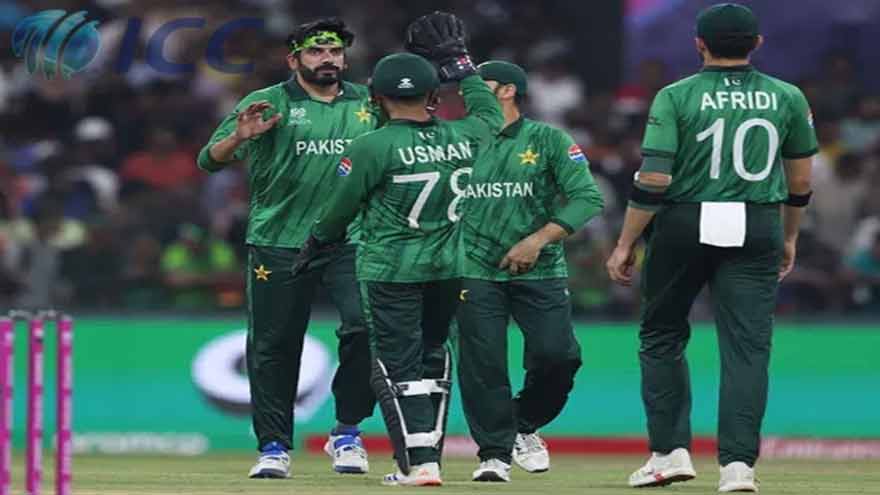
Pakistan has been relying on an all-round heavy middle order. In theory, this sounds like a smart plan, as it protects both the bowling and batting attack. However, inconsistent performances mean that trade-offs need to be made. Nawaz has been misfiring with the bat; Faheem, barring a sub-par spell against Namibia, has not bowled; and Shadab has proven to be inconsistent with both bat and ball. No all-rounder has been firing on both fronts, and given the fragility shown by our middle-order on a couple of occasions, replacing someone with an additional batsman seems to be the need of the hour. The question then remains, who sits out? Faheem has proven to be a matchwinner, Nawaz has been handy with the ball and Shadab has shown glimpses of brilliance with both bat and ball, although sparingly. Ideally, the decision should be based on the match ups against the opponents and the ground conditions, but it ultimately comes down to the hesitation the management may have from making too many changes and unsettling the team.
4. A Seam-ingly Persistent Problem
We have to address the elephant in the room: both Babar and Shaheen have not been playing well. While Babar still manages to somewhat escape criticism due to the lack of a significantly better alternative, Shaheen has been in the line of fire. Shaheen has been poor in every game — to the extent that Ishan Kishan was quick to point out his inability to make the ball talk in his post-match conference. Salman Mirza, on the other hand, has been impactful in every game. On the bench awaits Naseem Shah, who has made his way back into the squad after a very impressive title-winning run with the Desert Vipers. On paper, the choice should be simple enough. Shaheen should be on the bench, while either one of (or both) Naseem and Salman play. However, Shaheen can hit a few, and his cult following, along with his status within the dressing room poses risks of outlash and disruption within the locker room. The management was careful to let everyone know that Shaheen was ‘rested’ against Namibia (and not benched), which offers insights into how delicate the situation is.
5. Trial by Spin
One thing that became very obvious very early on is that Pakistan’s fate lies in the hands of its spinners. Out of the 35 wickets Pakistan has taken at this tournament, 26 came from spin, 7 came from the pacers and 2 were run outs. Even though the spotlight has been on Usman Tariq’s action, all the spinners have done moderately well, chipping in with wickets. The approach should be clear — Pakistan should be playing its frontline spinners, and if any changes are to be made, it should be ensured that they do not significantly disrupt the spin bowling options available. Pakistani spin attack becomes even more crucial when analysing our opponents in Super Eights. Both England and New Zealand have prolific hard-hitters, who on their day can score at a rate that would make the game dramatically one-sided. Their record against Shaheen is also good. Pakistan should be looking at their record against spin, which is not as impressive. In order to maintain control, take wickets and to ensure that the scoring does not get out of hand, we need to rely heavily on the spinners.
6. A Game of Strategy
The loss to India implied a dramatic imbalance of quality that may be inflated. The difference in skill-level is not as much as the difference in game-awareness. Take this for an example: Pakistan had lost early wickets, 9 runs had already been scored in the over, there were still 15 odd overs to be played, yet Babar went for a blind slog off Axar Patel. Sounds mind-boggling right? That has been the story for Pakistan for many years. Much decision-making is often driven by emotions rather than critical thinking or control. Partially why Ishan Kishan was able to score so well was because contrary to the field setting, he had plenty of deliveries targeting his leg-side which was completely free for his pickings. Modern cricket is about calculation and precision. Much like other sports, tactical superiority has started to trump pure ability. While the move to start the India game by giving the first over to Salman Agha indicated that the team management is innovating, there is still a long way to go. Situational awareness and a tactical approach has to be ingrained into the approach of every player. In a game of fine margins, it might be this cunningness and street smartness that takes Pakistan into the semi-finals.
7. Catches win Matches
The relationship between fielding woes and Pakistan goes a long way back. For a team that has been mocked for its questionable fielding, Pakistan has been exceptionally well this time around. In the very first game, Babar and Shaheen worked together for a catch of the tournament contender. In the same game, Usman Khan had taken a brilliant catch for which he had to cover 30-40 metres. Fielding sets the tone for the game, as it did in this case as well. Back in 2022, during the semi-final versus New Zealand, it was Shadab Khan’s runout which set the tempo, leading to a dominant Pakistan performance, subsequently leading them to qualify for their first T20 World Cup final since 2009. Likewise, it was the catch drop in 2021 by Hasan Ali which gave the Aussies the momentum to finish the game. Pakistan’s fielding of late has been impressive; if they want to progress forward in the tournament, it is important they keep up the hard yards they have been putting in.
8. Fortune Favours the Brave
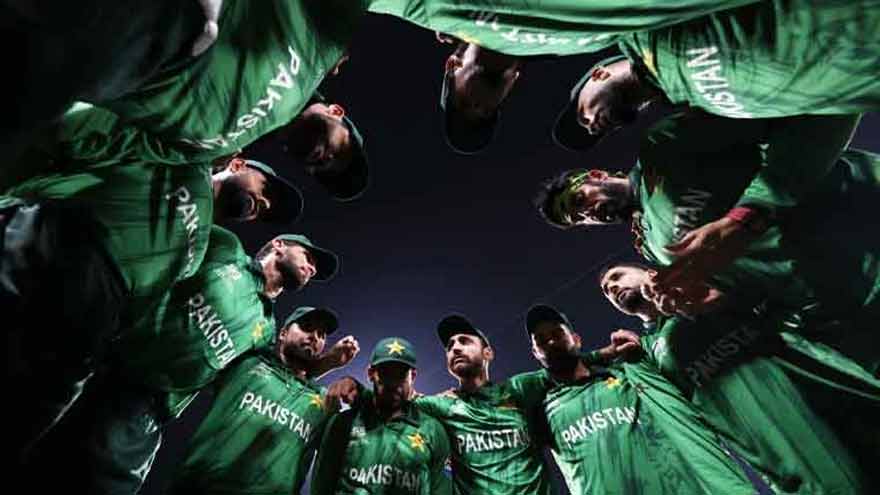
Lastly, Pakistan will have to be brave. Against India, the players looked shaken and anxious. It must be remembered that each game has both good phases and bad phases. Similarly, all it took against the Netherlands were a couple of quick wickets to change the momentum of the game. The players must develop the temperament to absorb pressure effectively and give it their best shot. Against big teams like England, New Zealand and Sri Lanka, the ability to absorb pressure is what would determine the winner.
Ultimately, the management needs to be brave as well, as I mentioned in my previous piece, brave enough to make bold calls which may not be the most popular, but the ones that make the most sense. There are a lot of things that both the players and the management need to ponder over. Despite the horror show against India, Pakistan is fairly stronger than how it is being perceived in the media. Although, we cannot say for sure who will qualify, one thing is guaranteed, we are in for a fun ride!
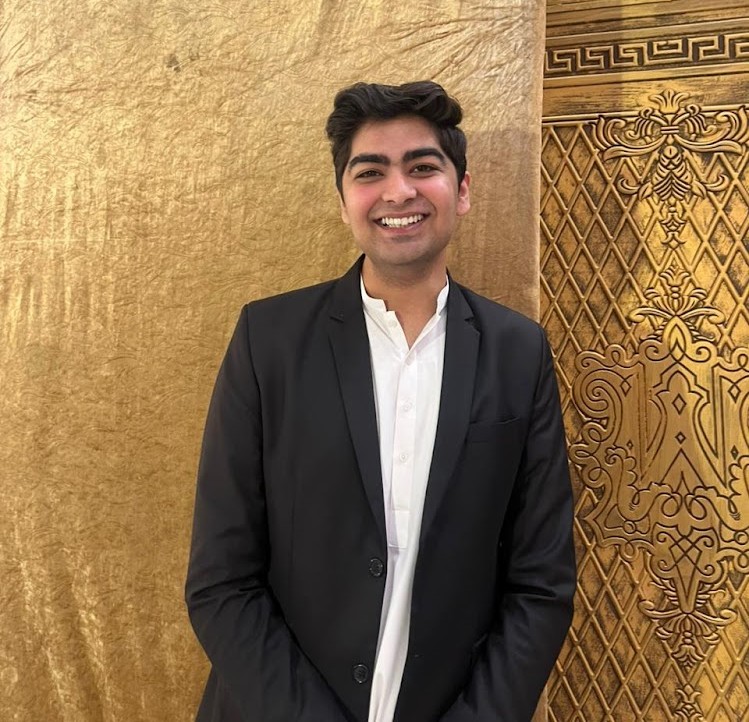
Moiz Asim is a cricket enthusiast and a 2024 graduate of the Lahore University of Management Sciences (LUMS) with a degree in Management Sciences. He has previously written for The Nation and served as a Teaching Assistant for the only undergraduate Sports Management course offered at LUMS. His interests lie in examining the socio-economic and political implications of sport in the contemporary global economy.