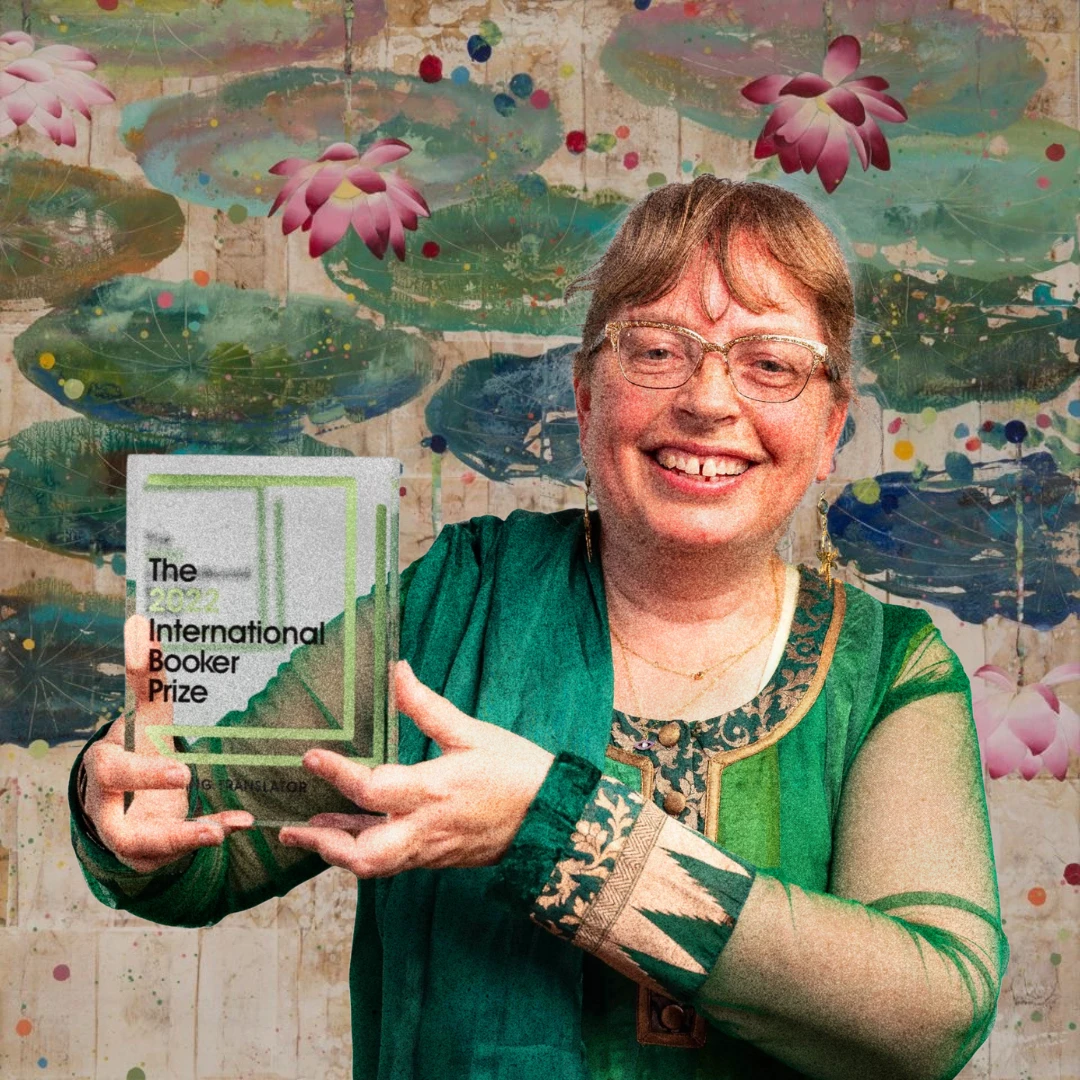
Beyond the success of Tomb of Sand, Daisy Rockwell is the reason many older novels from Hindi and Urdu have been given new life in English translation. For the respective readerships of languages that are so closely related, so mutually intelligible and similar in the sense of the worlds with which they engage, it may be strange that translators like Rockwell would serve as the access-point to the language of the other. But both disparate scripts and divergent vocabularies in higher, literary registers have separated the literatures of Hindi and Urdu. Decades of deliberate Sanskritisation in Hindi and the ever worsening political climate between Pakistan and India has only made their worlds pull further apart.
As such, before reading Tamas in Rockwell’s English – a translation of an immensely acclaimed Hindi novel from Bhisham Sahni – a Rawalpindi or Islamabad native may never have heard that one of South Asia’s most technically ambitious, sociologically intense novels of the Partition also features artefacts from Taxila, as well as the sights of Pindi, the Potohar. Then, the fact that many Muslim men, driven by a rigid anti-colonial sentiment and a dismissal of the ‘Two Nation Theory’, died among other Congress activists in the anti-British agitations of India might be long forgotten in today’s Uttar Pradesh. But it can be recalled once more through the story of Aliya’s father in The Women’s Courtyard, Rockwell’s rendition of Khadija Mastur’s Aangan.
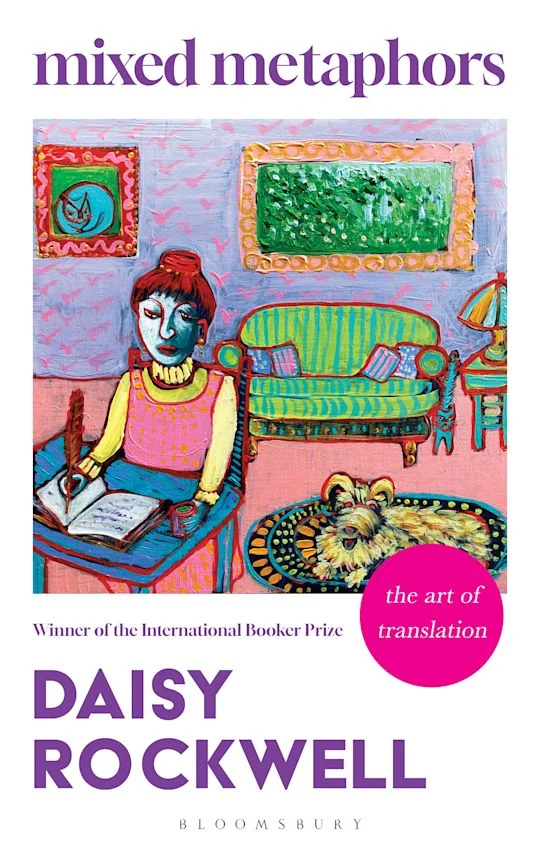
Indeed, transcending Urdu and Hindi, Rockwell’s translations are providing many other readerships in South Asia and elsewhere exposure to the fascinating creative works from canons beyond Bollywood and Anglophone literature. Closely in conversation with her experiences as a translator, Rockwell's first collection of essays, Mixed Metaphors, launched recently in India in June 2026.
This interview took place via remote link. It has been edited for clarity and concision. An earlier segment of this conversation is published here. A Writer and Their World: Daisy Rockwell (Part 1)
RSK: Before this conversation, I imagined that your interests in these literatures came from the horrors of Partition, the violence in the Punjab. In fact, a lot of the authors you translate are in conversation with that historical moment. Do you think that Partition focus is in the nature of the literatures, or speaks to a specific fascination you have within them?
DR: When I was in graduate school, my Hindi professor kept changing his pedagogical methods all the time, reading research articles on teaching languages, testing out new techniques. In his advanced Hindi class, he used to say that the problem was that nobody in US universities was trying to read South Asian languages fluently, that they treated all South Asian languages in this Orientalist way in which you’re always translating word-for-word – you never learn how to read for pleasure. So he had read about a technique in which you can learn to read rapidly in a new language.
He got us to read this book called Jhoota Sach by the Hindi author Yashpal. It was an absurd choice: it was two volumes and a thousand pages long. He wanted us to read without stopping, so you don’t look up words all the time – which is how you learn to read as a child, you don’t bother if you don’t know what a word is. So what I would do is that I would read and keep a notebook by me, just to jot down the words that would really get in my way. I would then turn them into flashcards, memorising them all. I was very, very focussed on this project of rapid reading. But Jhoota Sach also has a killer plot – it’s a page-turner. Yashpal had been a journalist, so there are also direct quotes from newspapers and speeches that people gave at the time. It is very political, very rooted historically, and it starts out in Lahore. Then the Partition happens and everyone gets displaced because it’s focussed on a Hindu family. I just became obsessed with it, and decided I wanted to translate it.
In those days, there was no email or internet. Getting copyright permission was so hard; it is still hard even if you have email and the internet. But I went to the University of Chicago library, where they had a who’s who encyclopedia for India, and I found Yashpal’s address. I found out he was dead. But I found out what his wife’s name was! So I wrote out a letter to his wife in Hindi, because I didn’t have a Hindi typewriter – there were no Hindi fonts yet. Then she wrote back and gave me permission. So I kept translating it. But then I got a letter from his son from Montreal, taking away permission. Then I wrote to the mother, asking what happened. Then she wrote back and gave me back permission! Then the daughter got involved and it became even more confusing. Later, I went to India and met the widow; she suggested that I hire the son to help me translate it. That was when I decided I wouldn’t continue the project anymore. Everybody thought I was crazy because I’d already done 500 pages – but there were 500 more!
That was my first translation project. To answer your question about how I became interested in the Partition, this was why: I was obsessed with this book. Honestly, the best history book of Partition that I’ve ever seen. The history books themselves don’t know how to deal with the scale of the violence and the tragedy. But there are downs and there are ups. If you’ve read Khadija Mastur’s Aangan, her character’s life was always pretty bad. But when she moves to Pakistan, she has a good job and she is an independent woman. When everything is dislodged, sometimes the outcomes are actually good for some people; horrible things happened to a lot of women, but a lot of women got to escape from different patriarchal frameworks. Jhoota Sach also covers that aspect in a believable way – and it was the first Hindi novel I read. I later read a lot of literature in translation, and it just held my attention.
With Tomb of Sand by the way, I had read half of it when I signed the contract to translate it. I had no idea it was a Partition novel, and I had literally thought to myself that it would be my first non-Partition related book! Wrong. Interestingly, Shree quotes from Krishna Sobti and Tamas in some of her later sections – both texts that I’d already translated. So I actually just pulled from my own translations in Tomb of Sand.
RSK: I’ll say now that even if in principle I agree that Hindi and Urdu are the same language, it’s not as if I would be able to necessarily understand a recording of Hindi prose – it’s not the same Hindi as in a Shahrukh Khan and Kajol movie. Is the experience of translating them different for you?
DR: Honestly, Bollywood Hindi is Urdu! And yes, they’re not a single literature, but they have the same grammatical system. When a Pakistani talks to their friends in India, they’re all speaking Khari Boli, and it’s only the vocabulary that differs. But literature written in the Nastaliq script is much older than the literature written in Khari Boli with the Devanagari script. Even though people try to make it seem like Hindi literature is old by fluffing it up with medieval Braj Bhasha texts, that is not really the same language as modern Hindi.
So there is a lot of influence of Urdu literature on modern Hindi literature. For one thing, a lot of those difficult words that an Urdu reader doesn't recognise were just made up to replace Urdu words; once you start to memorise them, you'll realise that it’s just a plug for that other word – a corresponding Urdu word that would fit very neatly in that spot. And then another influence is that even when people are writing in the most shuddh, Sanskritised Hindi, the characters will be quoting ghazals all the time. No matter how rigidly Sanskritised it is, there will still be these Urdu couplets popping in.
I also like to say that Hindi literature is also a sort of rowdy teenager, because all the authors are still experimenting. It’s a young literature! One reason why I like to translate Urdu literature more is not a qualitative difference in the sense of Urdu being a better literature. It’s just that all the words are in the dictionary, because Urdu has been codified and standardised over a long period of time. But Hindi has not, and authors are always bringing in regional vocabularies and dialects, making up words all the time. With Geetanjali Shree, I constantly have to ask her, “Did you make this word up? And if so, what does it mean?” And she says, “Oh, maybe I did, I don't know.” It’s not in the dictionary.
RSK: You also mention this in your preface to Krishna Sobti's Gujarat Here, Gujarat There – in relation to the Punjabi loanwords she deploys, in how you had trouble finding them in the Hindi dictionary. In that case, you were able to ask her like you did with Shree, but how do you handle these problems when the author isn’t accessible?
DR: Usually I can't ask, so I have this army of friends that are used to me writing them WhatsApp messages at odd hours of the night. I also used to use Twitter this way before it went down the tubes; I would crowdsource. Especially if a book is old, there will often be things described that just don't happen anymore – like a children's game – and I would throw it out and get people to ask their grandparents to figure out what it was.
Another interesting thing is that someone like Krishna Sobti grew up reading Urdu, so there is more of an Urdu ‘feeling’ to her work. But someone like Geetanjali Shree is just an adorer of Urdu; but then, the funny thing is, she will ‘misuse’ Urdu because she’s not an Urdu reader and can’t read the script. Her Urdu vocabulary is often misspelled or used in a strange way that an Urdu author wouldn't – if I check with one of my Urdu friends, they’ll say, ‘Well, that word doesn't really mean that.’ And if I ask her what she meant, she’ll have a very clear answer, but for a Hindi author, you don't really have to do it ‘right’. Hindi is not as rigid: you can have your own way of seeing a word and use it however you want. In Urdu, though, you can't really do that. There’s this strong sense of right and wrong in terms of how Urdu should be used, how words should be pronounced, and how they are connected to Arabic roots. In Hindi, it's much messier.
RSK: In some of your translations, I’ve noticed that you tend towards inflecting Hindi and Urdu in the English, with honorifics like ‘Mian’ or specific words like ‘dhanak’. But with the translation of Aangan, a lot of the kinship terms in the original Urdu were minimised in the English. How do you decide you’ll integrate ‘Mian’, but ‘Choti Bahu’ is a no-go?
DR: Well, the US edition of Aangan – The Women's Courtyard – came out recently with Penguin Classics. During the editorial process, they sent me a Word document – which was a big mistake. They just wanted me to check for typos, but once a translator has a Word document, we never feel like we’re done. I made a thousand changes.
Dealing with kinship terms is a big problem in women's writing, because sometimes characters won't even have a name. I had minimised them initially because I was thinking about readers who don't know these terms – you can't force people to learn an entire kinship system. But some readers in South Asia found it upsetting. They’d critique me, ‘Oh, you should have left in Choti Bahu’, and I’d think, Well, why don't you just read it in Urdu then! But I’ve come to accept that many people who know the language still want to read the translation. Anyway, I came up with a new technique for the kinship terms and applied it to the entire novel. Then I sent it in and the publishers said, ‘You weren't allowed to change it!’ I had a breakdown because I had done so much work. My agent had to intervene to get permission from Penguin India, and it went through.
I actually put the Bhais back in for the new edition. I discovered they weren’t all just Bhai – there are slightly different variations for the different cousin characters, and I put that aspect back in because, even though it’s revolting, it’s part of that reality in the novel. Mastur doesn’t think it’s romantic; it’s a set-up in which a sexual harasser or rapist is in your house and has total access to you, because you don’t keep purdah from these guys – they can just come into your room. Those cousin dynamics are part of that story.
When I taught that Partition literature class at Loyola long ago, we read a story where someone was married to their cousin. It wasn't the point of the story at all, but the entire class of Indian and Pakistani Americans could not let go of it. They were so shocked! We had to spend 45 minutes talking about marriage patterns across cultures.
RSK: Even though you said to Harris Khalique in the Herald that you believe you have to let go of an original language in its transformation into English, your translations actually stick pretty close to the original text, especially in a formal and stylistic sense. With the recent Azra Abbas book, it definitely felt like I was reading a Pakistani poet in English, as opposed to something that is contemporary or in circulation in American or British English poetry. I would also suggest that all your translations read very differently from one another. How do you achieve that as a translator?
DR: My technique is that my first draft is always very literal; I'm merely bringing it into English in the most rough sense. Then, the process is this refinement of bringing it further into English so that it's readable – because the first draft is not readable. And when I said you have to let go, there were obviously some things that sounded bad in English in a way that's not helpful to the translation. So I think a lot about the ‘rasa’, the feeling of the text.
I've been translating Hijab Imtiaz Ali’s horror stories. She was writing in the 30s to the 50s. But the point is that it's horror, and she puts in certain motifs and things to make it scary – I mean, it's not truly scary, and honestly, it's pretty funny, some of it tongue-in-cheek. But when I bring it into English and I’m polishing it down, I think: does it still feel like this is supposed to be horror? A lot of times it doesn't, so I have to tweak it. There are ways you can make your sentences sound more suspenseful, ways you can elevate the language, and you think about how horror is expressed in English. So I will sometimes do pretty dramatic things to add to that ‘rasa’, to the dhvani, as I do in Tomb of Sand. Those are not at all literal, but they bring the mood – the vibe – from the original into English.
That's part of what a translator is doing. It’s kind of an illusion, because you're not, in fact, reading Azra Abbas in Urdu: you’re reading what I just wrote in English. So how do you make someone feel like they’re reading the original text? I think for a lot of people, that can tend to make them err on the side of literalism. But a lot of times that doesn't work. That’s why I always tell people you have to do many drafts. When I’m mentoring emerging translators in India and Pakistan, they are always horrified when I say that I do ten drafts of most texts. They feel like two or three is a pretty good number, but to me, that's just the beginning.
Ultimately, they may seem close to the original because I start out really close, and then I only change things where I have to. When I tell people they have to say goodbye to the Hindi, it’s because they aren’t bringing it into English – people don't know the sound of a bangle the same way that they know it in Hindi or in Urdu. You have to convey how a bangle is supposed to sound, but you don't literally use the same word that was used in the original – that's not going to help anybody.
One exercise I think is really useful for translators if they're having trouble bringing something across is a description of something somebody is doing with their body. For some reason, if you translate these things literally, they can sound really weird. Say somebody's got their ‘arms crossed’. That’s how we say it in English, but that’s not how they would say it in Urdu or Hindi – if you’re going literal, you can end up making it sound like somebody's doing something wacky with their arms or legs. So I always say: just close your eyes and imagine, visually, what that character is doing. Then you describe that in English. Write it down. Then go back and look at the Urdu and ask yourself: Did I translate that? Was that correct? And it often is correct, but you're using completely different words. You would never have gotten there if you used your internal dictionary or the regular dictionary, because you are filtering it through your visual or auditory memory and getting rid of the words.
I also believe our internal dictionary probably doesn't do justice to our vocabularies if you're just translating everything word for word. For example, in English, there are lots of fantastic verbs, while Urdu and Hindi actually don't have that many verbs. But then, Urdu and Hindi have oodles of nouns and synonyms. If you're translating a language where everything can be turned into a verb by saying karna or hona at the end and you keep translating that into English as ‘to do this’ and ‘to be this’, it just sounds very boring and dead. It's really important to try to access your bigger vocabulary in some way.
RSK: You mentioned in an interview that perhaps the editorial practices in Hindi are not as refined, that there are sometimes continuity errors in novels. As a translator, do you find that you also have to edit the original texts in their transformation to English?
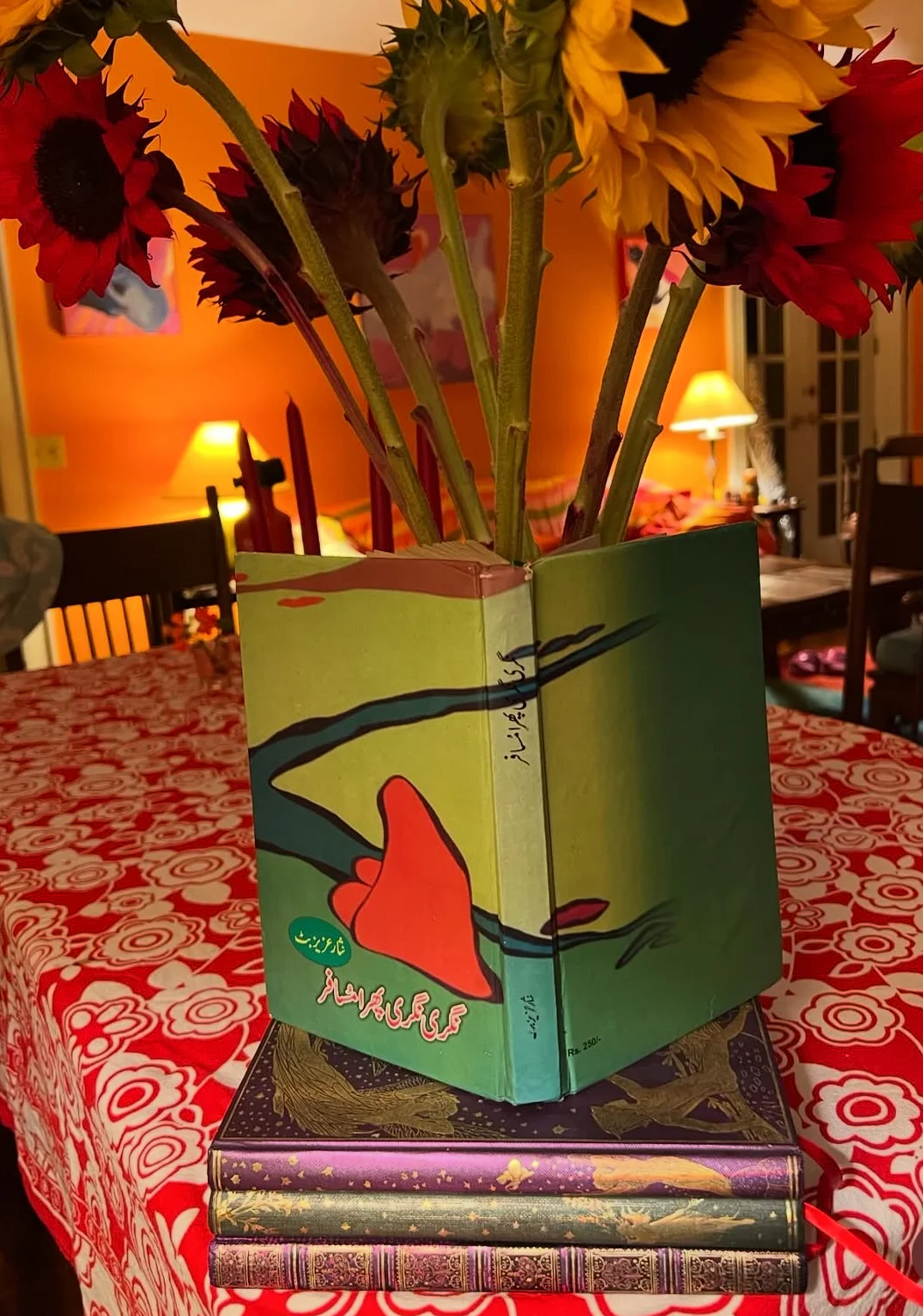
DR: Yes, a lot. I just finished translating an Urdu novel, Nagri Nagri Phira Musafir by Nisar Aziz Butt, and there was this kind of problematic narration issue. There are three sections in the novel, and there’s this long, slowly building romance in the first section that starts to fall apart. But then it suddenly stops. In the next section, the main character is in a tuberculosis sanatorium, and you don't hear a single thing about this man that she was in love with. Then you go along, and about two-thirds of the way through that section – while she’s lying in bed all the time because she has TB – she starts to think about him. And then you find out what happened, why they didn't get married. It was very far removed, in a way that it didn’t feel like a narrative technique or something, that it just felt like there was no editor there. Both in Urdu and in Hindi – across South Asia – books aren’t edited at all.
But I translated just as it was and sent it to my editor, who is also a Hindi translator. I didn't tell him what I was thinking, because I wanted to see how he would react to this. He immediately said that it was kind of problematic. I said, ‘How about if we move these five pages and stick it onto the end of Section 1?’ We were calling it ‘doing surgery’. But it actually glued on perfectly. I didn't even have to write transitional sentences to get it to work; I just stuck it there. And then the reminiscence was just much shorter – like oh, she was thinking about so-and so, and then…
RSK: That's a fascinating fix. I’m glad you mentioned Nisar Aziz Butt, because she and Azra Abbas are not quite as canonical to Urdu literature as, say, Khadija Mastur. How do you decide you’re going to work with these authors? How do you discover them?
DR: Usually, I think I have to feel a real connection with the author's style, because you have to reproduce the voice. I think a lot of translators can tell within the first few pages, or even just a few paragraphs, if they are capable of recreating this voice. Stylistically, I’ll say I am really not interested in translating people who just write very simply. Now, Azra Abbas writes simply, but everything she writes is enigmatic. Even if the sentence is simple, you never feel like you're on solid ground. You're not really sure what she means – and that’s even true when you're talking to her in person.
I met her in Karachi and she would just say these unusual things. We went out to lunch with her friends. Then one of them found a nail in her food – a big one. So they called the waiter, and he was just dismissive for some reason. Then they called the head waiter over, and he also didn't take it seriously. So then Azra Abbas started talking to him very, very slowly. I'll just say it in English, because I can't remember what words she used, but imagine her saying: “Just imagine what would happen if this nail went down your throat.” And then she slowly started following that journey through her body with her hands. The guy looked kind of confused. She wasn't being menacing, though, she was just in her zone, like watching a jazz musician pick up their saxophone. That's how she thinks; that's who she is. And I love the way she uses language.
Similarly, with Nisar Aziz Butt, Urdu is not her first or even her second language, because she's a Pashto speaker, and she probably knew English before she knew Urdu. So she actually writes Urdu kind of strangely; it’s not necessarily wrong, but it’s more constructed. Then Geetanjali Shree is, obviously, hugely difficult to translate because she's making things up all the time, breaking grammar and all. She jokes when we appear in public that she can't send me anything too simple or I won't translate it – which isn't necessarily true.
As for how I was introduced to them, it’s all different people. I found Azra Abbas because her friend, Tanveer Anjum, recommended her. I had met Tanveer at a conference in the US – she’s actually the one who had the nail in her food! And then the author and translator Aamer Hussein introduced me to Nisar Aziz Butt; he was friends with her late in her life. He also introduced me to Hijab Imtiaz Ali. He and I have similar tastes, so if he says something is great, I usually feel that way too. Then the Bangla translator Arunava Sinha introduced me to Geetanjali Shree, because the translator Deborah Smith was looking for a Hindi translator for the novel.
RSK: I found the Azra Abbas book surreal and uniquely fantastical. What you were saying about the nail and her reaction – there are poems in her work that have that same bodily, wacky quality. I'm curious about the choice of opting for Neend ki Musaaftein specifically from her work.
DR: Shortly after I won the Booker, her son reached out to me. He knew I had translated some of her short stories and asked if I would consider doing her poetry. I don't usually translate poetry, but he sent me her complete works and said, “Just look at Neend ki Musaaftein and see what you think.”
I felt very drawn into it. There was a lot of noise around me at that time because of the prize, and I was traveling a lot. I was unsure what to do next with my life, because that win was just so earth-shattering. But I felt a kinship with Sleep Journeys. It’s so mystical, and I don't understand it in an analytical way; I loved the imagery, but I wouldn't be able to write an essay about what was ‘good’ in it. There needs to be room for literature that nobody can explain – the kind that just brings us feelings, the way a painting does.
RSK: Finally, as a translator, not only are you transcending the divide between Hindi and Urdu, but also in some sense that between India and Pakistan. Even if translations of other Hindi novels have at some points been in circulation in Pakistan, the Booker win for Tomb of Sand made its Urdu translation almost an Urdu bookstore staple here. I don’t think that’s something that can be said for any other Hindi author but Geetanjali Shree.
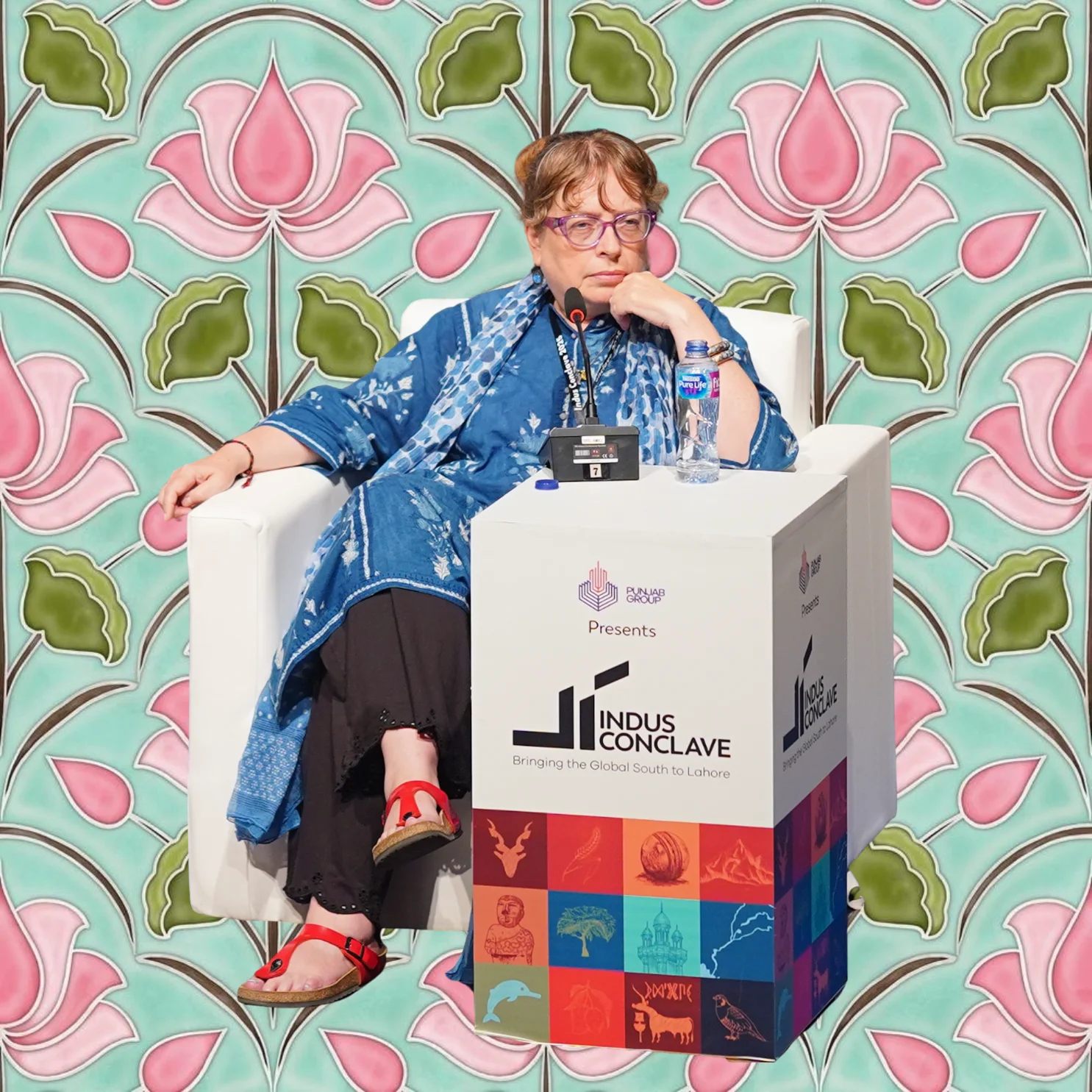
DR: And the Urdu translator, Anwar Sen Roy, is Azra Abbas’s husband! I didn’t know that until I attended this event in Lahore with her and somebody said, “Oh, it’s great to have both of the translators of Reit Samadhi here together!” And Anwar Sen Roy just walked in. I knew there was somebody working on an Urdu translation – I just didn’t know it was him, that he was Azra Abbas’s husband. And I met him right after the translation was launched!
Just like the border between Hindi and Urdu, the countries are split by a really artificial boundary. Of course, it’s difficult for many people to surmount, and by translating, you are allowing books to travel across. I find that both in the diaspora and readerships in India and Pakistan, people are really excited to be able to have access to these books, to read these books. And people should read more.

Rana Saadullah Khan is a writer from Lahore and Islamabad. His work has been published in Lakeer, Jamhoor, The Aleph Review, as well as through UNESCO Pakistan and by the history education platform, Hashiya.