Once, Salman Rushdie remarked that English was the most important language in which prose was being written in South Asia. The “vernacular” literatures, he said in The New Yorker, were not as inventive or ambitious as the English counterparts, bogged down by a tendency towards “parochialism," a general disinterest in “holding a conversation with the world.” And because these literatures did not aspire to such cosmopolitan ends, Rushdie argued their worth was more limited than some would admit.
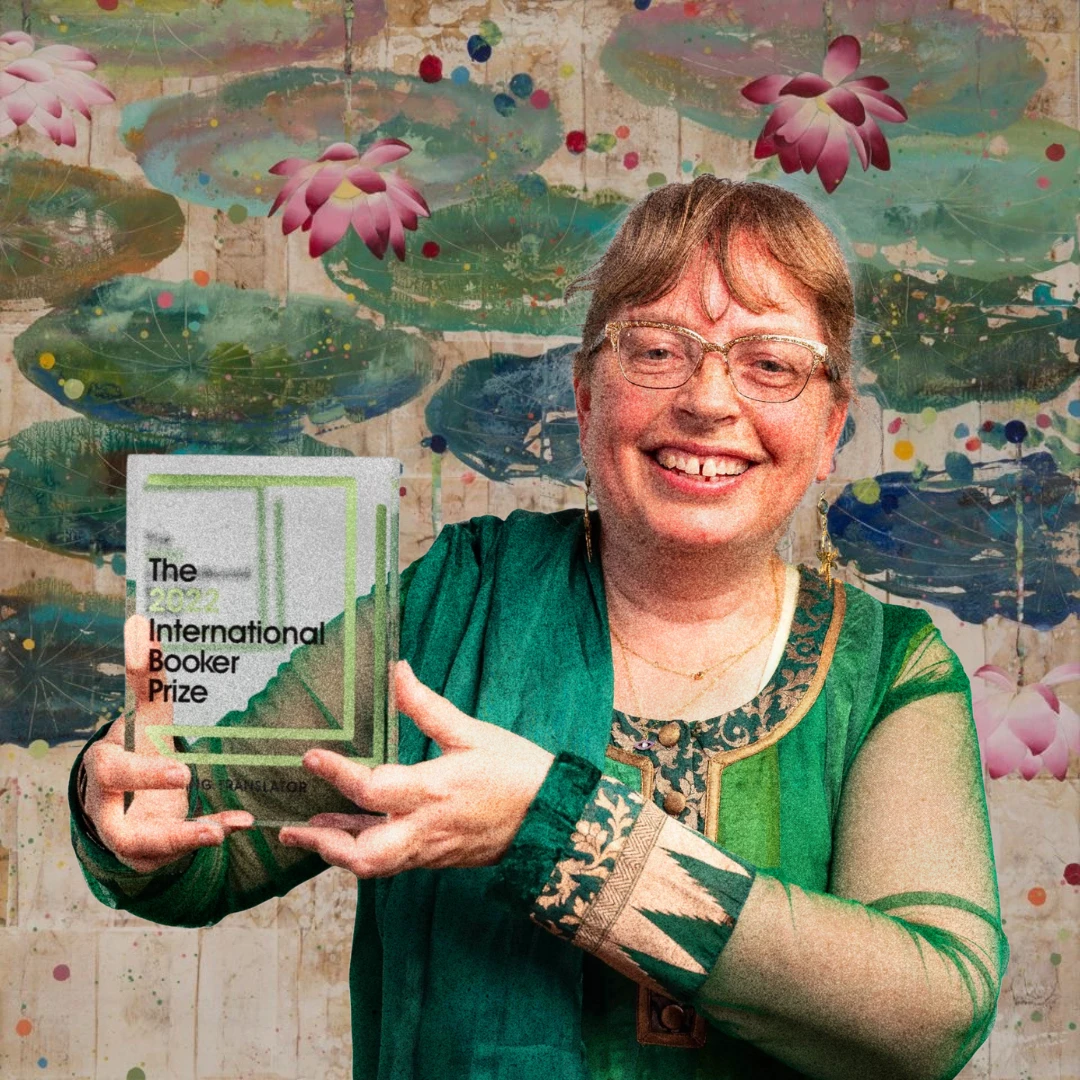
Many intellectualised and passionate reactions followed, Rushdie’s premise lambasted, his range of reading questioned. But since his 1997 comments, perhaps the most sensational advance the South Asian “vernaculars” have made was in 2022, when Tomb of Sand won the International Booker Prize. A novel from a prolific but little known author of Hindi, Geetanjali Shree’s achievement in international letters was unprecedented for any text translated into English from a South Asian language. To honour the central role of a translator and their craft in bringing phenomenal fictions into the English language, this particular award is shared by both author and translator; thus, the American translator Daisy Rockwell also became an International Booker Prize winner.
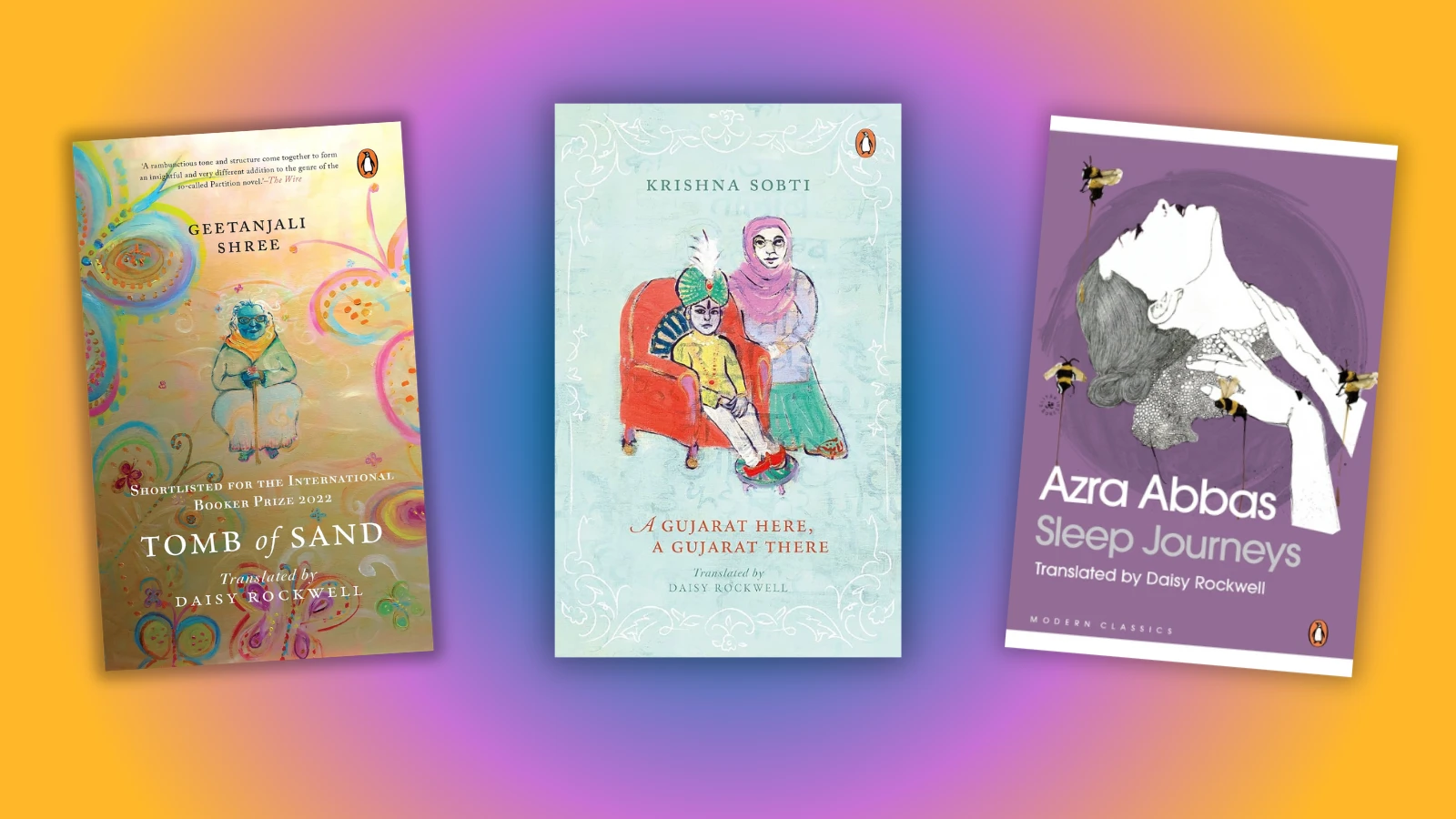
As a translator, Rockwell works with both Urdu and Hindi, Pakistanis and Indians, prose and poetry. Before Tomb of Sand, she had already received an academic accolade for her work with Krishna Sobti’s novel A Gujarat Here, A Gujarat There; later, in 2024, she won a Wisconsin Prize for Poetry in Translation for her translation of Sleep Journeys by Azra Abbas from Karachi. In fact, the authors Rockwell brings into English are both central to Hindi and Urdu – such as Sobti, Bhisham Sahni, and Khadija Mastur – but also are sometimes rather fringe, somewhat unknown. Each, however, is full of formally inventive, challenging storytelling, and they all play with language in ways that, even if not particularly seeking to develop a relationship with Western metropoles, do upend assumptions about the simplicity of local literatures.
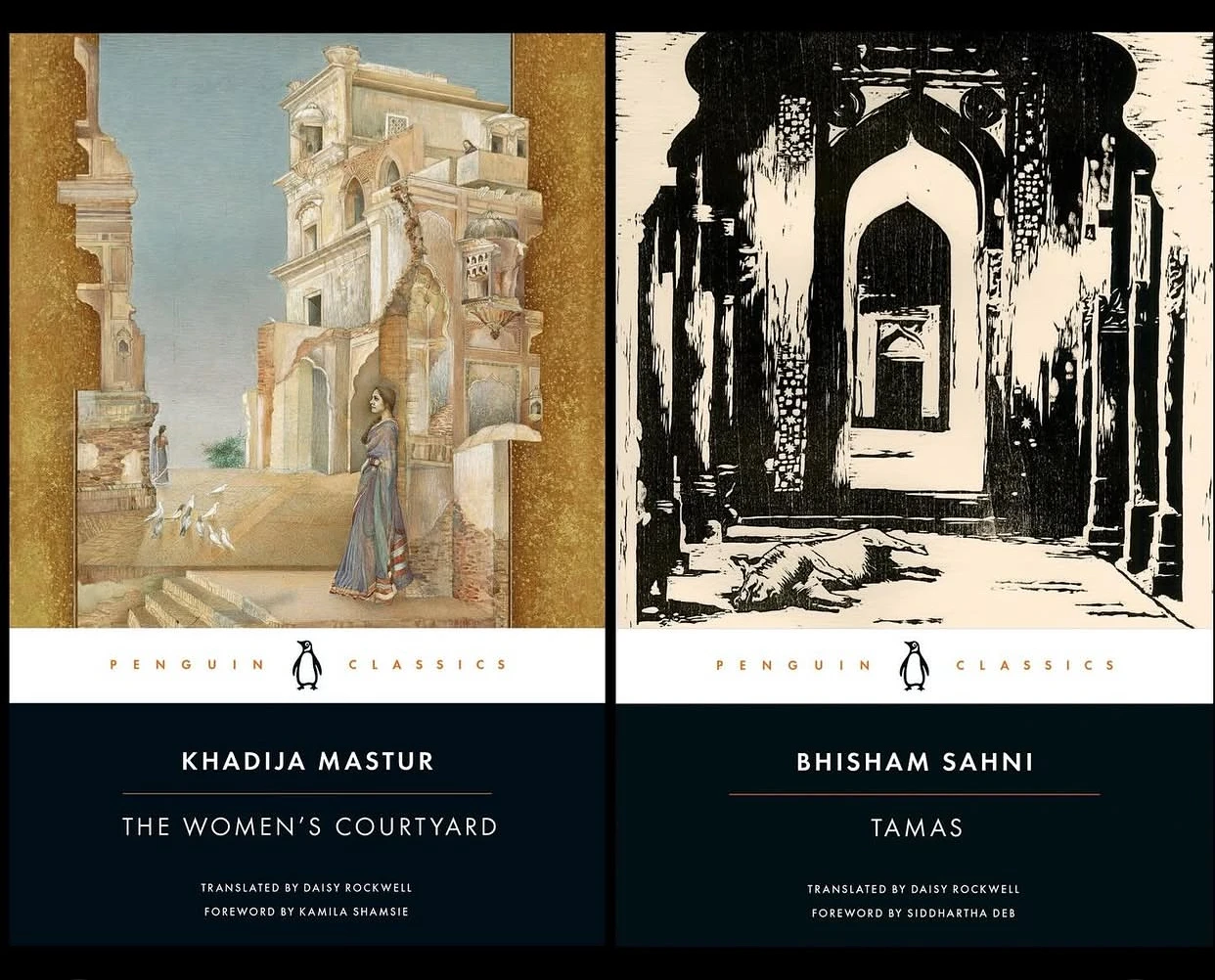
Rockwell is also a novelist herself, with her own debut, Alice Sees Ghosts, having been published in 2025.
This interview took place via remote link. It has been edited for clarity and concision.
Rana Saadullah Khan (RSK): In different interviews, you often mention how little publisher interest there has been in North America for texts translated from Hindi or Urdu. Considering that’s where you’re based, what made you want to be a translator of these languages?
Daisy Rockwell (DR): I actually started from a completely different direction. I never intended to be a literary translator when I began learning Hindi in college. Over the course of that time and during my PhD, I did discover translations and began doing translations, but I didn’t know anything about the publishing world. I wasn’t thinking about a career as a literary translator – which is really good, because it’s not really lucrative!
Colonised languages – languages that were colonised during what we call the ‘colonial period’ – are not considered desirable to publishers in the West. Literary translation tends to come from more affluent countries, like from Europe, Japan, and now South Korea. There’s also a kind of aversion to literature that is political or social in nature, which is bound to happen in formerly colonised parts of the world because the impacts are so strongly felt; people can’t just afford to pretend that politics or poverty isn’t happening. But there’s this idea of ‘pure’ literature that strips away these histories and politics. Even though some topics are okay, like the Holocaust or the Second World War, it’s only because they’re pertinent to Western publishers, dominated as they are by White people who just don’t know that much about the world. They have this narrow idea of what can be aesthetically beautiful.
You know how we talk about somebody having ‘discriminating taste’? I like how it can mean something both positive and negative: if you have discriminating taste, you can discriminate between very subtle shades of meaning, but it could also mean you’re discriminating racially. When I talk to colleagues from across languages – particularly those perceived as interacting with ‘Third World’ languages – the aesthetics that we see valued in publications in the West are a kind of minimalist, Scandinavian aesthetic, often eccentric and whimsical. Japanese fits into that, since Japanese literature is often whimsical and quirky without being over-the-top. In comparison, I can’t think of any minimalist literature in South Asia – even if the writing is not fully maximalist, it’s not minimalist at all, and I think that’s true across the Middle East and China too. That aesthetic is just not desired in the same sense there. But arbiters of taste in the West have defined ‘good’ aesthetics or ‘good’ literature very much biased towards certain types of cultures – often wealthier and non-colonised.
RSK: But thinking specifically again about Hindi: if I were to put myself in the shoes of an American undergraduate, I could perhaps imagine being drawn to Sanskrit or Japanese or Chinese – languages so much more ‘Orientally’ appealing than Hindi. But as a young person, you were drawn to Hindi and Urdu.
DR: So, I was a Classics major studying Greek and Latin. Then I went to a required social sciences class on political economy, and the professor was Susan Hoeber Rudolph who studied the political economy of South Asia with her husband, Lloyd Rudolph. In the first class, she just introduced herself as somebody who spent every fourth year in India, living and researching with her husband, doing fieldwork and so on. And she sounded like she had a really fun life! That was one of the reasons why I checked out the Hindi class. It wasn’t a big commitment on my part. I always say American college is like a buffet – oh look, they have baingan bharta today! I just wanted to try Hindi out. Anyway, as somebody that likes learning languages, I feel like languages are like people: some of them I’m really drawn to, and some of them I’m not.
One thing I liked about Hindi is that it’s kind of vague. Sanskrit and Latin have all these endings and grammatical rules, while Hindi and Urdu are very loose in comparison. A lot of things depend on intonation and placement of words. It’s actually very hard to learn from an outside perspective: you can get through the basic stuff really quickly, but getting enough of a grasp to read the literature is hard – it’s elusive. That took me years and years.
I hadn’t realised then that when you go to do research in India as a Hindi scholar, you go to what’s called the ‘Hindi belt’. It’s not the greatest place to travel in; derogatorily, it’s called the ‘Cow Belt’, because it’s where a lot of Hindutva comes from. It’s very conservative and poor – it’s not culturally that exciting. But by then I was too deep into it to get out. I said to myself: why didn’t I study Malayalam! Then I would be at the beach in Kerala – but it was too late!
RSK: Did your acquisition of Urdu happen by virtue of being in north India?
DR: No actually. In graduate school in Chicago, I signed up for a class with CM Naim, the illustrious Urdu scholar who passed away recently. Later in life, he and I would become very good friends, but back then, he was a very mean teacher. The professors who had offices on either side of his office used to call his class ‘Urdu with tears’, because people would literally come out weeping! In that class, he wasn’t mean to me, but he was so sadistic with another student that I couldn’t watch, that I just dropped the class. After that, I kept trying to learn Urdu on my own, but I found it so difficult.
It was when I was in Allahabad doing fieldwork for my PhD thesis on Upendranath Ashk that I got a chance to learn it again. Ashk grew up writing in Urdu – he had lived in Jalandhar and Lahore before Partition. But he was very elderly then and had rheumatism, so he wasn’t able to write with his hands: he used to dictate the Hindi to one of his daughters-in-law, while he would dictate his Urdu poetry to a maulvi sahib that would sit by him. Ashk’s family was the one that suggested I get the maulvi sahib to teach me Urdu. I thought that was a great idea.
So the maulvi sahib came to my apartment. It was really hot in that season, but he would be wearing this heavy black achkan and the whole garb – and he looked like he was really, really hot! He would ride his bicycle to my house, teach me a letter or two. And then he would start talking about the Quran. He wouldn’t take any money, because he thought it was a good idea to try and convert me.
RSK: It’s interesting that you would find Urdu so challenging, since by then you had already learned Hindi.
DR: Yes, I don’t know why I had such a hard time. Something in my mind just switched off – oh my God, it’s backwards! Writing in the opposite direction was so complicated; then the breakers, the joining of the letters…it is complicated! It’s hard to learn as an adult. Hindi is much easier because it’s totally phonetic and there’s no cursive. But Urdu has all these different ways words can join together and be shown.
Anyway, I will finally now tell you what made me successful. By this point, I now had a PhD and was teaching a Partition literature course at Loyola University in Chicago. And my students were all bigots. They were first and second-generation desis, bigoted towards one another along Hindu, Sikh, and Muslim lines – but also as Indians and Pakistanis. Because their style of Urdu was different, the Hyderabadi Muslims were picked on by the Pakistani students. I was also teaching Hindi at the time, and I had decided that it had to become a Hindi-Urdu class, that I had to teach them both the scripts. I had heard people say these ridiculous things about how Urdu is really Arabic with some Hindi words thrown in, and I really felt strongly about teaching them that this was wrong, that these were the same language. I knew a little bit of Urdu by this point, but I wanted to improve. Then this colleague introduced me to this Sufi Imam who ran a mosque in the basement of an apartment building on the north side of Chicago. He was the retired chair of the Arabic department at Osmania University in Hyderabad, India.
I went over to his house and said to him, ‘Mujhey Urdu seekhni hai.’ He said, ‘Aapki Urdu toh kaafi achi lag rahi hai.’ But I told him that I couldn’t read or understand it well. I tried to explain to him that I was a grown-up, that I didn't need to read children's books, that we could read literature. He ignored me, and somehow, got his hands on the entire run of a Punjab textbook publishing company’s readers, starting from preschool all the way to the end of high school. I had to sit on the floor opposite him and read them all out loud. I was, like, 30 years old – and a professor! But it totally worked! And I learned a lot about Pakistani education too.
***
You can find Part 2 of this interview here. A Writer and Their World: Daisy Rockwell (Part 2)

Rana Saadullah Khan is a writer from Lahore and Islamabad. His work has been published in Lakeer, Jamhoor, The Aleph Review, as well as through UNESCO Pakistan and by the history education platform, Hashiya.