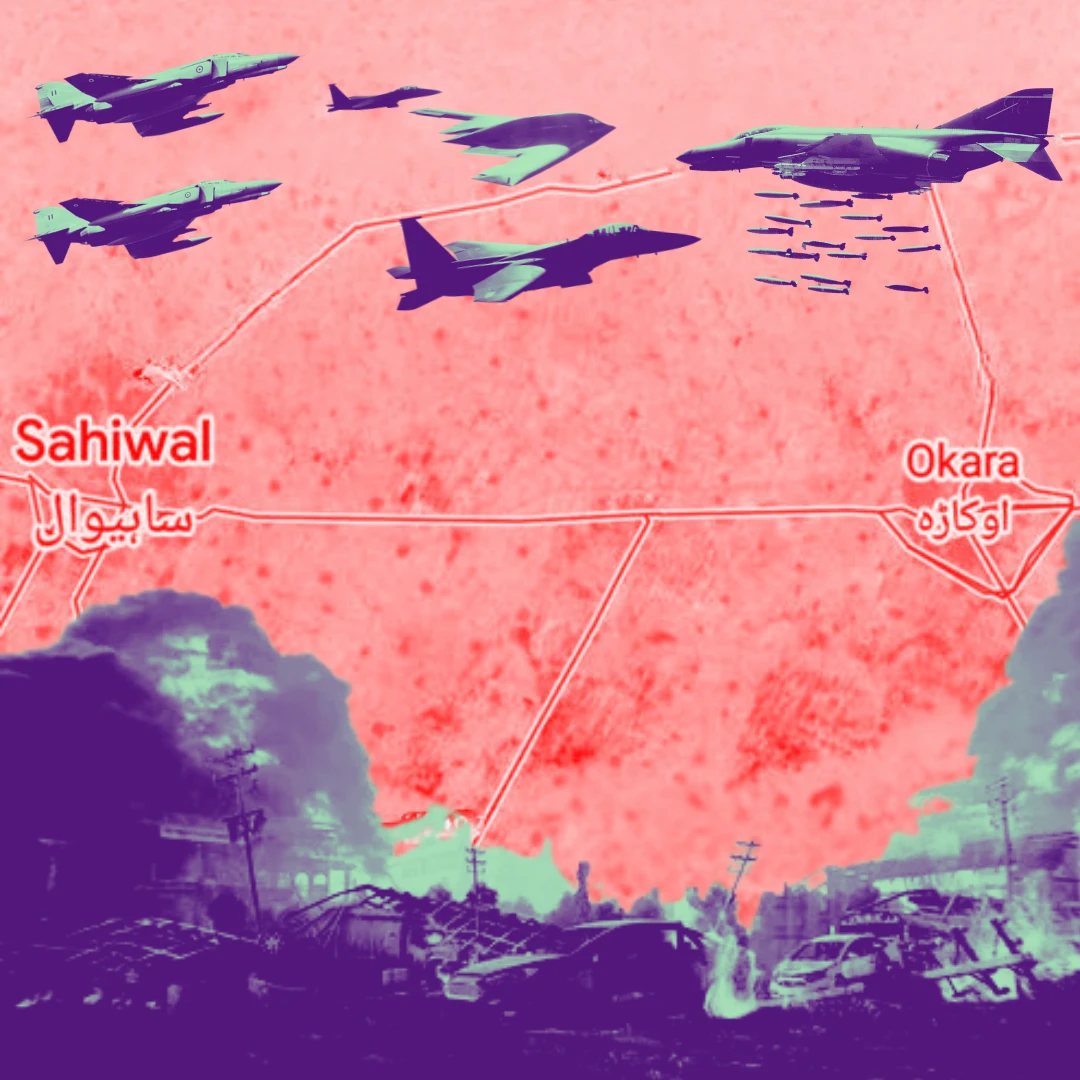
Last week, Channel 67 Okara reported on the first shots fired. Rockets launched from its territory were raining down on neighbouring Sahiwal in a dramatic escalation of tensions between the two rural Punjabi towns. The first casualty of war is the truth, so competing narratives were instant. Channel 67 Sahiwal fired back with visuals of its own jets, ballistic missiles and airstrikes.
Inherent to war is diplomacy, so it wasn’t long before the foreign ministry of Sahiwal announced its condemnation of Okara’s aggression. Others were forced to choose sides; regional powers including Lahore and Peshawar backed Sahiwal; Karachi and Rahim Yar Khan threw their weight behind Okara, as it rapidly advanced as a global hegemon, launching its own navy and space programme. Visuals of en masse hostilities continued to be projected to an audience of millions, including those of naval warfare between two territories that are — and I cannot stress this enough — both entirely landlocked. A fighter jet is shot down, and it is announced that Okara’s forces have taken into custody a crucially important military figure: Wing Commander Chahat Fateh Ali Khan.
The war lasts about 7 days, before it is announced in a shocking display of reconciliation, through a joint statement issued by both Okara and Sahiwal, that talks in Islamabad succeeded. Sahiwal was to pay $400 billion to Okara for violating a prior ceasefire and agreed to immediately halt its nuclear programme and all uranium enrichment. After a long week of extensive war reportage seen across Pakistan and the world, the clouds had parted, and war was over.
None of this, of course, actually happened. While the millions of viewers were real, the war was not; the Channel 67s of Okara and Sahiwal are Instagram accounts and nothing more. The dozens of other accounts across TikTok, X and Facebook that popped up were just playing along, as were thousands of people in the comments sections. Okara and Sahiwal are neighbouring districts that don’t even have much of a rivalry. The whole thing was made up, but I feel the need to remind you, dear reader, so too was Game of Thrones. That never stopped anyone from enjoying it.
What unravelled from this 7-day spectacle of decentralised, leaderless, meta-humour-fuelled war hysteria was much about the psychology and humour of a nation. Whether the anonymous warriors at the forefront of this movement knew it or not, what they produced is a scathing satire of a global military industrial complex that values chest-thumping lies just as much as the rockets and hellfire it seeks to rain down on its enemies.
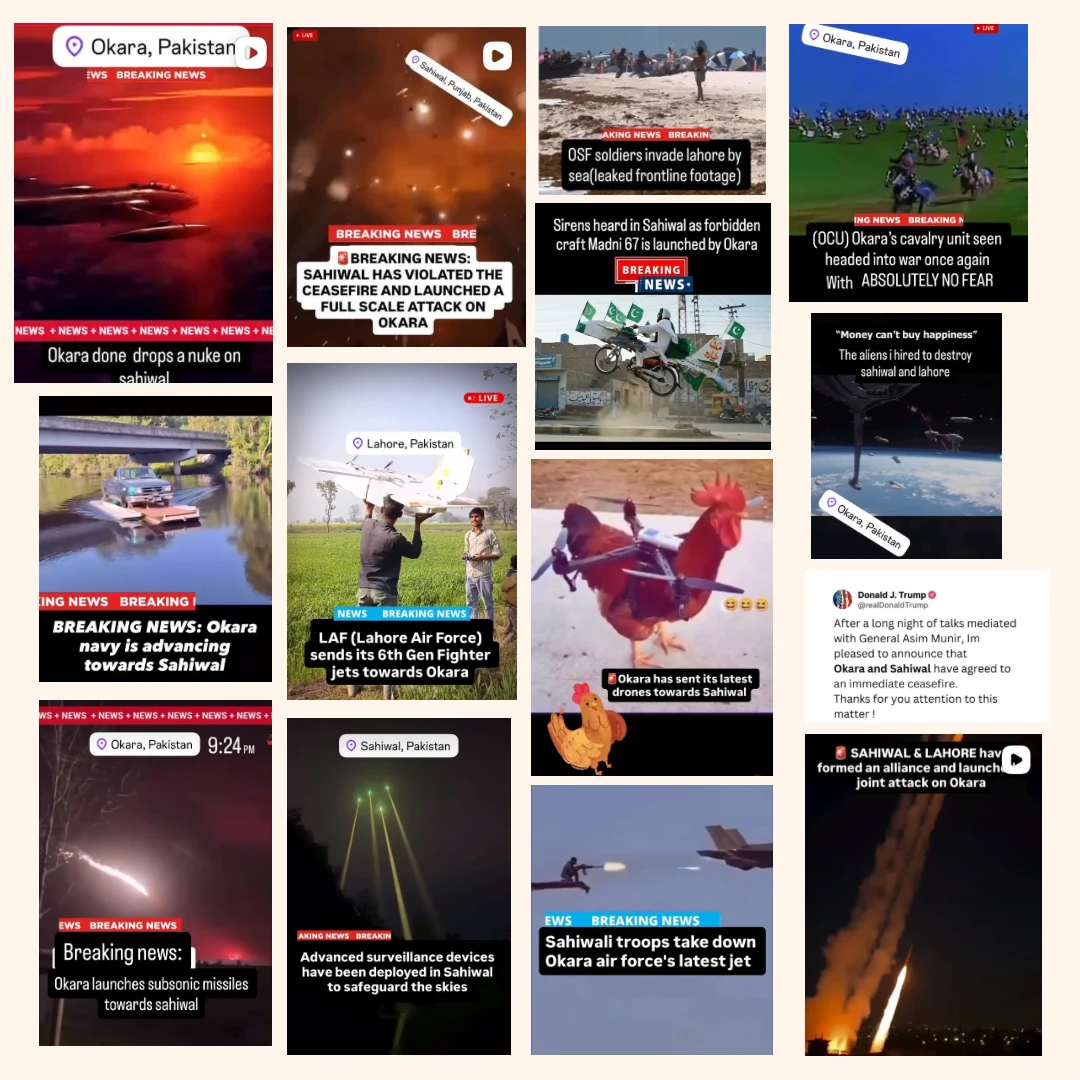
The language of the Okara-Sahiwal war mirrored in its entirety that of two major conflicts that we as a country of over 200 million have been subjected to, impacted by, and yet remained largely aloof of.
The first was India-Pakistan 2025, which hit just about as close to home as you can get. When enemy drones are buzzing across your skies and rockets launching into your airspace, you feel a need to closely monitor the situation. Your news channels are perfectly adequate for getting basic information, but you know that the quickest way to get every side of the story as it unravels is social media, so you open your phone and fire up X. What you see next are Indian journalists straining their vocal cords to declare that the city you’re sitting in will be waving the tricolour by morning, that the next one over has already been reduced to rubble, and the Lahore port is up in flames. There are screen recordings from video games presented as evidence of the destruction of your grandmother’s neighbourhood. Your annihilation is declared unavoidable. The folks certain of it can’t contain their joy. Then you wake up the next day to find the other side is minus six jets and awfully silent about its assurances from the night before.
The ongoing American and Israeli war on Iran is an equally potent example of the nature of war in the digital age. The most powerful man on the planet will not only blow up a village, he will post the footage with flag emojis and all caps hoorahs designed to satiate the bloodlust of his audience. Netanyahu will curate his tweets to coincide with his bombing campaigns, referring to the men, women and children he has annihilated as ‘barbarians’, a word originating from how the Greeks referred to the Persians: strange foreigners whose language sounded like bar bar bar, rendering them unworthy of the civilities ordinarily extended to fellow humans. He and his supporters can take solace in the idea that the explosions on their screens bury beneath them nothing more than the bar bar bars.
Whether the anonymous warriors at the forefront of this movement knew it or not, what they produced is a scathing satire of a global military industrial complex that values chest-thumping lies just as much as the rockets and hellfire it seeks to rain down on its enemies.
And when the bombs finally stop dropping, we discover through a tweet from the President of the United States that it was in fact courtesy of a surprise entrance mediator: us. War is theatre and we’re not just the audience, we’re on stage.
It is a direct consequence of all of this, in my opinion, that young people on the internet can now post videos of a villager launching a firework or a man riding a bicycle with wings, present them as advanced rocket fire and stealth fighter jets launched by the Okara Air Force, all being guided by the slippery hands of global geopolitics, and people will immediately get the joke. It’s because we’ve seen this film before.
In the times we live in now, if violence is biryani, lies are the raita. The Okara-Sahiwal war exists in this context of every bizarre spectacle of geopolitical violence that came before it. This is humour over a fake conflict drafted by a populace that has laughed through real ones. An organic, en masse indictment of the ridiculousness of the times we live in, and of the silver-tongued suits and cartoons that rule our world, constantly finding new ways to convince us that a few more hypersonic missiles on that other group of non-humans would actually be a wonderful idea.
Despite all of this, you might still be pondering the very random nature of it all. Why Okara? Why Sahiwal? Why a war? Why now? Why is this even worth writing about?
Well, if you don’t get it, that’s precisely the point.
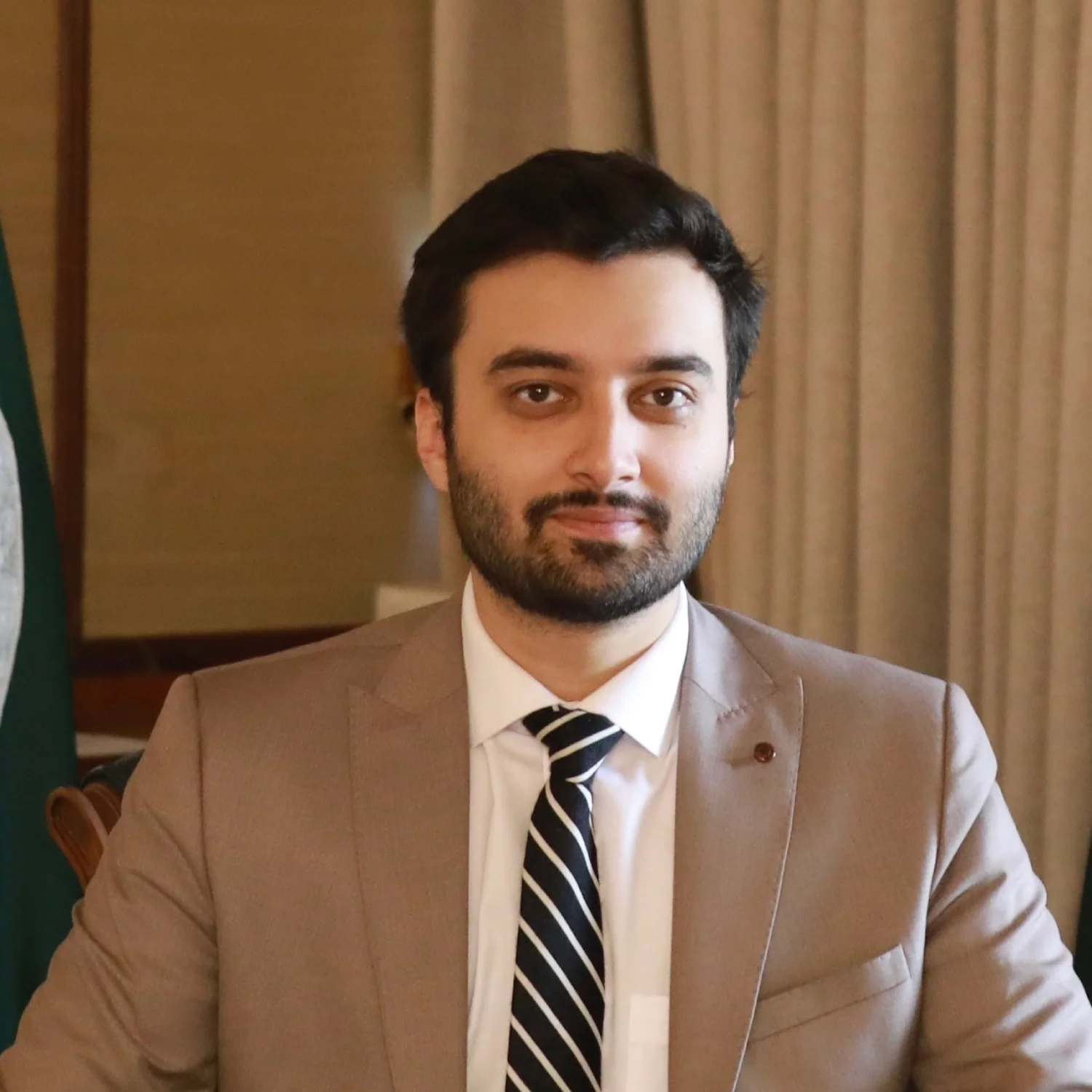
Hassan Kamal Wattoo is a lawyer and columnist from Okara, based in Lahore. Twitter: @hkwattoo1