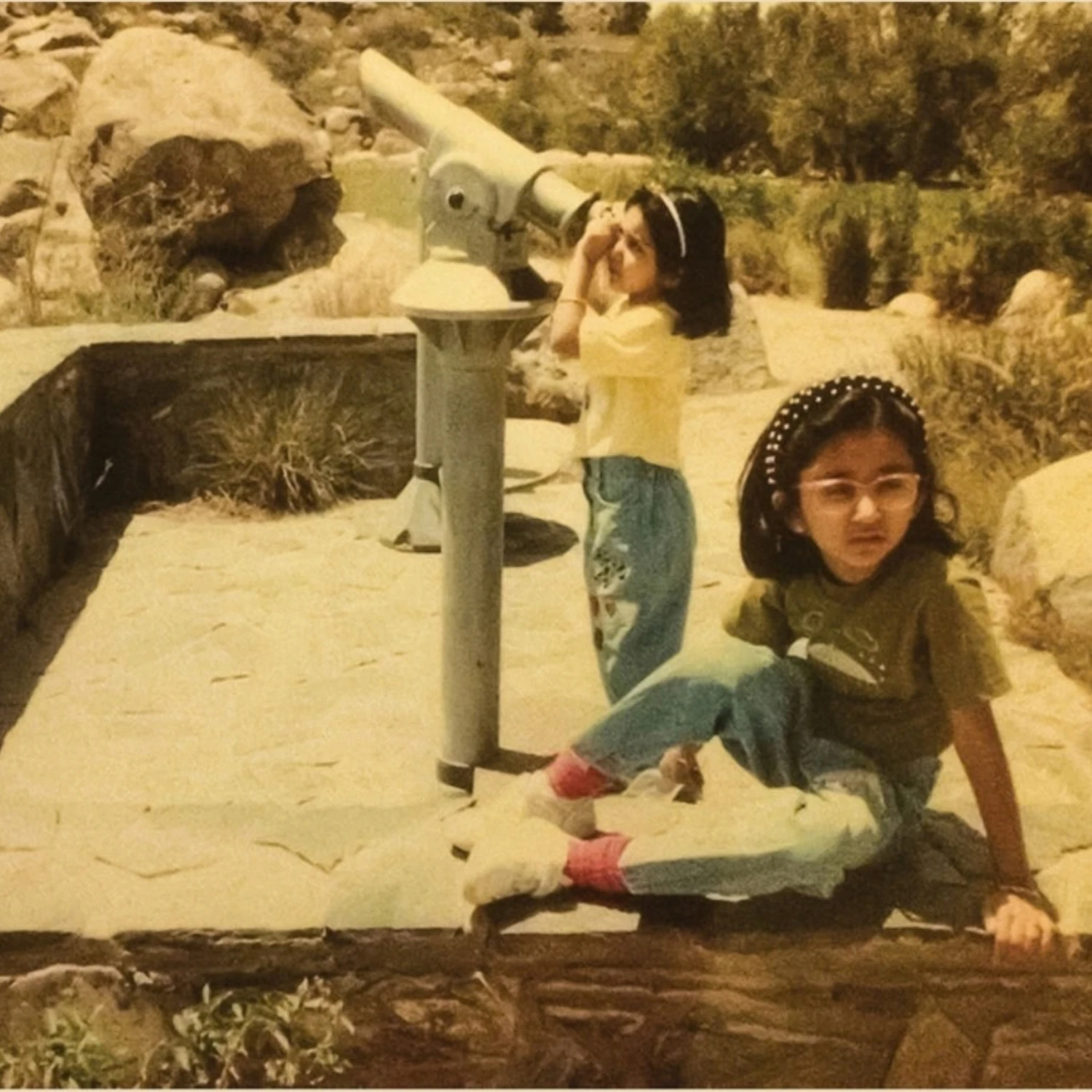
It’s hard to write a poem about an expatriate childhood now. It used to be a much more novel thing: one lived away from the noise and clangour of family and cousins and that one uncle who twisted your cheeks left and right and found it awfully funny. There were trunk calls booked back in The Day, with three minutes to holler your news down the line as if shouting would make it more audible to the person across the world; there were flimsy blue AirMail letters. If you grew up in the eighties and nineties, a lot of people you knew had a father who worked abroad and they lived in Pakistan with their mother and grandparents; the most normalised that a single-parent home has probably ever been. Then all those kids grew up, and started writing about their bifurcated lives, the here-and-there, the sense of always being in two places at once.
Whenever you feel like you’ve encountered an idea before, Naguib turns a phrase to make you rethink the thought.
It’s hard to write about a childhood cleaved in two, not because you can’t, but because it’s so common now, suddenly, to have a heart and memory pulled in many directions. Hera Naguib’s Rupture Anthem (University of Pittsburgh Press, 2026) is a book about this condition, but it is also a book that has a steady centre: the narrator. Unlike romantic notions of the sky at sunset, a muezzin at home but disco abroad, Naguib opens her collection of poems with Derek Walcott, the sea and a father humming aaj mausam barra beiman hai, aaj mausam in “The Expulsion”.
Immediately, we are located, and almost as swiftly everything is turned upon its head; a nasty, shocking birth. A passport, “a prosthesis”, policemen with guns in what should have been a safe space: things are familiar, and yet nothing can be as it seems — “Belonging, once terra firma, crumbles to smoke.” (The Expulsion). It’s like a Greek chorus, setting the scene for what is to come.
Rupture Anthem is an interesting journey. Whenever you feel like you’ve encountered an idea before, Naguib turns a phrase to make you rethink the thought. It’s difficult to write what so many have already explored; American presses seem to have a particular fascination with the well-travelled storyteller. But poems like “Bildungsroman”, at first glance a series of nostalgic glimpses of memory, whip out lines like “taped my breasts flat, uncitizened/ my femininity until I blossomed/ to a blazing violence that had to speak” that echo Lady Macbeth, similarly blazing with rage and a disowning of feminine weakness. The violence of the lost land of childhood is repeated through the book. Nostalgia exists, but of a sharp-edged kind; Naguib remembers, but with a steely memory that refuses to gloss anything over. Poems such as “Lessons from the Quran Teacher”, “Morning Assembly” and the titular “Rupture Anthem” all end on the breathless suddenness of an em-dash — a long gangplank, walking you to the edge of safety before daring you to jump off; an arrow, pointing, a spear. There is no self-pity in any of these poems, no longing for gentle bygone days; only a firmness of gaze, a witnessing that is steady, and loving in a hard way. “Prologue to Womanhood” describes the absolute uproar surrounding the narrator being discovered with a boy; the narrator is unrepentant without being a martyr, wryly observant of the furore, but also entirely detached from any of the shame being foisted upon her, “bowls/ of pistachio ice cream snug/ on my criminal thighs”. Being an adult, looking back, has its advantages, and one of them is being able to remember without cringing.
Hera Naguib has always been deft with a startling phrase, and Rupture Anthem comes with a delightful array of them: from a “humid conch of bread” in “En Route to Mecca, My Crisis of Faith” with the narrator and her sisters “row up like duckpins/ in the backseat” and the “wet glitter of appetite” of oilfields; to the “open bracket” of an answer (Nostalgia Is a Pathogen), hanging over sleep; to “stolen tangerines bulging/ in my pocket, happily as a goiter” (The Years We Carry) and so forth. Naguib skilfully skirts the edges of poetic verbosity (sometimes titles like “Repatriation Trepidation” had one holding one’s breath) without, thankfully, falling into the pit of it. Amidst the linguistic surprises, Naguib is best when the poems are aquatic. “Human Capital” opens on the crest of absolute beauty:
Tide-slurped, the shore
rocked my father’s thirst,
eyed the day he, too, will
foray fishwards, his spine
full-mast, borderless as salt
There is a recurrent thread — a wave, if you will — of the poet using marine imagery to speak of her father, in poignant contrast to the deserts of oil country and land-locked Lahore. The water is both a challenge to be surmounted (The Bribe), as well as a place of belonging, even if it is a “paleolake of/ the gone/ girlhood,/ of a father’s/ ambition” (Jeddah) — a familiar experience of fathers and fatherhood.
There is no self-pity in any of these poems, no longing for gentle bygone days; only a firmness of gaze, a witnessing that is steady, and loving in a hard way.
Another deeply engaging theme is of the body, and how the vessel of it is the locus of experience. Sometimes this appears detached, as if the poet is an impassive observer; sometimes it comes alive with curiosity. But the constant is a certain verisimilitude of experience, an assured affection for the adventures that have made the narrator the person they are today, a kindness and lack of judgement in the witnessing, even if the people around her have not extended the same grace. Touch, and the lack of it, is something one noticed time and time again — adolescent meetings in dark alleys; “Through the year, we touch no one” (Nostalgia Is a Pathogen); “I touched no-one” (The Season of No Return). Touch and the absence of it echoes into other absences: of home, belonging, a parent’s attention, water in the Lahore canal, blood in veins, a caress. Rupture Anthem is at once a resolute, beautiful roll-call of the things that break us, and a love letter to the ways we learn to bloom again.

Mina Malik is a writer and poet based in Lahore. She is the co-founder of The Peepul Press and prose editor at The Aleph Review. Her bestselling debut chapbook of poems, Rogue Planet, came out in 2026 and she is represented by Peters, Fraser and Dunlop in the UK.