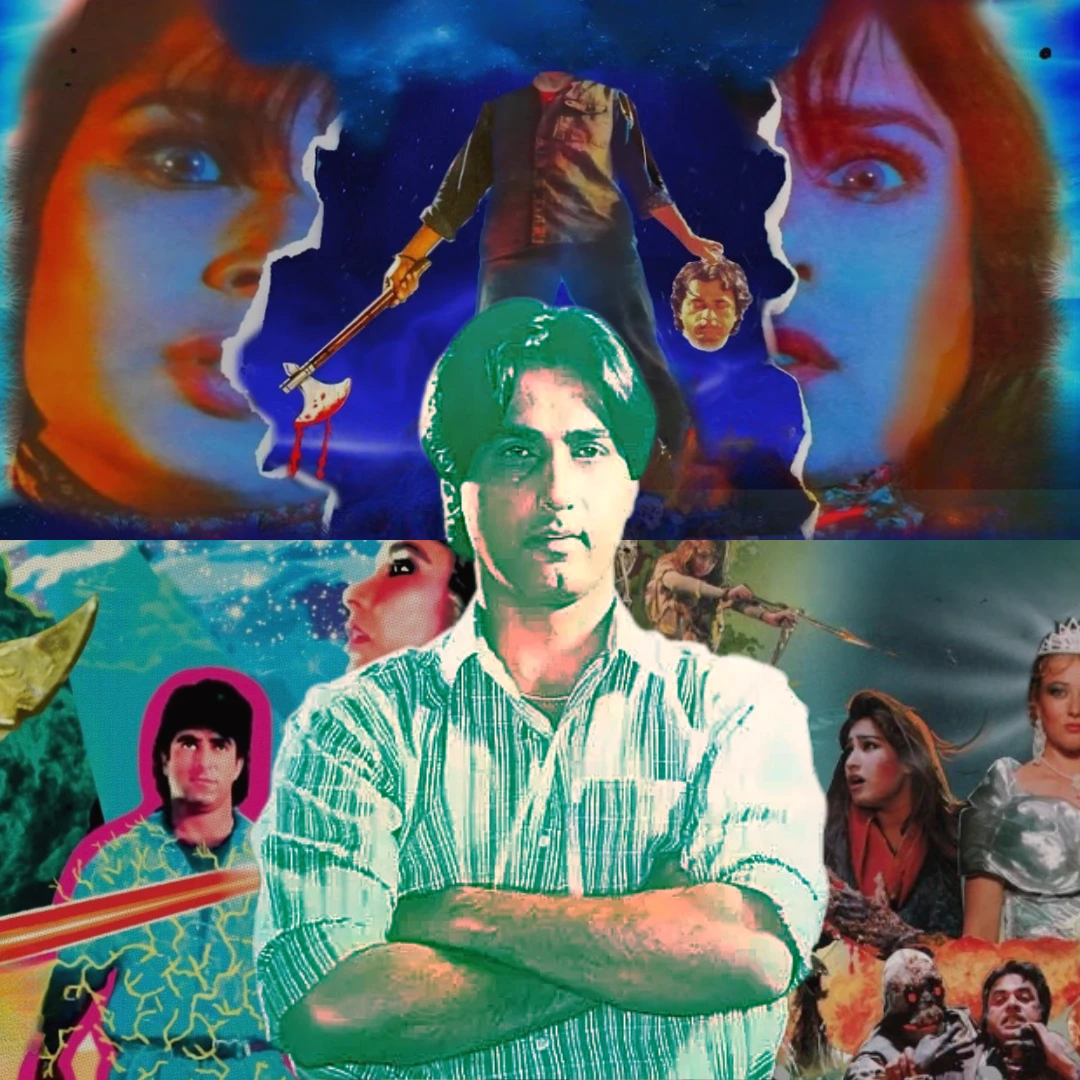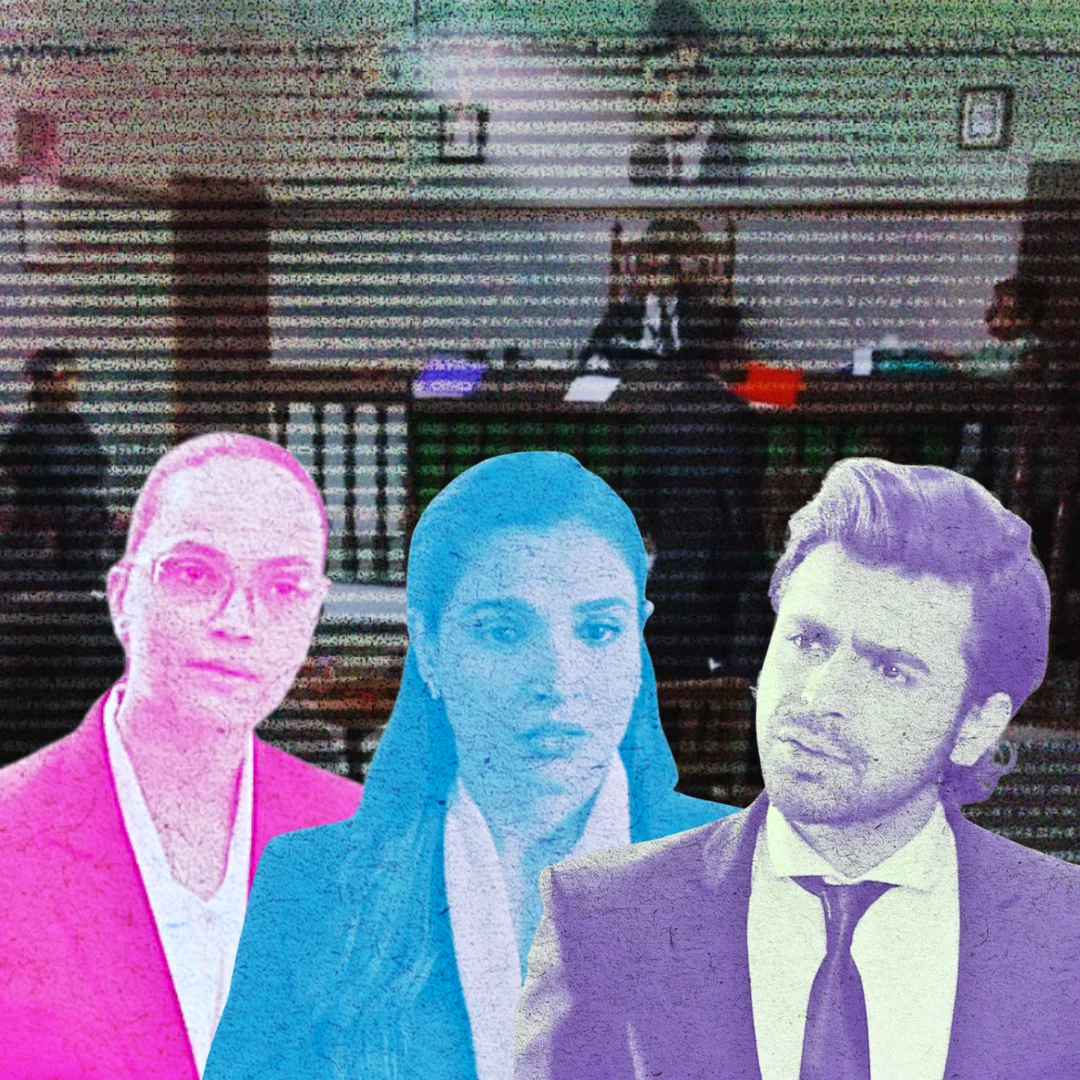
There is a lot of heavy lifting that contemporary Pakistani cinema and television do for the sake of so-called realism. In the 2010s, bad women on the small screen wore skinny jeans and slim tops to demarcate a Western sensibility. Men beat their fictional wives, women played unabashed golddiggers, and the saas-bahu saga continued, drawn out across both good and bad offerings. In the same decade, there was an influx of rape dramas: Roag (2011), Pani Jaisa Pyar (2011), Chup Raho (2014), Udaari (2016), Muqabil (2016), Yaqeen Ka Safar (2017), Dar Si Jati Hai Sila (2017).
The rape drama has, by now, settled into the shape of a public service announcement. Whether it arises in response to the news cycle or merely shadows it, its repetition is easily defended: this is how things are. In an industry hemmed in by a tightly policed imaginative horizon, realism — particularly in its guise as “awareness” — offers a convenient alibi, even a kind of sanctioned relief. Within this logic, even more “controversial” additions like Barzakh can be recast as observation rather than endorsement. As Rubina Ashraf put it, “Barzakh is simply another example of a drama that mirrors certain aspects of society. People have the choice to engage with it or not, but the show is offering a perspective on the world as it is.”
If the rape drama once moved, always troublingly, toward romantic love as its denouement, it has now fully colluded with the courtroom drama to seek justice.
On the one hand, this is a negotiation for freedom, an incremental stretching of what can be shown and risked. On the other, the rape drama’s increasing fidelity to “real life” has rerouted its narrative engine. A drama like Pani Jaisa Pyar, for instance, drives much of its momentum from Sana’s marriage to the abusive and unfaithful Adarsh. That her marriage turned into a nightmare on her wedding night when Adarsh learns she was raped plays the central conflict at the expense of the sexual violence. Unsurprisingly, the drama’s ending (spoiler alert) is the couple’s bittersweet reunion. Meanwhile, Muqabil follows Parisa's trauma response, part of which compels her to marry her rapist’s son, before the two fall in love.
If the rape drama once moved, always troublingly, toward romantic love as its denouement, it has now fully colluded with the courtroom drama to seek justice. Unfortunately, the result is an uncanny splice with an NGO-ised mantra of women's empowerment in a visual economy where the judicial system is otherwise absent.
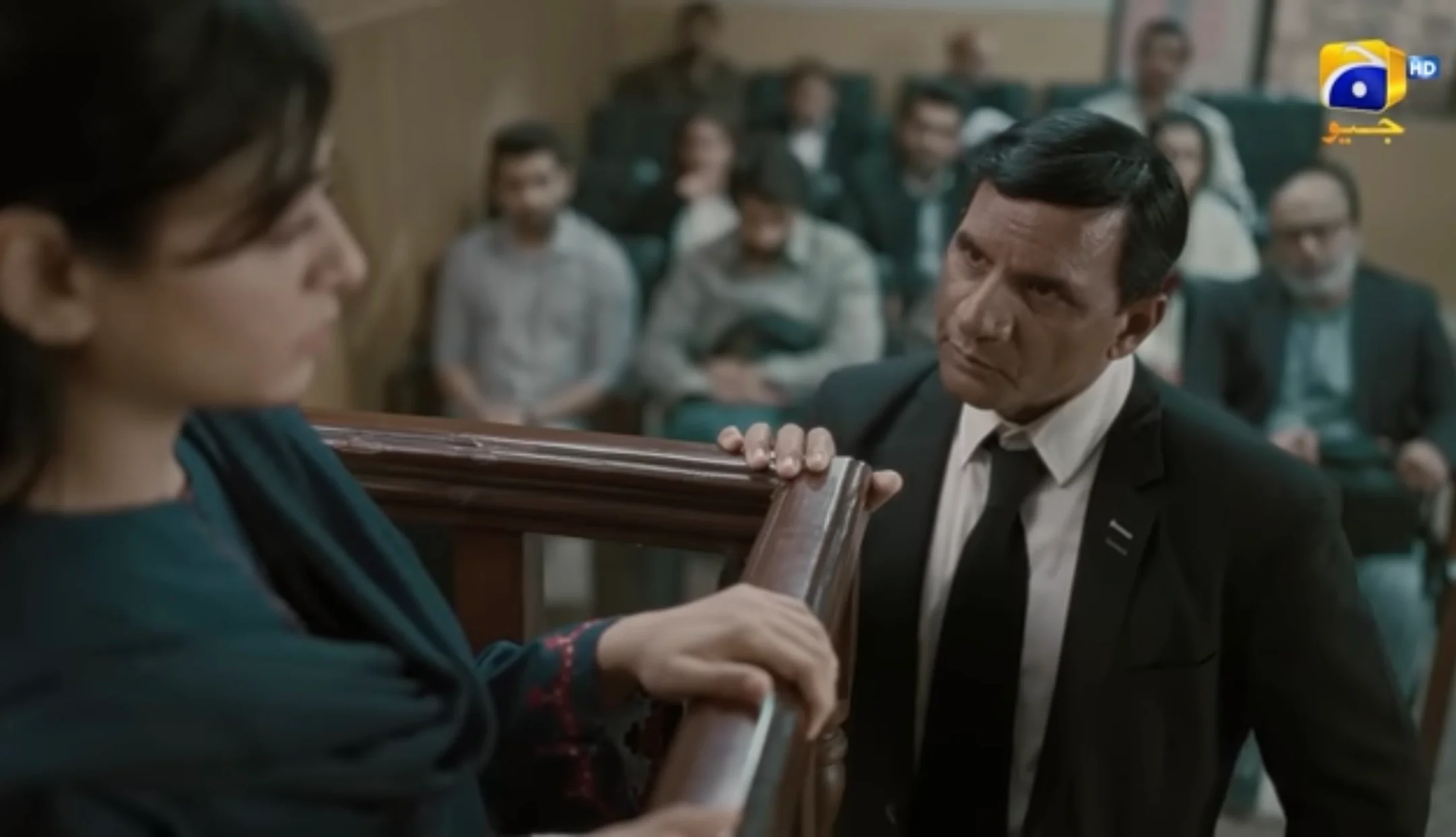
There is no other way to put it: I do not believe Pakistan can convince in its courtroom dramas. In particular, the highly improbable triumph of justice on screen, from Udaari to Aik Aur Pakeezah, make the rape trial drama in particular a questionable formation. If there is any justice today, it appears increasingly sparse for survivors of sexual abuse in a hyper-digital post #MeToo world. After all, whatever fantasy is being offered via such Pakistani dramas is one TV remote click away from Justice Ali Baqar Najafi’s warning on “live-in relationships,” or from the victory dances born out of nefarious defamation suits.
There may be grounds for this defeatism everywhere. That the US Supreme Court overturned Roe v. Wade does not quite take away the efficacy of Law and Order, Suits, or, within popular cinema, A Few Good Men and My Cousin Vinny. Is it because North American audiences at large do not have to be convinced to believe in the court as a site for justice? Or that Hollywood’s conception of the trial is not limited to a particular kind of crime, especially one that the judicial system is notoriously bad at handling? Of course, North America’s fictional courtroom is also housed in a well-developed legal drama tradition, one that weds the bench to many different types of plots and genres.
Conversely, the Pakistani courtroom in fiction, like much of its contemporary scene, feels detached from its own film tradition, even though today’s industry is itself an amalgam of television and cinema tropes and personnel.
The plot tends to run like this: you have been harmed, therefore you must seek justice. Since justice is difficult to obtain and must be wrested from a chain of corrupt intermediaries, you must persist. And if you do persist, there will be a victory, and it will be yours.
In Insaf Aur Qanoon (1971), when Mohammad Ali’s character discovers he has been wrongfully imprisoned, he erupts into an impassioned and memorable address to the court. Stepping away from the witness stand, he stretches his arms across the bench, his hair greyed, his eyes wet: “Give me back twelve years of my life. Return my youth to me, my desires, and my longings. Today, I will see how powerful justice and law really are.” Only a year earlier, Ali had played a senior lawyer in Insan Aur Aadmi, in a strikingly polished scene for its time, defending a former courtesan accused of murder. “How is a socialite dancing for a charity fundraiser any different from a courtesan dancing for her children?” he asks, with his signature sternness.
Despite the melodramatic tension, whether in the former’s emotional frontal address to the court, or in the fact that Ali’s opposing counsel is his own son, with the socialite in question revealed to be his daughter-in-law, Pakistani cinema, too, has historically accommodated the courtroom across genres and across a wide spectrum of crimes. Bhool (1974) offers a particularly curious variation: a lawyer is drawn into a case against her own husband when a woman arrives claiming to be his first wife, a marriage he refuses to acknowledge.
On some fronts, particularly the incessant attacks on women’s honour and reputation, there is little difference between the courtroom of older cinema and that of contemporary dramas. A depressing indictment of the system’s stubborn pitfalls, yes, but more broadly, this new bench appears as part of a pedagogical machinery around sexual violence, one that posits that perseverance and resilience can ultimately defeat all odds.
The plot tends to run like this: you have been harmed, therefore you must seek justice. Since justice is difficult to obtain and must be wrested from a chain of corrupt intermediaries, you must persist. And if you do persist, there will be a victory, and it will be yours. For anyone with even a passing familiarity with how the system actually works, such trajectories feel cruelly optimistic. But the writers, directors, and production houses are not unaware of this. Long scenes of police brutality, negligent or corrupt officers, dilapidated lock-ups, and predatory courtroom lawyers work to reconstruct a broken infrastructure that rape survivors must nevertheless pass through.
Udaari, co-produced by the Kashf Foundation, constructs a similar narrative of empowerment. When Sajida is finally arrested for the attempted murder of her husband Imtiaz, who abused her ten-year-old daughter Zebo, the NGO enlists Arsh, a musician-lawyer, to take up the case. Roughly the first half of its 26-episode run unfolds across two parallel village arcs: Sajida and Zebo on one side, and Sheedan and her daughter Meera, who later joins Arsh’s band, on the other.
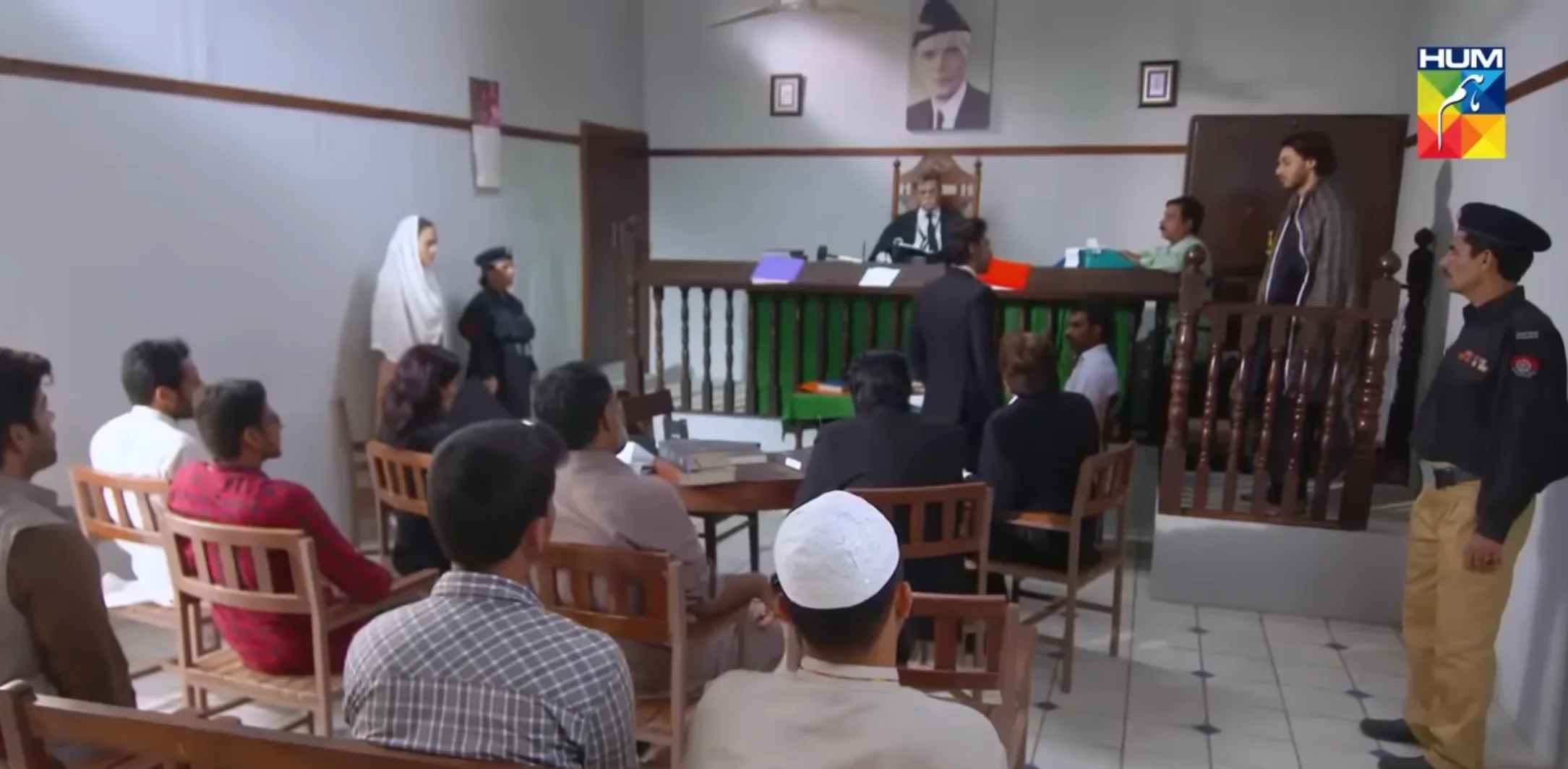
With Sajida facing prison, Arsh tells Zebo that the only chance of saving her is by confronting the past. “Tell me, Zebo, do you want to live like a victim or a survivor? A fighter, a brave woman who wants to see her criminal meet a miserable fate?” he asks earnestly. When she decides to take Imtiaz to court, Arsh, now something of an older brother figure, tells her to face a mirror and repeat after him: “I am not a victim, I am a survivor. I will not be helpless. I will bring my culprit to justice.”
Of course this is very much in line with contemporary global discourse on sexual harassment and abuse, there is a developed language of trauma and agency. The shift from “victim” to “survivor” is part of this vocabulary, much of it built by feminist organisers across the world. Whatever its internal disagreements about how best to navigate such thorny terrain, particularly in a post-#MeToo world, this work has consistently sought to reconstrue rape as a crime of power and control, where the recovery or recognition of agency becomes central to the idea of relief.
Scenes like these have been hallmarks of the social drama. They are pedagogical, instructing viewers in what must be done: through Arsh’s pursuit of medicolegal reports, the first information report (FIR), and forensic traces from the crime scene, we are offered a procedural map of justice. At the same time, these scenes are also escapist, allowing us to imagine a world in which such procedures can be completed against all odds; Zebo is, fortunately, albeit discreetly, taken to a doctor for examination within 24 hours. In the courtroom, the decisive witness is a thief who happens to have stumbled upon the crime scene. Only imagination can assemble a world in which rape survivors can rely on such coincidences to shore up a victory.
Case No. 9, too, is similarly invested in reconstructing the survivor’s journey from assault to courtroom and beyond. With no competing plotlines, the drama allows the trial to expand into its own central architecture: the lawyer’s badgering of Sehar, the personal attacks on her character, and the accusations of promiscuity receive extended screen time. Outside the witness stand, the dialogue is stiffly punctuated by Sehar’s blunt questions about who a Medico-Legal Officer is, or by declarative statements on victim-blaming and legal reform. These moments sit uneasily within the narrative rhythm, but they also carry a certain candour. The drama does not trust implication; it states its terms openly. Its purpose, finally, is to teach.
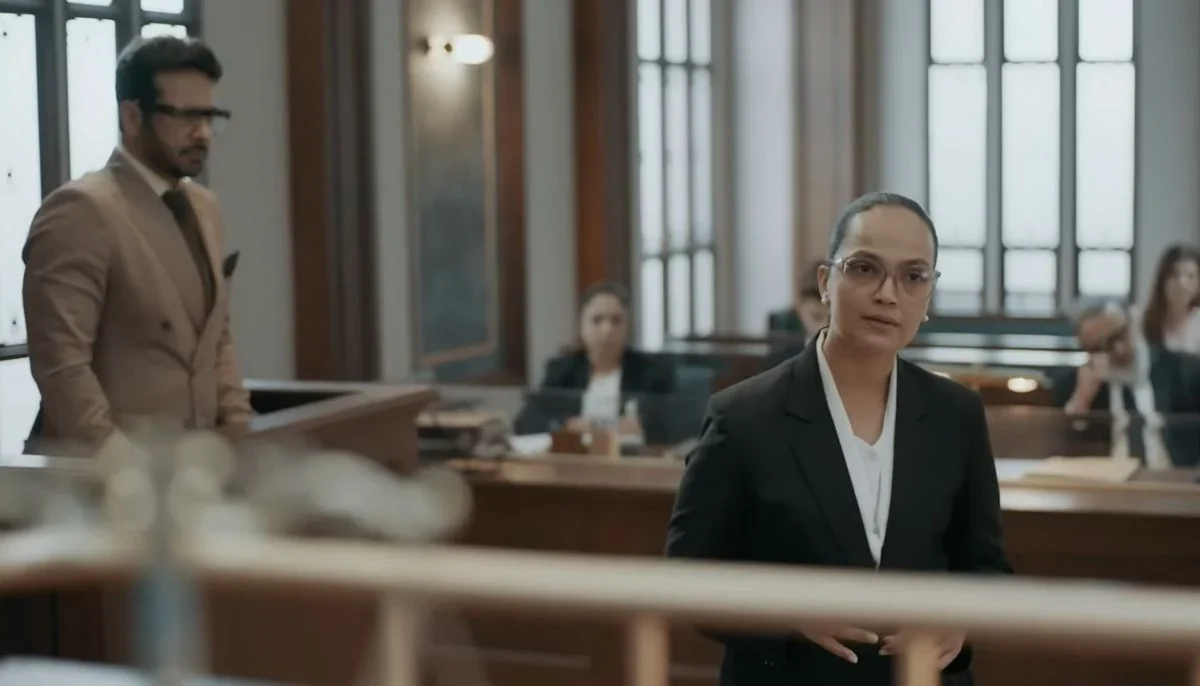
Inside the court, however, in the name of realism, every attempt to humiliate and cross-examine the survivor on the witness stand echoes earlier iterations of the rape trial plot. From Udaari to Taxali Gate, Case No. 9 to Aik Aur Pakeezah, the trajectory is brief yet overdetermined; any analysis of this fictional courtroom already feels saturated, even mechanically repetitive, in its vitriol. If anything, Aik Aur Pakeezah fares relatively better precisely because its courtroom time is minimal in relation to the rest of the narrative.
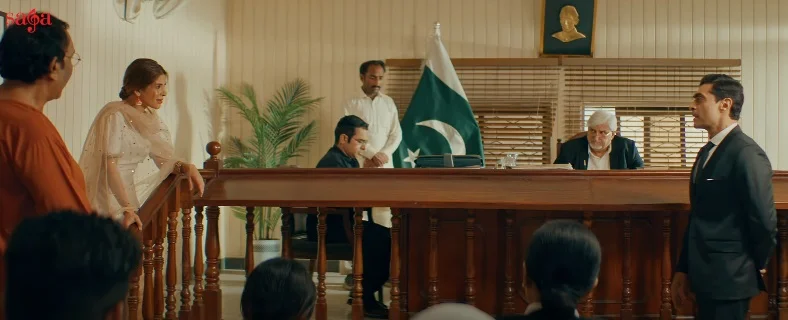
Nothing quite captures the courtroom’s collapse of authority as Taxali Gate. Under Abu Aleeha’s uneven direction, the film begins to feel as though it personally wants to humiliate the rape survivor, Zainab, and her lower-caste family. Alyy Khan’s defence lawyer delivers a heated denunciation of #MeToo and ‘Mera Jism Meri Marzi,’ only to be abruptly emptied of conviction by Muskan’s pointed rebuttal, which leaves him suspended in an uncharacteristic silence. As always, the trial’s gravity is undercut by an awkward vein of humour: the judge, cast as a bumbling figure, takes a phone call from his wife in the middle of proceedings. Whether the moment is meant to show his incompetence or offer respite in tense moments is never quite clear.
Perhaps what these stories keep circling, without fully articulating, is not simply the question of justice but of trust. What would it mean to trust the audience, to relinquish the pedagogical urgency of explanation and allow implication, ambiguity, and even silence to do some of the narrative work? To not oblige the courtroom to mean something? Until then, the courtroom will continue to overperform its own credibility, speaking most loudly at the very moment it is least certain of being heard.

Manahil Tahira is a Karachi-based journalist and writer whose work moves between fiction and nonfiction, tracing the intersections of bodies, spaces, visuality and technology. Formerly desk head of Lifestyle at The Express Tribune, their creative writing has appeared in Arzu Anthology, Fahmidan Journal, Lakeer, and is forthcoming in The Aleph Review (2025). They are also a Non-Fiction Editor at South Asian Avant-Garde (SAAG) magazine.