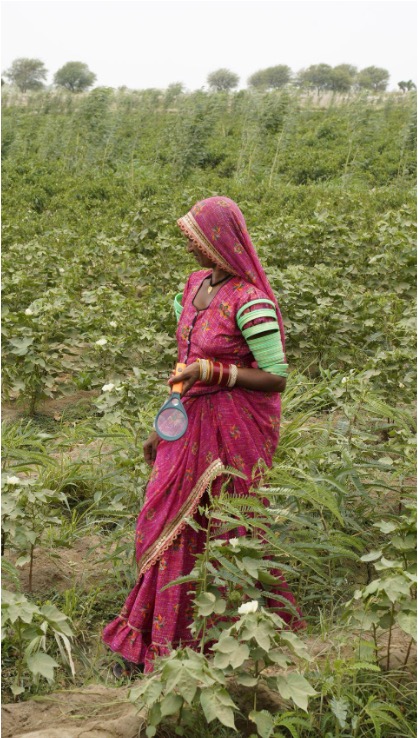
In Masoodabad, a village in Sindh’s Umerkot District at the edge of the Thar desert, Kavita Kohli, 46, a peasant activist, lives with her family of six in a one-room mud house. These days, she is busy clearing weeds from the field. In a week or two, the cotton bolls will crack open, surrounding her in a sea of white. “I care for them as I care for my own children,” she says, admiring the flourishing returns of her labour. In addition to farming, Kavita devotes her time to advocacy, encouraging and assisting other women of Masoodabad in obtaining National Identity Cards for themselves and B-Forms for their children, in order to secure their civic rights.
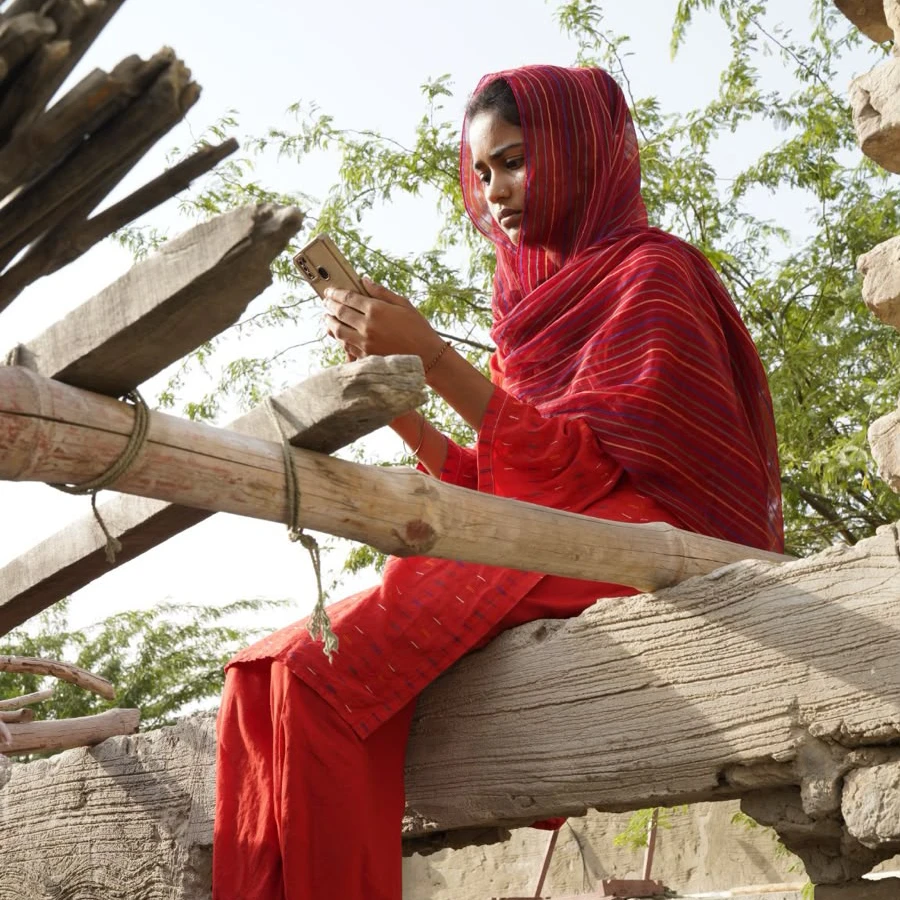
According to the Global System for Mobile Communications (GSMA), around 26% of rural women in Pakistan use mobile internet. Kavita falls into this minority, with the added rarity of actually owning a personal mobile phone — an exception in rural Sindh. Noticeable progress can now be observed on this account though, with more rural women acquiring personal mobile phones, largely driven by the need to track their monthly stipends from the Benazir Income Support Programme (BISP) — a federal social safety net initiative for low-income households in which the woman of the house is the designated beneficiary. This summer, Kavita accompanied several neighbouring women to the city to help them purchase their first mobile phones. Yet, as far as she knows, she remains the only woman with a smartphone in her 300-household village.
The recent GSMA Mobile Gender Gap Report highlights that family disapproval as well as limited literacy and digital skills are the top obstacles to mobile internet adoption for Pakistani women. It also emphasizes that this disparity expands two to three-fold in rural settings compared to urban centers.
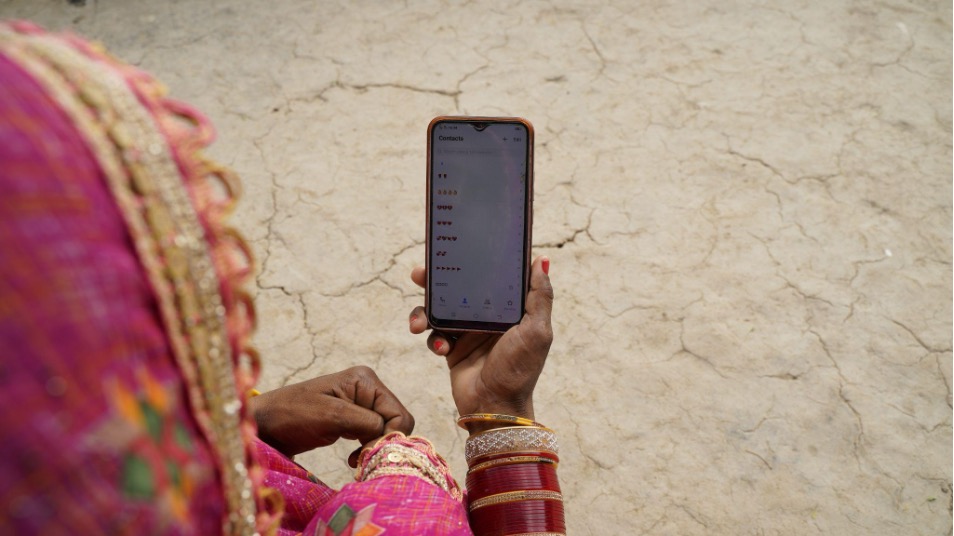
Even though Kavita has never set foot in a school, she is a quick learner. In the past few years, she learned basic smartphone use by observing NGO workers in her role as a Gender Lead with Sami Foundation, a local non-profit active in Umerkot that works on community development and social welfare.
“Conventional literacy is not necessary for digital literacy; it’s not a big barrier anymore”, said Atif Ahmad Khan, the lead trainer and consultant who designed the digital literacy curriculum for rural women across eight districts in the provinces of Sindh and Punjab, organised by the Food and Agriculture Organization (FAO). “The element of exposure might differ due to varying educational experiences, but features like touch-screen, text-to-audio and audio-to-text have narrowed this barrier to a great extent”.
Predominantly, in rural regions of the country, a woman’s social exposure and digital participation remain a household decision. Shared phones often become tools for surveillance and dominance, allowing male family members to monitor call logs, messages, and search histories…
Yet, a tug-of-war persists between the world of possibilities offered by digital connectivity and Kavita’s ground realities. Like most of rural Umerkot, Masoodabad lacks electricity. Every day, to charge her phone, she walks five to six kilometres between her village and the main road, where she plugs it in at a local shop. Two hours of charging usually last her a day, if she uses the phone carefully.
A few kilometers from Kavita’s place, Jivanti, a 16-year-old high school student from Mandhal Thakur Village, climbs to the roof of her house brick by brick, hoping to catch a cellular network on her phone.
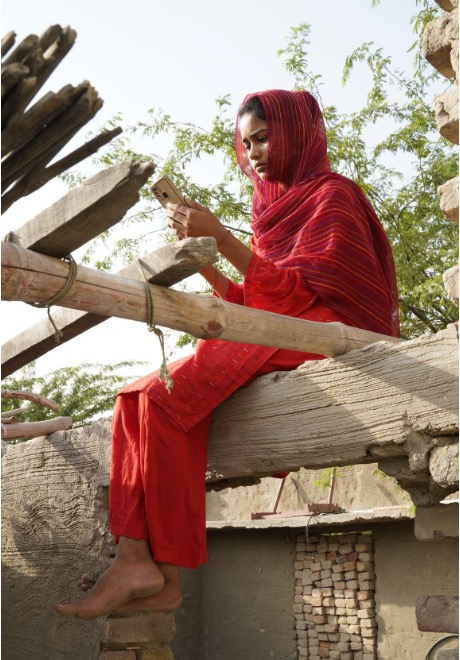
Last year, she was one of 30 participants who received introductory digital literacy training aimed at rural women, facilitated by FAO Sindh. After the two-day session, she gathered the courage to persuade her father to buy her a personal phone, driven by the conviction that through digital participation she could elevate her quality of life and that of her community.
With applications like PlantX and Bakhabar Kisaan at her disposal, Jivanti now helps her family and fellow farmers protect their crops from harmful pests by photographing them and running them through the apps for identification. Jivanti's experience illustrates that digital literacy among rural farming communities could contribute effectively to food security.
Recently, she helped Fatu, a neighbouring female farmer, identify a whitefly infestation in her crops. She was also able to suggest a remedy to eliminate these notorious agricultural pests known for draining nutrients and transmitting plant-based viruses.
In the neighboring village of Chanisar Mari, Jamna, 33, after toiling for most of her day, gets to spend some time on her husband’s smartphone when it’s free. Like Jamna, most women of her village have access to smartphones, but not on their own terms. This gender disparity isn’t just limited to a single village.
Recent findings of the GSMA Mobile Gender Gap reveal that 28 per cent of women in Pakistan who use mobile internet still rely on someone else’s phone. In her recent interview with Arab News, Nighat Dad, digital rights activist and founder of Digital Rights Foundation, shared, “When a woman’s only route to the Internet runs through a husband’s, father’s or brother’s phone, every search, every message is visible to the phone’s owner”.
Predominantly, in rural regions of the country, a woman’s social exposure and digital participation remain a household decision. Shared phones often become tools for surveillance and dominance, allowing male family members to monitor call logs, messages, and search histories, thereby amplifying gender inequalities and leaving many women vulnerable to abuse and violence.
With applications like PlantX and Bakhabar Kisaan at her disposal, Jivanti now helps her family and fellow farmers protect their crops from harmful pests by photographing them and running them through the apps for identification.
Jamna points to a lack of affordability, formal education, and digital literacy as the primary barriers constraining her online exposure. Moreover, being stretched thin by a grueling day of work – which involves toiling 12 to 14 hours a day for household chores, child care, and demanding field labor – leaves her with no time or energy to upskill.
Her situation reflects the reality for most women agricultural workers in Pakistan. Although they make up over 65 percent of the agrifood sector, socio-cultural norms keep them on the margins and ensure their contributions remain under-recognized. Trapped in a vicious cycle of time poverty, they continue to be sidelined when the work is mechanized and monetized. Their labour remains underpaid and largely undocumented, as it is seen as part of household chores.
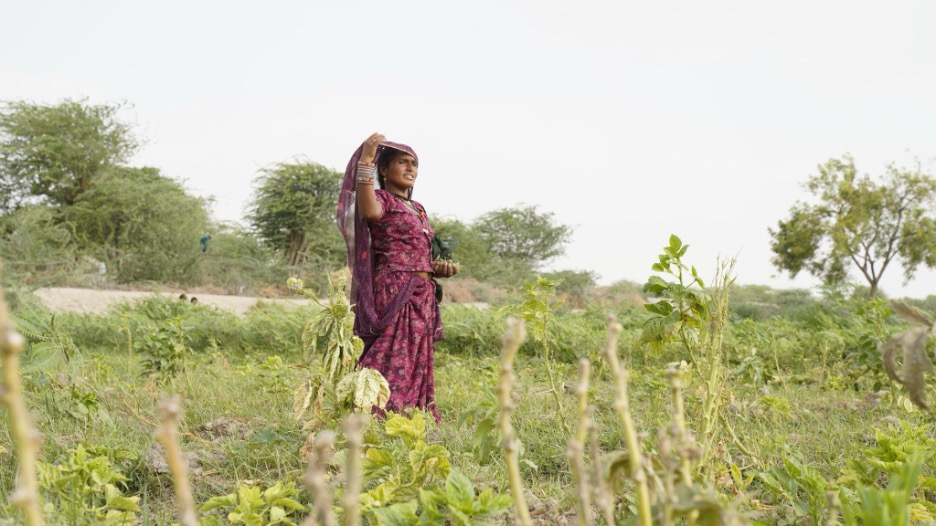
A few months ago, Kavita opened her first digital wallet with JazzCash, a leading digital finance service provider in the country; it enabled her to receive her stipend from the Benazir Income Support Programme (BISP).
She switched to digital, preferring it over cash collection at the BISP distribution center, to save her stipend from corrupt officers who pocketed a share. Kavita jokes, “The amount that was stolen from me — who knows, I might have started a factory of my own by now.” Kavita proudly shares that she became aware of these wrongful deductions through her time spent browsing the internet. Access to digital knowledge ultimately enabled her to take control of her own finances.
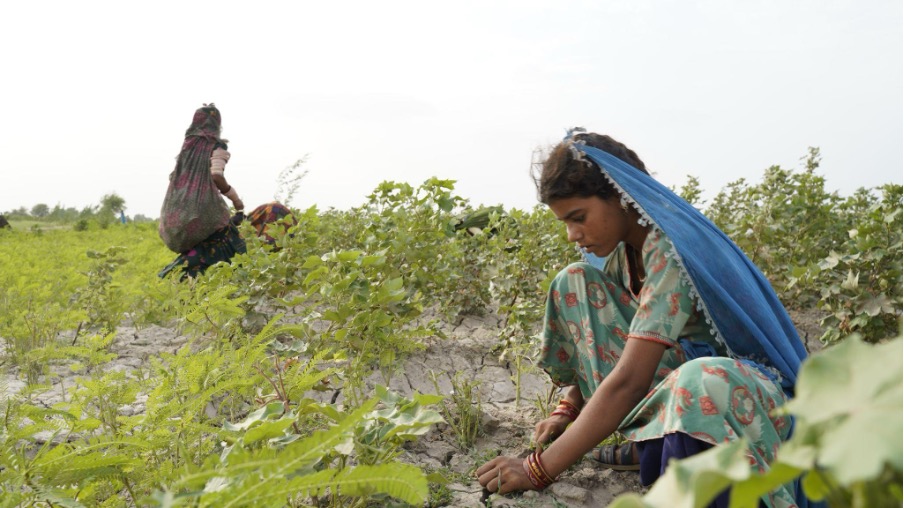
However, while technology granted her financial autonomy over her state stipend, breaking free from deeply entrenched agricultural systems proves far more challenging. When it comes to receiving her wages from the landlord, traditional norms still govern; the husband receives a single, collective payment for both of them. A 2024 FAO report reveals that only 4 percent of female farmers in Sindh, from a sample size of 112, received their pay themselves. For the remaining majority, their earnings are given either to their husbands (92 percent) or to contractors (4 percent).
Fortunately for her, Kavita and her husband enjoy a mutually supportive relationship; he encourages her various passions without dimming her light. Because of their emotional bond, the customary practice of her husband receiving her wages doesn’t bother her, as long as she is consulted in the financial decisions of their home.
But this systemic dynamic is one of the underlying reasons why women farmers remain invisible in both policy and practice. Despite working most of the day, their economic empowerment and decision-making capacity remain severely restricted when their hard-earned pay never lands in their own hands.
Today, as Pakistan’s agricultural sector makes significant technological strides, it is imperative to examine what this digital transformation means for women farmers like Kavita, Jivanti, and Jamna. Will this evolution accommodate the lived realities of the majority of the agricultural workforce and enable them to participate in the expanding world of agritech? Or will a semi-feudal production system and deeply rooted patriarchy continue to push them to the sidelines?
***
This story was produced with the support of Asia Pacific Forum on Women, Law and Development (APWLD)’s Media Fellowship on Digitalisation and Feminist Digital Rights and Justice.

Gulzar Nayani is a Karachi-based independent filmmaker whose work primarily focuses on local struggles, feminist movements, and land and water rights.