What does it take for a woman to be free? Dying at the hands of her brother, only to reanimate and finally leave? Or murdering her husband (by mistake) instead of seeking indefinite refuge in romantic could-have-beens? Is autonomy to be found in becoming a man through a vow of virginity, or in swearing oneself to the Virgin and refusing the temptations of the enfleshed feminine? And what about the witches, both the real and the publicly condemned? Are they free? Or must they, too, take leave of men, soliciting, however temporarily, shelter among their own kind before the inevitable death-by-male? Are our only options for freedom: kill men or be killed by them?
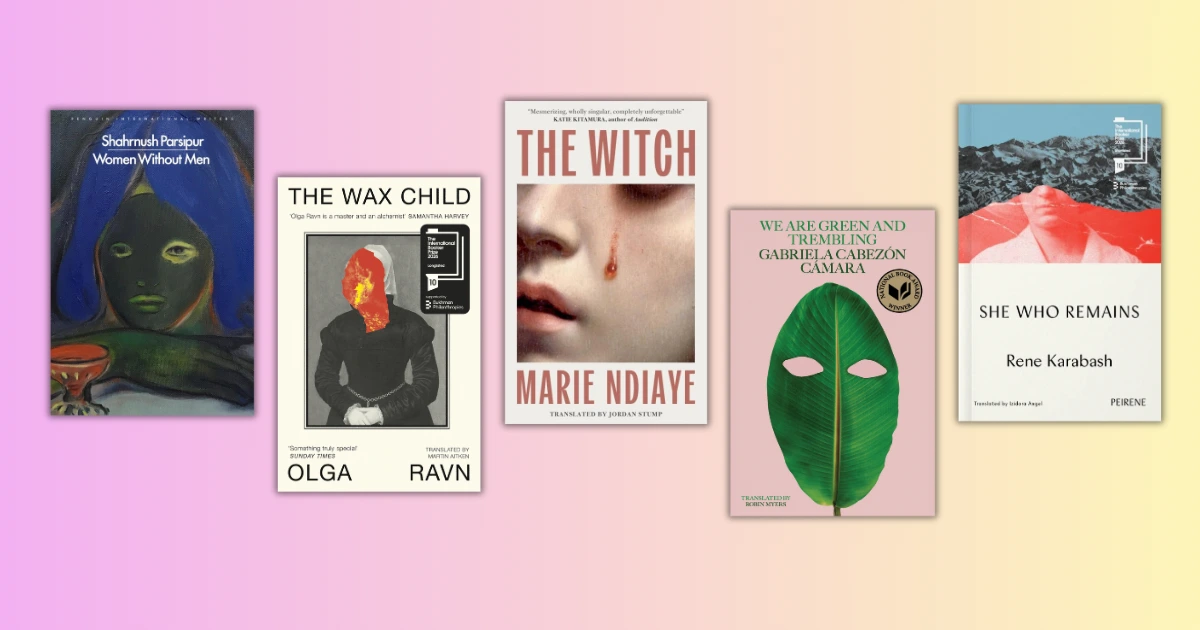
According to the women who authored some of the titles that appeared on this year’s International Booker Prize longlist — Women Without Men, She Who Remains, We Are Green and Trembling, The Wax Child and The Witch (which went on to receive a shortlist nomination) — the possibilities are few and far between. What is common to all, however, is the emancipatory potential of witchery, itself rooted in embracing at times the sapphic, but almost always the virginal.
Growing up, I was also taught the value of an untouched woman — definitely sexually, but ideally untouched by man altogether. What is better than birth by consumption of the forbidden fruit? Immaculate conception. Or better yet, reproductive labour that feigns willingness, but is ultimately — like all labour — compelled and exploitative.
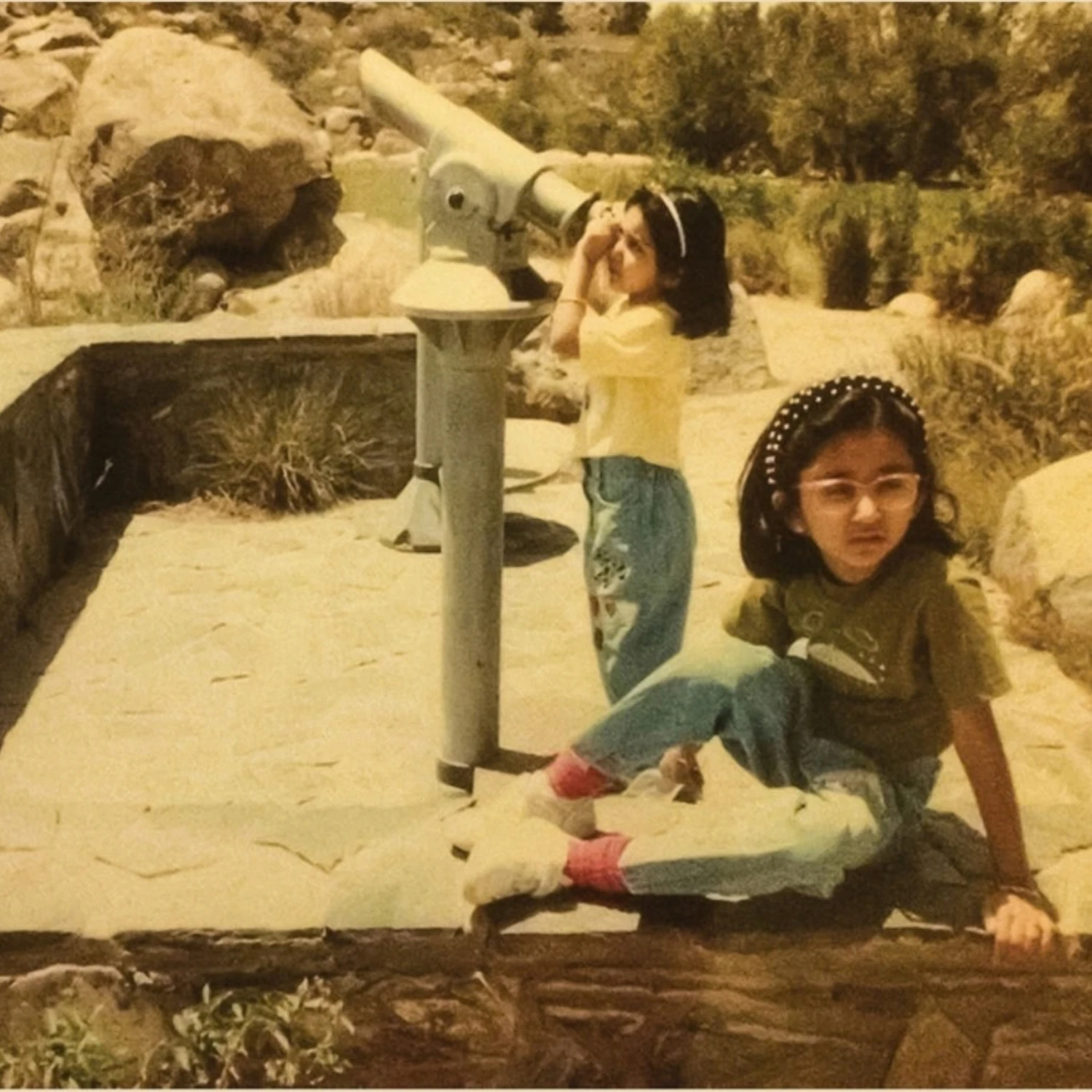
In early puberty, my mother, the Parvati tasked with protecting my father’s honour, made sure I knew to sit legs-crossed, wear trainer and then (groomed?) bras, as well as a dupatta over my still underdeveloped chest, to wash my underwear in the bathroom sink and to pretend as if I never got my ‘menses’ in the company of men. In the fourth grade, my parents removed me from a co-educational school and placed me in an all-girls’ institute in the hopes that the only men I would come across would be my two brothers, my father and the occasional relative or driver-uncle. In my O-Levels, when I became (like all private-school going, self-proclaimed geniuses) a public speaker, my parents’ biggest worry was that I would end up befriending a man; note: friendship between the opposite sexes is always more than. Little did they know that my larger-than-life eye-glasses and horse-braid guaranteed virginity. At 18, my parents ‘let me go’ abroad when I got into Yale with full financial-aid, but every summer I was subject to harrowing questioning about any encounters with the opposite sex. During my sophomore year vacation, the househelp baji discovered me fighting on the phone with my then-situationship and ratted to my mother. Consequently, I was subjected to a two-hour long session where my father accused me of having “an affair with a Black man.” To this day, mama prides herself on having a chaste daughter, unlike all these ‘modern’ types.
And, even I — secular, progressive, cosmopolitan — have often quietly judged many a sexually promiscuous whore, for taking it too far, even praying late into the night for forgiveness from God for their (and my own) unvirtuous thoughts and actions. More often than critical, however, I have been envious of these self-deputising women and the ease with which they command their sexuality. For instance, a friend of mine once told me about her adventurous tryst with what she described as: an InDrive-r, a total bear, huge and hairy in all the right places. I cautioned her, as one ought to, but internally I was hot, bothered and exceedingly jealous. Or these days, when my graduate-school roommate tells me of her almost-weekly hookups, I laugh along and even give her the occasional retort about entering one-too-many territory, but secretly I hate that she can embrace an independence I could never even fathom. Masculinist morality aside, is there any argument for feminine celibacy? In the past, I would venture: safety, but all women (including virgins) teeter the line between femicide and freedom everyday. If anything, it is on this line that life is lived for many of us.
Shahrnush Parsipur is acutely aware of this reality and portrays it brilliantly in Women Without Men. Intertwining five women’s quests for autonomy in the aftermath of each coming face-to-face with the impossibility of love, Parsipur maps the terrain of feminine desire in Iran — always negotiated, always wanting — while revealing the universality of the feminine. An experience crafted through (never fully) evading masculinist violence. Perhaps, what the book most aptly unveils is the fragility of the promise of the virgin, one shared by radical feminists and patriarchs. The least likeable, although most ordinary, of the five women, Fa’iza religiously guards her chasteness, only to be rejected by the man she admires and raped by a stranger for sport. As a Pakistani reader, the book most resonated with me when Fa’iza declares, “but I was a virgin…How can I deal with the dishonour of losing my virginity? How can I live down the disgrace?” And is then told, what is perhaps known to all, but said by none, “It is possible to live without virginity.” The illusion breaks, 28 years of withholding herself…for squat.
Silvia Federici underscores that the witch-hunt was an extension of capitalist primitive accumulation, seeking to enclose the feminine commons, as early as 14th-century Europe. Is the oppression of women simply resultant of capitalism or its twin-other, colonialism, or is gendered domination inevitable as long as the hierarchical structuring of society persists?
Even better than Parsipur’s novel, the absurdity of the demand for female abstinence is shown by Rene Karabash in She Who Remains and Gabriela Cabezón Cámara in We Are Green And Trembling, both of whose protagonists vow celibacy in order to become men. In reality, the harlot is closest to man by nature. Whether for the Kanun of the old or the dream of the New (World), virginity as passage is mere facade, because to be born a woman is to be born a dead man. The desire is his; the act is his; the punishment is all mine; everytime.
“the eye of the water snake is a hook, my love
the eye of the water snake is an ear”
“the water snake is hungry, feed it
come on, milk-white bride, douse it”
[She Who Remains, Karabash]
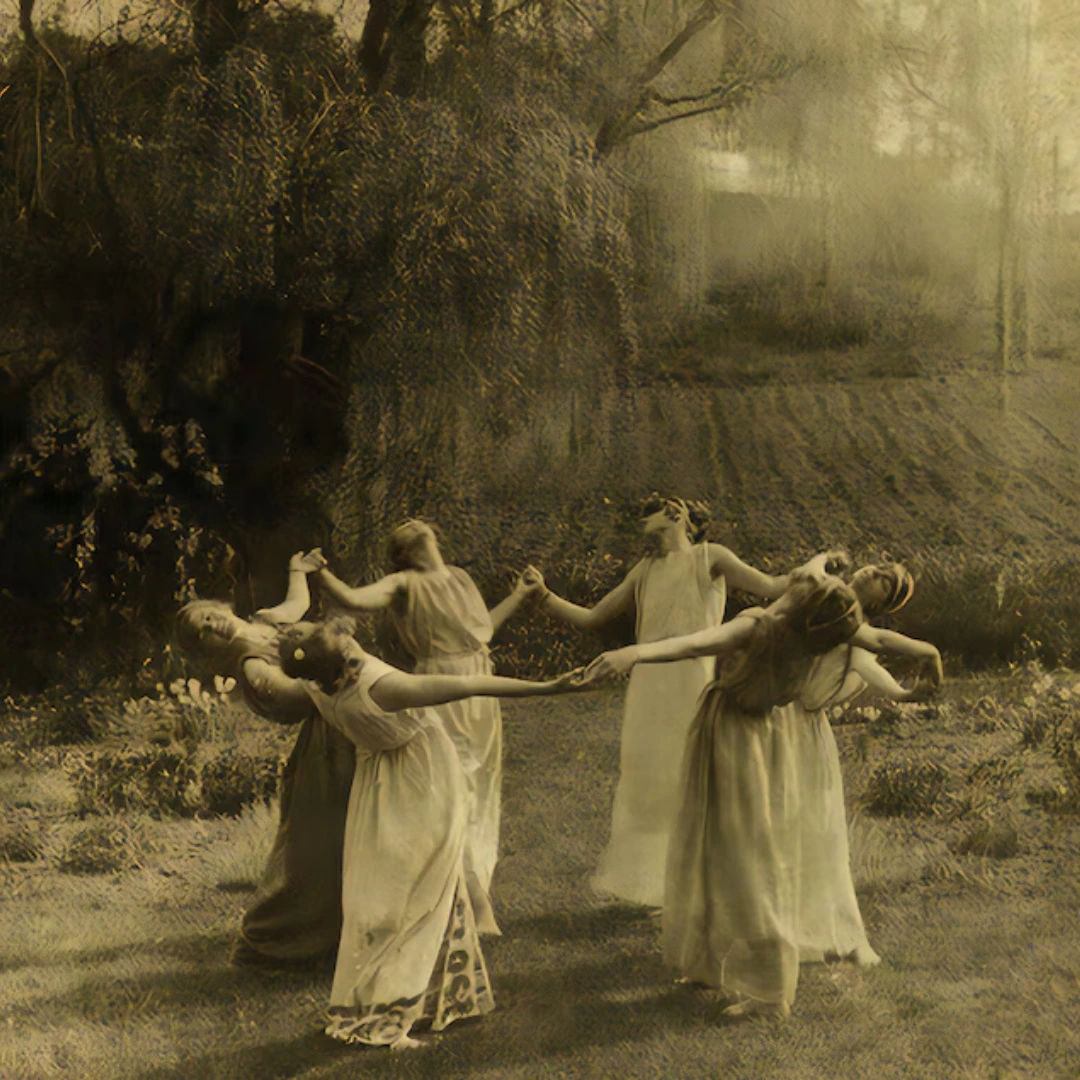
My best friend likes to joke that she and I are going to avoid the infamous, South Asian marriage-market by becoming spinsters, in the language of television’s current favourite series: Bridgerton. The escape from the world of men is occasioned by entering it undefiled. Or maybe leaving it altogether? To go where, I must ask, as does Olga Ravn in The Wax Child. When noble-blooded maiden, Christenze Kruckow, is accused of witchery by her own relative, Anne, who might have even been a lover in a past life, the true story of a witch-hunt in the 1600s ensues. It is executed by men, but enabled by women who mistakenly believe that a shoddy alliance with the opposite sex can secure refuge. Christenze escapes for a while and even joins a sapphic safe haven, but eventually they are all betrayed by one another and condemned to death by burning or beheading.
What is common to [Women Without Men, She Who Remains, We Are Green and Trembling, The Wax Child and The Witch], however, is the emancipatory potential of witchery, itself rooted in embracing at times the sapphic, but almost always the virginal.
In Caliban and the Witch, Silvia Federici underscores that the witch-hunt was an extension of capitalist primitive accumulation, seeking to enclose the feminine commons, as early as 14th-century Europe. Is the oppression of women simply resultant of capitalism or its twin-other, colonialism, or is gendered domination inevitable as long as the hierarchical structuring of society persists? I am inclined to agree with the latter, as does Ravn, whose book exemplifies that, beyond the structural nature of capitalist-patriarchy, it was the individual enactment of communalist fraternising that left many women victim to the fire. And what is wrong with a burning or four when hell-fire inevitably awaits every woman? “All witchcraft stems from fleshly desires, which in the woman are insatiable.”
“The man said, ‘The woman whom you gave to be with me, she gave me fruit from the tree, and I ate.’”
The Book of Genesis [3:12]
My mother often tells me that there will be far more women than men in hell because we gossip more, a sin akin to eating the flesh of one’s brother. Men kill, rape, plunder and may even destroy Gaia itself, but women? We gossip. Ironically enough, it is feminine hearsay (and testimony) that propels the persecution of the alleged witches in The Wax Child.
Cain murdered Abel, rejecting his role as his brother’s keeper. I, on the other hand, am my sister’s ward. As a feminist, my super power is seeing every-damn-thing with a sixth sense sharpened on the whetstone of life under patriarchy. And so is Lucie’s — a suburban witch and mother of two far-stronger Wiccans, Maud and Lise — in Marie NDiaye’s The Witch, which follows an ordinary woman despite her ‘magical’ faculties. The least favoured of all the shortlisted selections for the 2026 International Booker Prize, The Witch is a hilarious exploration of the helplessness women face, even when empowered with supernatural abilities. Lucie can see into the future but fails to predict her husband’s infidelity or her daughters’ eventual withdrawal. She is a witch and yet, like many of us, still fated to fail.
Who even is a witch, you might ask. A self-sufficient woman with ownership of her body (though the language of ownership is liberal terrain I would rather not tread). But what of the virgin? She is a woman awaiting a saviour who will never come. From Women Without Men to The Witch, all five of the Booker nominees show that between the witch and the virgin lies the woman who must learn that salvation is but another name for surrender. Save yourself, or rather, don’t.

Iman Iftikhar is an MPhil in Political Theory at the DPIR at Oxford. A Rhodes Scholar from Pakistan, Iman did her undergraduate degrees in History and Philosophy from Yale University before joining Oxford. As an MPhil student, Iman works on critical theory, history of political thought and postcolonial feminism(s) with a focus on South Asia. She is also the Chief Editor at South Asian Avant-Garde (SAAG) magazine and a returning fellow at Kitab Ghar Lahore.