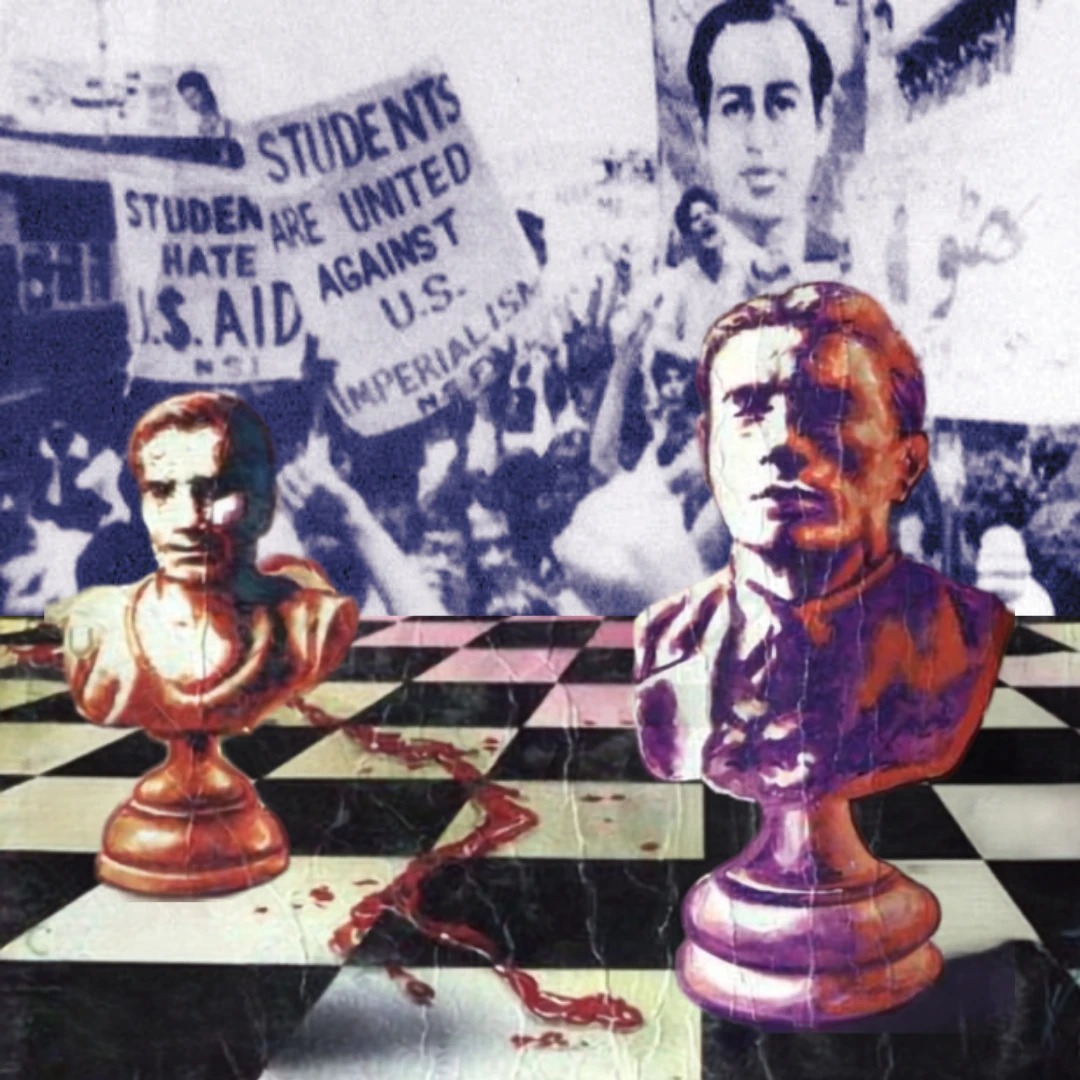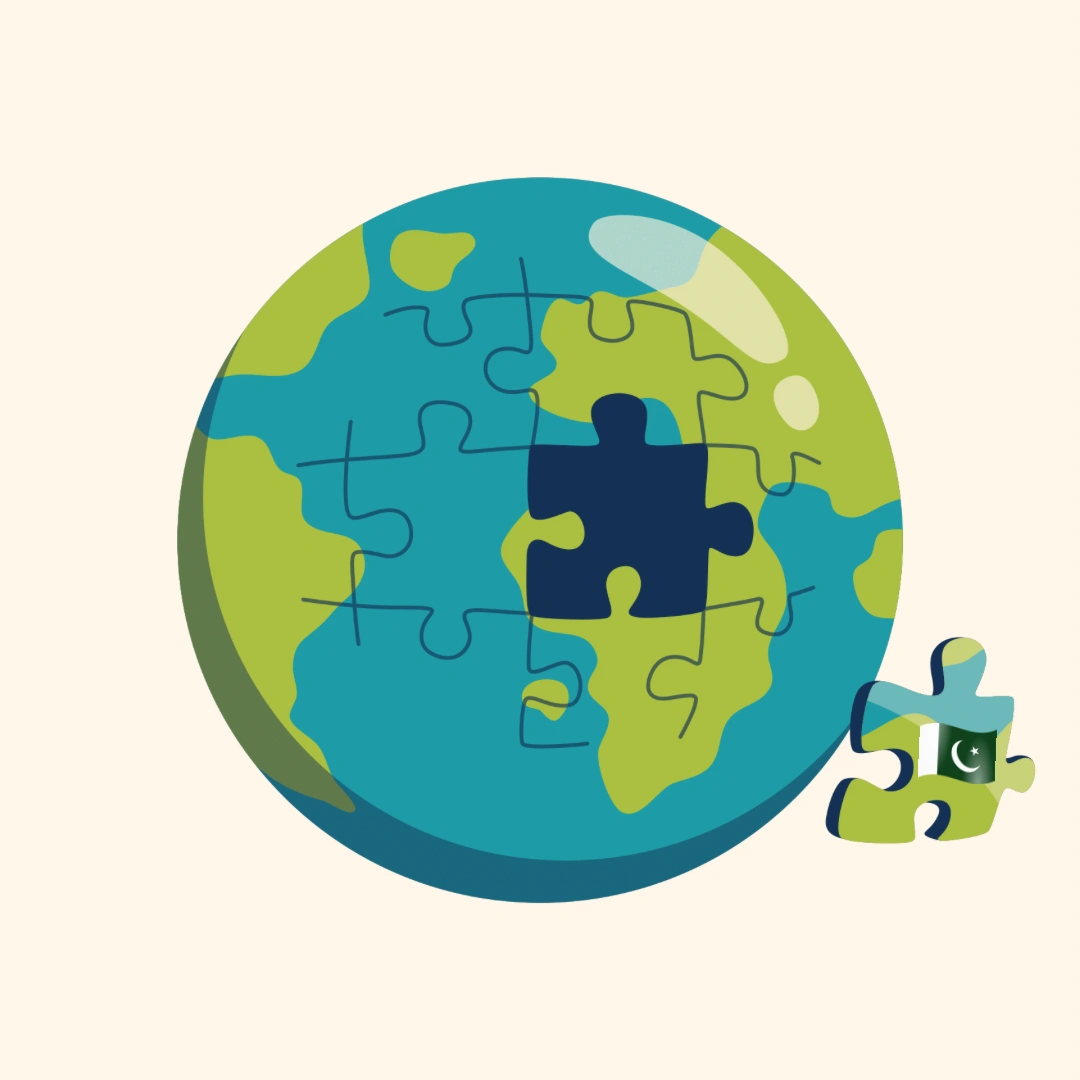
Does the current moment of global reordering offer Pakistan an opening to overcome its deep-seated development challenges? This is a question that has concerned people holding a wide variety of political inclinations. Predictably, ‘Paknationalists’ see the country’s increased role in regional geopolitical affairs as both a positive outcome of its military-led governing structure and as an opportunity for it to gain its destined fate as a regional power against the wishes of Indian hegemony.
More interesting has been the view from sections of the Left who see the decline of unipolarity and the Pakistani state’s navigation of the emerging multipolar and militarized world order as a potential opportunity. What exactly is the opportunity supposed to address?
For the Left, the primary theoretical concern is material uplift and welfare. So any assessment of opportunity should have this particular concern as its primary objective, with the pathway working through a solution to Pakistan’s stagnant and inequitable economy.
Given these grounds, the changes being witnessed at the global scale offer some room, but I fear that from the vantage point of the Left, the optimism with which these changes are being heralded is, at this stage, unfounded.
What exactly are these purported changes to the global order? The first is the decline in American imperial power, as evidenced by failed military campaigns in Iran, but also in the long shadow of its withdrawal from Iraq and Afghanistan. It is also clear that NATO’s influence in Europe is waning, given Russia’s expansionism in Ukraine.
In its absence, new, regional security orders appear to be emerging with an expanded role for militarized middle powers (such as Pakistan and Turkey). There is also no indication that China is interested or willing to assert itself in global security matters, except from behind the scenes through allied states and proxies. In that way, one may see bilateral and regional security escalations and resolutions as the new norm, especially in volatile regions.
As a state with strong military capabilities (both nuclear and conventional aerial), Pakistan can use its position to extract material concessions from regional powers who may look for a security patron after the US winds down its position.
The second major change is increased scepticism around neoliberal economic orthodoxy, with on-shored production, enhanced defence spending, and trade barriers returning as important policy positions, especially among Western economies.
In a recent piece for the New Left Review, political economist Benjamin Kunkel argues that neoliberal globalization has been defeated ideologically even if it remains to be dented practically. Trade and capital flows remain the norm, punctured only by geopolitical bottlenecks such as war and militarization. Simultaneously, state capitalism, industrial policy and tariffs have grown in piecemeal, sectoral ways.
The real shift taking place is in what politicians can say. China's state-led escape from mass poverty broke the "there is no alternative" consensus, and once states claim they can secure national prosperity against markets, they also become responsible for doing so. While the overall volume of total trade still remains high at almost 60pc of global GDP, the fact that tariffs are back on the menu for both the US and its allied states, and that these now include proposals to protect sectors beyond the usual agriculture and defence/aerospace industries – such as green technologies and semiconductor manufacturing – is worth acknowledging.
Given these two shifts – a return to multipolarity in global security and a global ideational shift around neoliberal orthodoxy – what are the options available for Pakistan’s development landscape?
On the face of it, both shifts work in the country’s favor. As a state with strong military capabilities (both nuclear and conventional aerial), Pakistan can use its position to extract material concessions from regional powers who may look for a security patron after the US winds down its position.
Similarly for a country long locked into IMF programs and structurally subordinated to global trade flows due to a perennially precarious balance of payments position, escaping some elements of orthodoxy is a necessity.
The real question is: can it? Here, the answer goes back to how the global is refracted into the local via the domestic arrangements that actually exist on the ground. Can the rentier economy be turned productive? Can those with outsized claims on the exchequer be reined in? Can natural resources, human labour, and Pakistani capital be mobilized in a dynamic configuration to deliver broad-based growth?
[Pakistan] is held together by the distribution of rents, both internally to its cadres and kin, and externally, to a narrow sliver of the population.
The task of delivering favorable responses to all these questions rests with the state. And the Pakistani state in its current form is overwhelmed by a military-bureaucratic establishment that has turned its primary logic into one of extraction via authoritarian decree rather than service delivery.
More importantly, this is a state with a viceregal origin that is incapable of the type of mass mobilization and disciplining which engenders effective capacity that other authoritarian states (such as Korea and China) have shown. Instead it is a state that is held together by the distribution of rents, both internally to its cadres and kin, and externally to a narrow sliver of the population.
In fact, one can argue that the biggest impediment to Pakistan’s material welfare isn’t necessarily neoliberal orthodoxy, but rather the structural subordination of the state to the global order via dollar scarcity and its internally extractive form that stifles both labour and capital.
The real, arduous task for the Left lies in reworking the state from its current form to something that is both attentive to the collective good and capable of mobilizing society for this collective good. This is not a reworking that will be handed to progressives on a plate by global reordering; in fact, one could reasonably argue that the first shift – increased militarization of the region – makes this even more difficult.

Umair Javed teaches sociology at LUMS. Twitter: @umairjav