A24's The Drama was much anticipated not only due to two of Hollywood's most prolific A-listers leading the film, but because A24 is a studio that has built itself up as the last frontier of commercial indie cinema in an increasingly hostile environment for indie filmmakers worldwide. It was impossible to miss the hype and discourse around this movie online, and yet, it soon became clear multiplexes in Pakistan would not be screening the film. This isn't the first time a highly anticipated international release has faced such friction making it to the Pakistani market.
Two months following The Drama, A24 released Backrooms—a film based off of a popular internet liminal horror phenomenon. The film was directed by 20-year-old Kane Parsons, who had previously established himself as a talented young filmmaker on YouTube. The concept of the film—that there exists a dimension of endless empty space that recreates concepts from faltering memory and exists just beyond our physical plane and can accidentally be stepped into—drew great interest even from people who previously weren't interested in horror as a genre or the Backrooms as a concept.
After watching the film, many creatives took to Twitter to share their versions of the Backrooms. A single popular tweet that garnered 79 million views drew responses in the replies and quotes with people sharing their versions of the Backrooms through different time periods, cultures, interests, and countries. Most of these tweets also garnered thousands, if not millions, of quotes and sparked a discussion about the concept of the film's themes through a societal lens.
The Backrooms, conceptually, are both a physical space and a representation of the human psyche. A notable absence in all this discussion was that of Pakistani creatives and their voices. Unfortunate yet unsurprising, as Backrooms was not widely screened in Pakistan despite its cultural relevance both before and after its release. The concept of the Backrooms could also be an intriguing metaphor for Pakistani cinema, which was once a great, thriving industry that is now an echo of what it once was: empty and hostile to audiences and filmmakers alike.
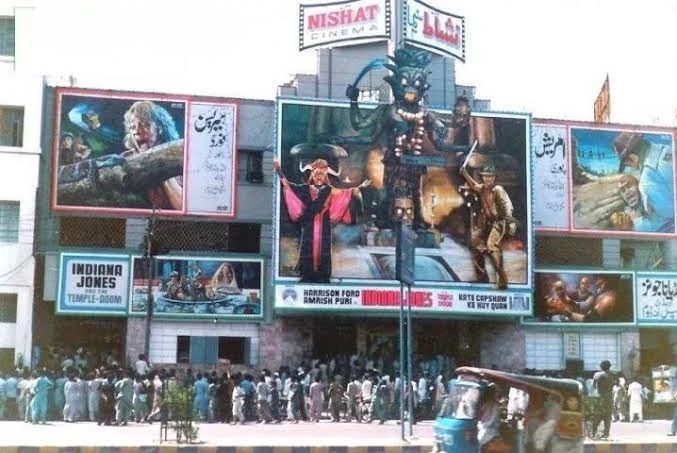
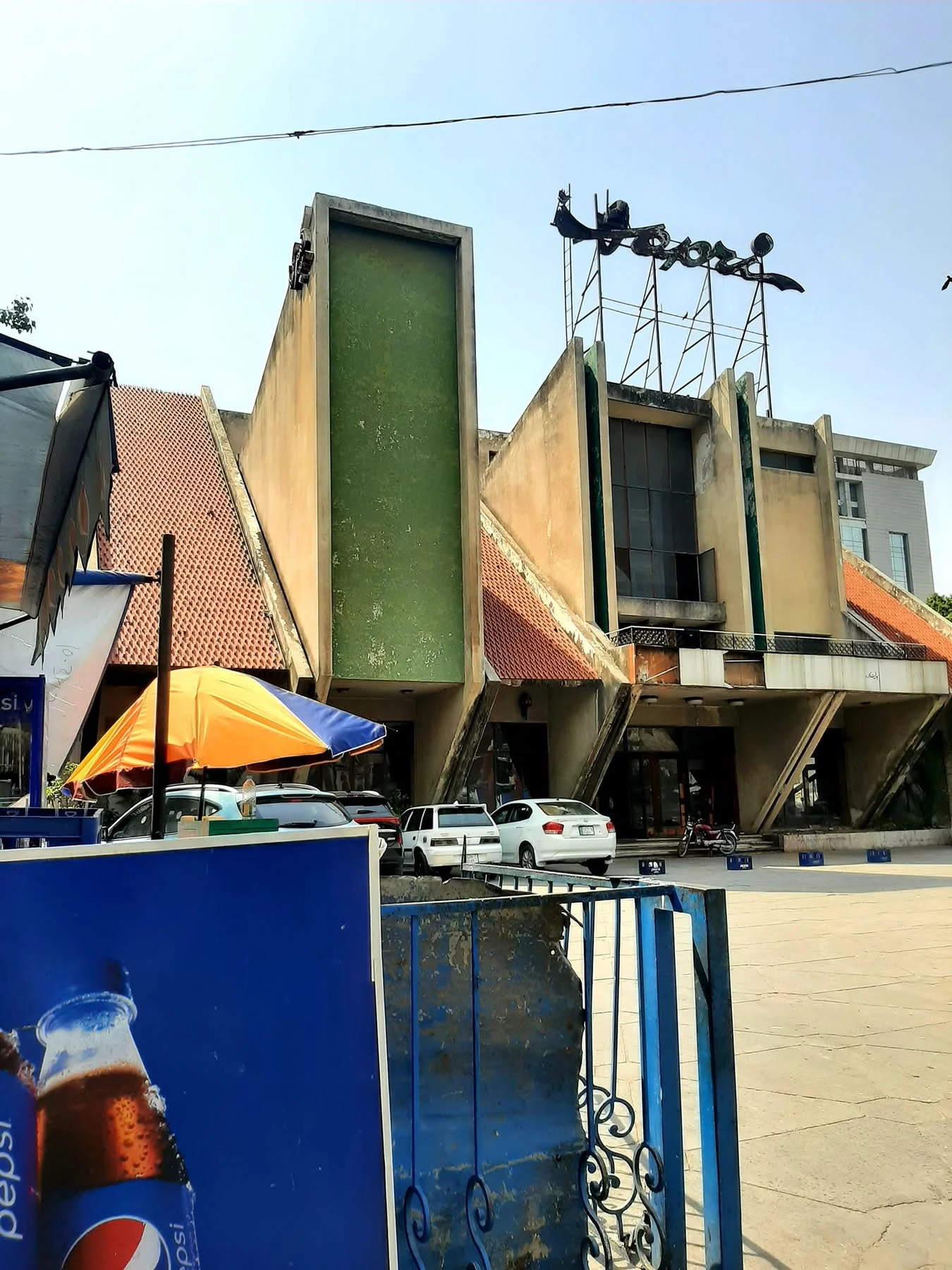
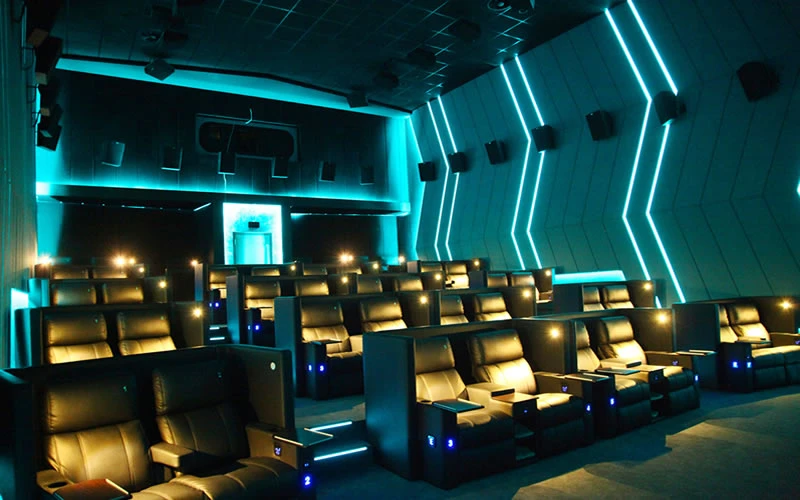
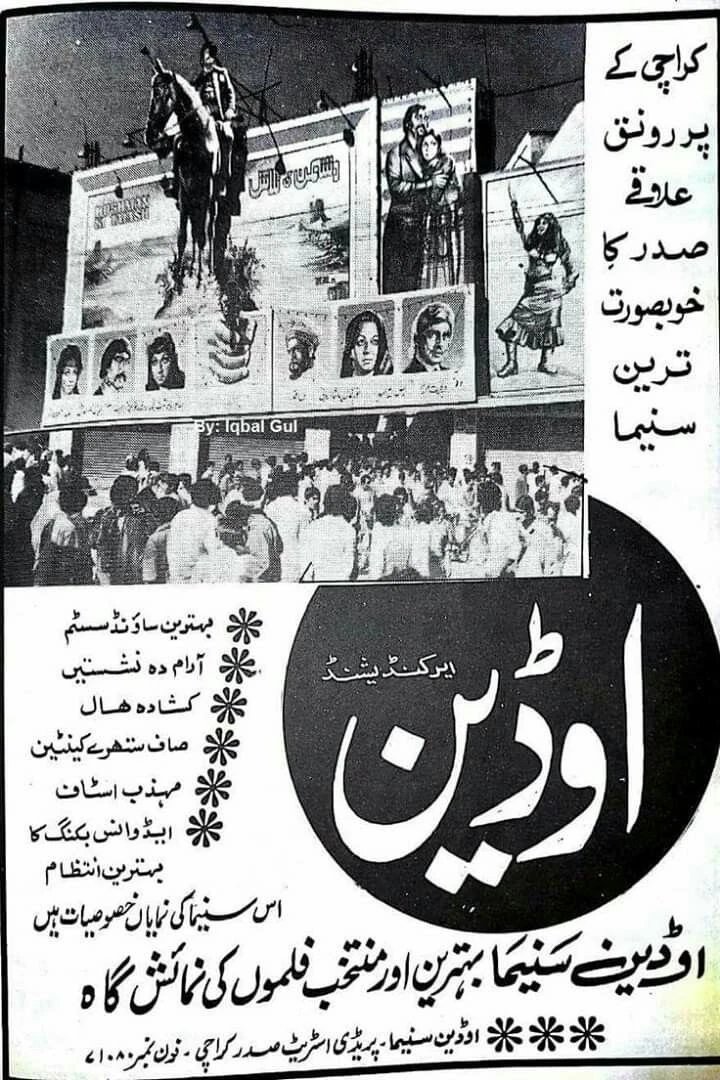
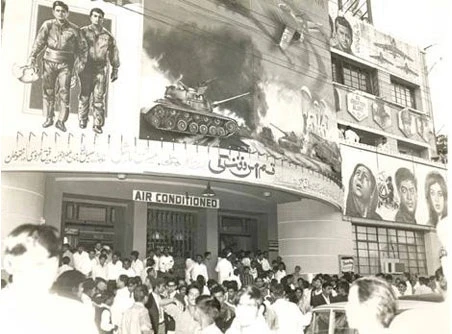
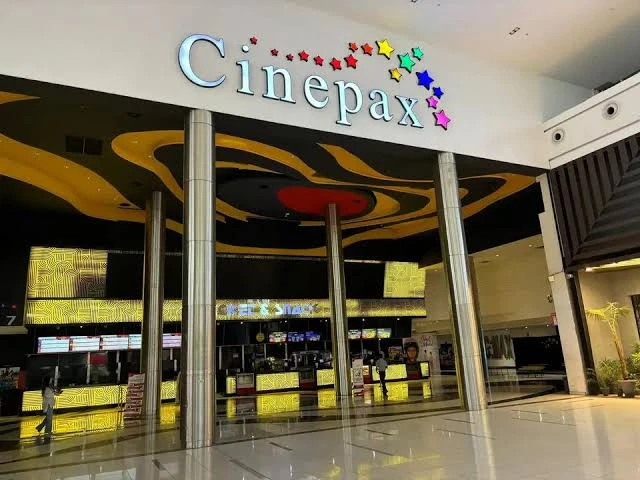
The primary fault, as always, is lack of accessibility. Pakistan's once thriving cinema culture has been replaced by multiplexes, which are also decreasing by the day. From nearly 1000 cinema houses, in the past 3 decades we have fallen to barely 100. The demolition of many cinemas has caused the current scarcity of screens. Now, the lack of audiences that can fill seats and pay the ticket price means risk of closure for others. The remaining multiplexes remain largely limited to certain upper middle-class areas with expensive tickets that wall out the working class. During Pakistan’s current cost of living crisis, going to see a movie on the big screen is a luxury even for the middle class. It also doesn’t help that nearly 70% of all available cinemas are concentrated in major cities.
Reissues of classic films and non-Western films are not exempt from this phenomenon. Joe Wright’s Pride and Prejudice’s 20th anniversary rerelease skipped Pakistan entirely, despite the long-standing popularity of the film based on Jane Austen’s classic novel. Another example is Studio Ghibli’s most recent release, The Boy and The Heron, which did not reach Pakistani cinemas despite the studio’s family friendly yet socially introspective releases. One might have assumed at least this movie would make it to Pakistan, considering Usman Riaz’s The Glassworker—Pakistan’s first hand drawn animated film—took its inspiration from Studio Ghibli’s oeuvre.
One cannot discount that language plays a huge role. Most people will not pay to watch a story they cannot understand. Cinemas do offer subtitled options; however, that effort seems to be limited to known seat fillers of huge IPs such as Disney and its subsidiaries like Marvel. However, while blockbuster films by major production houses are engaging to watch, it does not change the fact that the more thought-provoking stories that spark broader cultural discussion such as Obsession, The Drama or Backrooms usually come from the films categorized as "niche" in Pakistan, even if they may be blockbusters abroad.
As seen by the high engagement with Turkish TV serials, dubbed or subtitled media is something the masses eagerly await as it does an incredible job of making foreign media more engaging to local audiences who understand readily, or read fluently, in Urdu rather than English. There is no reason to suggest the same strategy would not be effective for films as well.
The solution then, one assumes, could come from local cinema in our local languages. After all, once upon a time Pakistani cinema was a booming industry and we have enough of our own Kane Parsons who are teeming with talent. A sparse infrastructure though, means that filmmakers are often left on their own to see their vision come to life. This remains unsurprising; however, the real misfortune lies in the lack of marketing frameworks available post-production. Multiplex cinemas remain unwilling to invest in local talent without any big, scene-stealing stars. Despite the removal of the language barrier, the desire for star power to market the films instead of a campaign to catch audience attention is ever-present.
This sentiment is echoed by the founder of independent film company BHM Films, Habib Shehzad, whose feature film Jujji debuted on Amazon Prime and Verizon Fios in 2025. Shehzad says that, despite understanding where theaters come from with their stringently cautious ways, the local distribution landscape is so difficult that foreign distribution is genuinely easier due to its meritocracy. “The foreign route, while slow and competitive, at least follows a legible process: you make festival-quality work, you get into the right festivals, distributors take notice, deals get made.” He states he had to work in reverse, leveraging the international acclaim Jujji got to have a chance at local distribution. He further states that: “It says something uncomfortable about how much weight local distributors put on recognition versus the actual work.” Shehzad also believes that audiences are not to blame as, across all social strata, Pakistanis have shown willingness to engage with all manner of quality media regardless of nationality or genre. Shehzad’s beliefs were echoed by a 2024 study which confirmed a dying cinema culture due to audiences perceiving a “lack of interesting content in the theatres”. The general conclusion of the study was that audiences were unwilling to engage in what they believed to be “repetitive story-telling; no quality writers;…and low-grade direction and acting.”
It seems the conclusion that can be drawn from this dilemma is that owners of Pakistani cinema houses and multiplexes want to invest in neither the audience nor the industry, but somehow expect audiences to fill seats anyway. Theaters are cut down due to lack of audiences and audiences don't show up due to a lack of incentive. According to Jujji screenwriter Ahmad Umar Ayyaz, the “circulation of funds” remains the biggest issue in making the film experience more accessible to audiences in a way that can revive cinema culture. Ayyaz states, “An industry can only thrive as long as there is regular economic investment and circulation of capital. Post-1980s and even now, in contemporary Pakistan, the prevailing sociopolitical landscape and deeply ingrained morality-based perceptions of the media industry deny value to the art of storytelling through film.” As a consequence, potential financiers believe the film industry in Pakistan has fewer customers which makes funding films a risky investment.
Any solution to these accessibility problems would have to be multifaceted, and would need to happen in steps. First, price-based exclusion would have to end. The biggest way to invest long-term in an audience is to provide them with an incentive for participation. Policy changes capping profits that multiplexes can make would be a good place to start. Another option is to subsidize ticket prices based on individual financial and economic status. Cultural knowledge and capital is invaluable in our globally connected world. Accessibility to storytelling through cinema—which has always been a way of starting these conversations—is now even more of a bonding experience. Easier access to it is what would create word-of-mouth goodwill that will eventually retain audiences while also granting them inclusion in social capital that would make them well-rounded global citizens.
However, finances are not the only thing we must consider. For most Pakistanis, English is their second, third, or even fourth language. Many might feel at ease conversing in it, but for their media they prefer the comfort of their own local language or the lingua franca which is Urdu. It is commonplace around the world for imported English language media to be subtitled or dubbed over when bringing into a local market. Pakistan seems to do this for films that are guaranteed blockbusters; however, yet again this ignores any productions that aren't from existing mega-monopolies.
As seen by the high engagement with Turkish TV serials, dubbed or subtitled media is something the masses eagerly await as it does an incredible job of making foreign media more engaging to local audiences who understand readily, or read fluently, in Urdu rather than English. For the younger generation, cross cultural media engagement through English accessibility features is less of an issue, with Japanese anime, Kdramas, and Cdramas having been a major draw since the late 2010s. There is no reason to suggest that the same strategy would not be effective for films as well.
Art Director of The Glassworker, Mariam Riaz Paracha, states that much of the film’s marketing actually occurred through a TV production house, as that remains the most straightforward distribution setup in the country. Thus, they often have to be relied on to promote films as well. She further added that the class differential that has emerged due to the scarcity of accessible cinemas (thereby walling off the cinema experience from the majority) is also what allows for the TV industry to dominate. It is difficult for films to compete with the easy, personalized, accessibility to soap operas through phones and television. Filmmaker Seema Farooq Khattak’s sentiment seemed to be a consequence of this industry tradition, as she said: “There are barely any opportunities for local distribution and, as for the ones that exist, most of us don't know the way to get to them.”
There is clearly a gap in the Pakistani film industry to set up a proper established route of licensing, dubbing, and subtitling films at a large scale. The local language would make audiences more amenable to viewing foreign films in different genres when they are able to follow along the stories presented to them at a comfortable pace. Consequently, the creation of accessibility infrastructure would not only create jobs for our own actors, it would also create the need to market films to people through traditional channels with the hope of ROI. Running ads, setting up billboards, and promotion through avenues that aren't simply limited to social media and word of mouth create organic growth that promote cinema going audiences.
It seems the conclusion that can be drawn from this dilemma is that owners of Pakistani cinema houses and multiplexes want to invest in neither the audience nor the industry, but somehow expect audiences to fill seats anyway.
Yet again, this solution asks for long term investment in Pakistani audiences of all social strata so that the relationship between the audience as investors into the cinema industry can be repaired. Simultaneously, these same marketing tactics need to be applied generously for Pakistani indie films. As the language barrier is non-existent, a marketing infrastructure alone would be sufficient to engage audiences. However, for that interest to develop, there is a need for audiences to realize that these films exist and are available to watch. This support would further bolster independent Pakistani filmmakers until they, too, are recognized for their craft and incentivize audience return, in the same way that Spielberg and Nolan incentivize global audiences based on their name brand alone. This sort of loyalty was not built in a day but developed through exposure and marketing of their craft over decades. What’s interesting is that most big names in Hollywood have confessed to the same thing. Renowned actor Ben Affleck has stated “What most people don’t realize is that you often spend about as much marketing the movie as you do making it.” It seems ridiculous, then, that Pakistan lacks marketing mechanisms at all for both local and foreign films with an expectation for profit.
Abrar-ul-Hassan, Founder of the 60SIFF (60 Second Intl. Film Festival) and Morango Films shared his thoughts: “Pakistani independent cinema […] is still trying to build the infrastructure between the filmmaker and the screen.” His sentiments were echoed by other Pakistani independent filmmakers, archivists and academics who agree that the entire pipeline between filmmakers and audiences is usually inhabited by marketing teams, sales agents and distributors which Pakistan generally lacks. Filmmaker and NCA Lecturer Hassan Zaidi states that while film craft is pursuable academically, there are very few avenues to learn film marketing and even fewer professionals available to teach it; those that do exist tend to work in the industry rather than in academia. Thus, the scales are further tilted against Pakistani filmmakers, who are not only expected to create incredible films that are commercially viable, but market their work themselves too.
EST N8 Global Sales Executive Shams Pasha, who has previously worked with Oscar-shortlisted and Emmy-nominated titles in Hollywood, said that filmmaking is no longer a “mystical gamble” and that film projects are investible products. This is done through practitioners who “analyze trend shifts, regional performance data, and buyer appetite.” Pasha believes the “Shepherd Layer” is where the immediate opportunity for Pakistani talent lies: “operators, market-savvy producers, who specialize in international packaging, profit and loss modeling, territory-sensitivity analysis, and downstream de-risking.” Filmmaking is a profit-making industry just like any other and it is possible to study the trends within it, predict the best outcome, and create products that can be promoted, packaged, and sold to existing markets for existing audiences not just within Pakistan but on a global scale as long as it is accompanied by the right narrative and business acumen. The “gap between craft and commerce” needs to be closed by people who can take on the mantle of studying the market, identifying distribution channels, and clarifying tax and production incentives before filming begins to minimize costs and to maximize viability. This ensures that a project has a possible home at the earliest part of its creation rather than simply a hope and a prayer after the product is finished. Ultimately Pasha’s solution, too, requires accountability and investment in the future of the Pakistani film industry by establishing bodies that serve as Research & Development centers which writers, filmmakers, and producers can utilize to create commercially viable stories. By treating the development process as a business at the earliest stages, speculative production is transformed into intentional filmmaking, which improves the chances of projects finding homes and recouping production and development costs.
Despite the many issues plaguing the development of Pakistan’s film industry, not all hope is lost. Most industry professionals agree that, despite screening and distribution setbacks, indie filmmaking in Pakistan persevering is a testament to the desire for good storytelling and the faith in the existence of these films finding their audiences. When asked, filmmakers believed that there is a need to diversify and find creative solutions. Habib Shehzad believes that more platform-style cinema releases, domestic film festivals, critic ecosystems and streaming platforms risking non-formulaic stories can build genuine word-of-mouth that can positively impact the industry. Abrar-ul-Hassan emphasized the value of more specialized viewing experiences such as university cinemas, regional festivals, repertory (re-screening) programs alongside catering to audiences through regional languages, restoration of classics, and inclusion of mediums such as animation, documentaries, and experimental films. He believes the question we should be asking is “Who needs to see this film, and what is the most effective way to reach them?” instead of clamoring purely for commercial success through multiplexes.

Iffah Mughal is a poet and writer from Rawalpindi. She is a Gold Medalist in English and was part of the inaugural cohort of the Pakistan Youth Poet Laureate program. She has been published in Jashn and The Aleph Review. Iffah is the recipient of an Erasmus Mundus scholarship and is currently pursuing an International Masters in Children’s Literature, Media, and Cultural Entrepreneurship. She is also a freelance editor, translator, and English tutor.